





U.S. Secretary of Commerce Howard Lutnick has rejected the New England Fishery Management Council’s (NEFMC) plan to split the region’s cod population into four separate stocks, claiming it doesn’t ally with federal regulations.
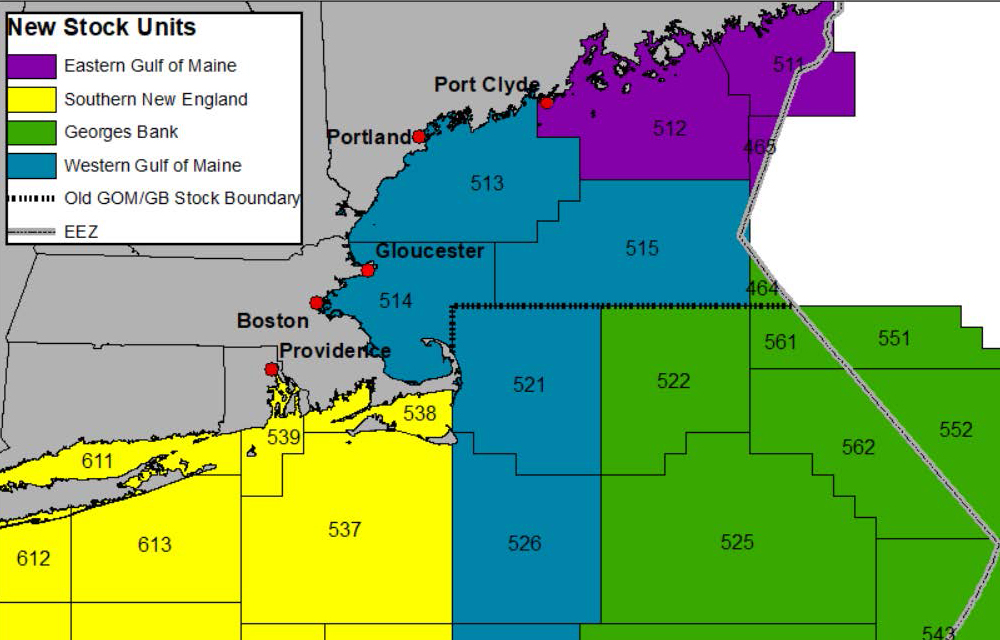
NEFMC voted in December 2024 to pass Amendment 25, which would divide New England’s cod population into four distinct stocks: Eastern Gulf of Maine, Western Gulf of Maine, Southern New England, and Georges Bank. According to NEFMC, splitting the population would give fisheries regulators the ability to set allowable catch limits (ACLs) for each stock separately, giving them more fine control in how they manage the species.
According to NEFMC, the plan would set an ACL of 47.2 metric tons (MT) for the Eastern Gulf of Maine, an ACL of 256.3 MT for the Western Gulf of Maine, an ACL of 75.3 MT for Georges Bank, and an ACL of 4.1 MT for Southern New England. Overall, the total ACL of 382.9 MT represents a 43 percent decrease from the previous season.
“The council recognizes the very low 2025 cod catch limits will be extremely challenging for the fishery to work under,” NEFMC acknowledged in announcing the lower catch limits.
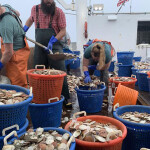
The plan has proven unpopular with New England fishers, who claim the restrictions will destroy their industry.
“These restrictions are going to be the end of the trawlers and anyone else buying fish,” New England Fishermen’s Stewardship Association (NEFSA) CEO Jerry Leeman said last year. “Everyone in the fisheries expects Addendum 25 to torpedo their businesses. We hope the new administration will promote American fishermen, instead of treating us like an invasive species."
In May, Lutnick rejected Amendment 25.
“After consideration of public comments received, the Secretary of Commerce disapproved Amendment 25 on 16 May 2025 on the basis that Amendment 25 and its supporting analyses do not adequately demonstrate how the proposed action is consistent with National Standard 1 or other required provisions of the Magnuson-Stevens Act,” NOAA Fisheries explained in a statement.
However, the rejection may not be a long-term victory for NEFSA and other opponents of the new cod management proposal.
NOAA Fisheries’ statement notes that Amendment 25 fell short of the department’s standard because it does not “establish reference points or management measures for the newly defined Atlantic cod stock units,” but the agency acknowledges that the four-stock structure is “the best scientific information available.”
NOAA Fisheries invited NEFMC to revise and resubmit Amendment 25 by updating “the cod stock definitions to reflect four cod stock unit structure; the [status determination criteria] for the four cod stocks; accountability measures; and the distribution of [allowable biological catches] for the four stocks."
In the interim, NOAA Fisheries approved an emergency rule at the end of April to allow the Northeast multispecies commercial fishery to start on time on 1 May. The temporary measure will be effective for 180 days, and it can be extended for another 186 days if needed. The emergency rule continues under the two-stock paradigm.
“Transitioning management in the middle of the fishing year from two stock units of cod to the four stock units would be challenging for fishery participants and NMFS,” the agency noted in its announcement. “Other measures included in Framework 69, if approved, would be implemented during fishing year 2025.”
