






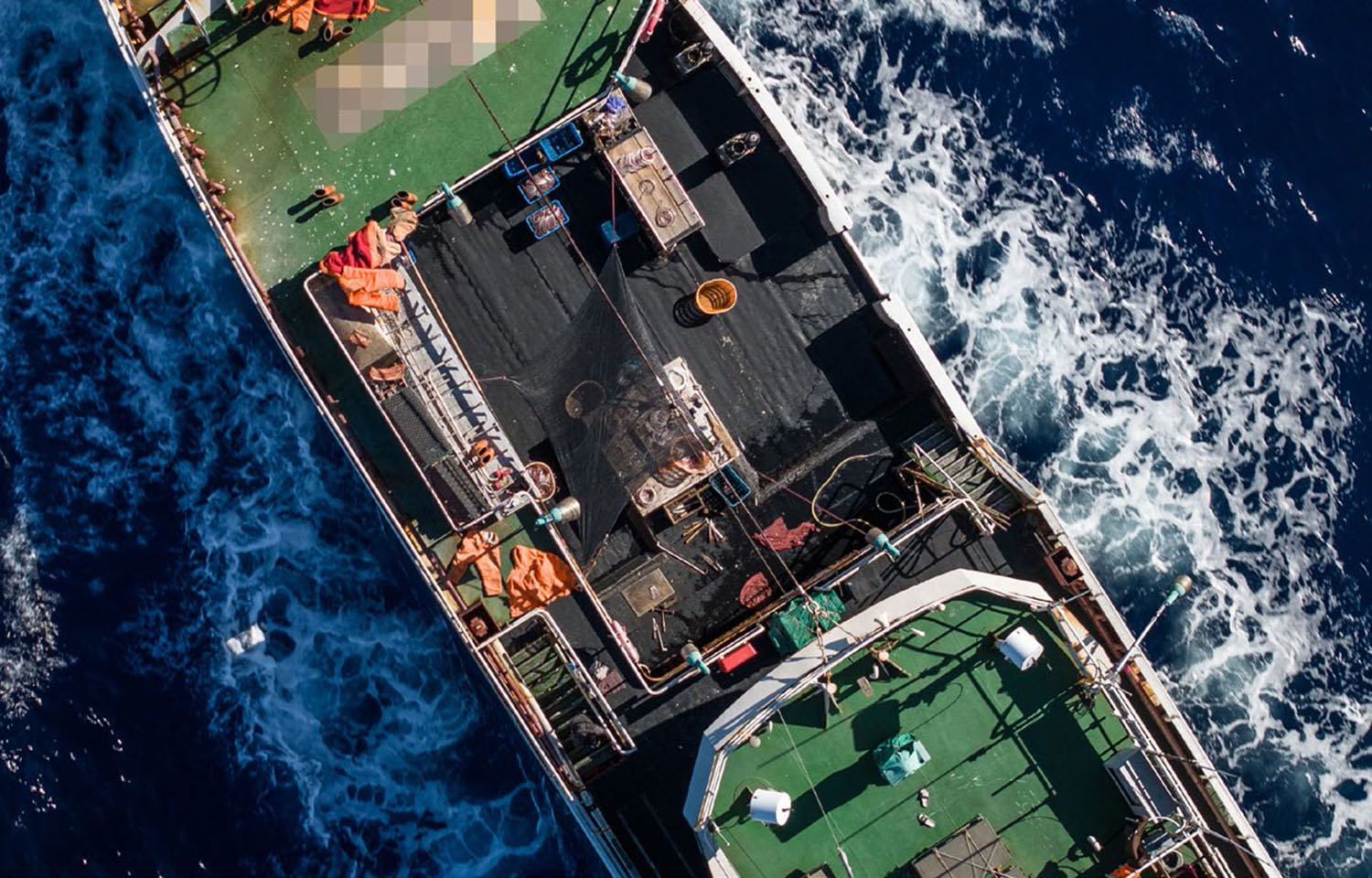
An Environmental Justice Foundation (EJF) investigation has identified what it says is extensive evidence of North Korean labor onboard Chinese tuna-fishing vessels in the Southwest Indian Ocean.
The investigation said it found evidence that North Koreans were used as crew onboard the vessels between 2019 and 2024, based on interviews with Filipino and Indonesian members of the crew who worked on the same vessels. According to the EJF, many of the North Korean laborers were subject to abuse, including being trapped at sea for up to a decade.
The new report, “Trapped at Sea,” said the workers’ presence onboard Chinese tuna vessels was confirmed both through interviews of other crewmembers and through photo and video evidence captured onboard the vessels by crew members. EJF investigators examined the evidence and transcribed dialogue on videos to identify any potential indication that North Korean labor was present onboard.
EJF’s report also said it corroborated the crews’ stories by gathering evidence of their time onboard, such as passport stamps, contracts, and airline tickets. Additionally, it used vessel-tracking software Starboard to corroborate the testimony and provide evidence of potential transshipment of products or port visits by the vessels.
“It should be acknowledged that there are limitations to the above methodology. EJF were unable to speak to any of the North Korean workers suspected to have been on these vessels, and as such, it was not possible to fully corroborate much of the testimony given by Filipino and Indonesian crew,” EJF said. “There are inherent risks associated with first-hand testimony as a data-source; however, the weight of detailed accounts gathered for this briefing lend overwhelming credibility to the described behaviors and events.”
Those first-hand accounts include evidence suggesting at least 12 Chinese-flagged tuna longliner vessels operating in the Indian Ocean had North Korean laborers onboard and working in the fleet for multiple years – in some cases potentially as long as a decade – without ever returning to North Korea or even returning to dry land.
The interviewees of one vessel said the North Koreans were given far less freedom than other crew members.
“They were not as free as the Indonesian crew. They went to the store [in Mauritius] one day to buy supplies ... the captain told them that they could only go that one day,” one crew member said. “Afterwards, they were not allowed to go outside.”
Another crew member said the North Koreans were not allowed to have mobile phones and were unable to contact their homes or families.
Crew on another North Korean vessel said there was tension between the Chinese and North Korean crew over a sick crewmate, and eventually, the North Koreans were transferred to another vessel because “the Chinese could not control the Koreans.”
According to the EJF, North Korean presence on the Chinese vessels is likely thanks to North Korea’s labor export program, which it said is suspected to be a means of funding the country’s nuclear programs. The use of North Korean labor by an outside country has been outlawed by the United Nations (UN) Security Council and additional laws in the U.S. and E.U.
Based on the investigation, North Korean crewmembers were allegedly onboard vessels that may have potentially supplied seafood to markets in the U.K., the E.U., and other Asian countries. Evidence gathered using Starboard found evidence of transshipment activity, with potential end markets in Japan, South Korea, and Taiwan. Multiple vessels were also found to have had valid authorization to export fish to the E.U. and the U.K.
The new report by the EJF comes roughly a year after a report by the Outlaw Ocean Project identified the presence of North Korean labor in China’s seafood supply chain. In that instance, the labor was inside processing facilities located in Dandong, which borders North Korea.
According to EJF, while North Koreans have been identified inside processing facilities before, this is the first time labor has been publicly documented on a distant-water fishing vessel.
“The use of North Korean labor onboard Chinese fishing vessels is a damning indictment of the failure to regulate our oceans,” EJF Founder and CEO Steve Trent said. “Illegal fishing and human rights abuses can be found almost without exception onboard China’s distant-water vessels. However, the use of North Korean forced labor for such long periods is a particularly severe example of the egregious misconduct uncovered by EJF.”
Outlaw Ocean Project Director Ian Urbina told SeafoodSource the EJF report adds to the existing evidence documented by Outlaw Ocean and other organizations.
“This report is really groundbreaking because it starts to open up a new, albeit smaller, front in the growing concerns about the North Korean-tied seafood getting shipped to the U.S., E.U., and Canada.” Urbina said. “The report doesn’t allow us to know which companies or which vessels shipped seafood tied to these workers, and thus, it is tough to say whether there were any violations of the UN sanctions on products being tied to North Korean workers or U.S. federal law promoting products entering the U.S. market tied to these same workers. But, the report does point to the role that at-sea transshipment plays in obscuring supply chains and potential illegalities in those chains and the failure of regional fisheries management organizations and port authorities to identify illegal presence of these workers.”
