



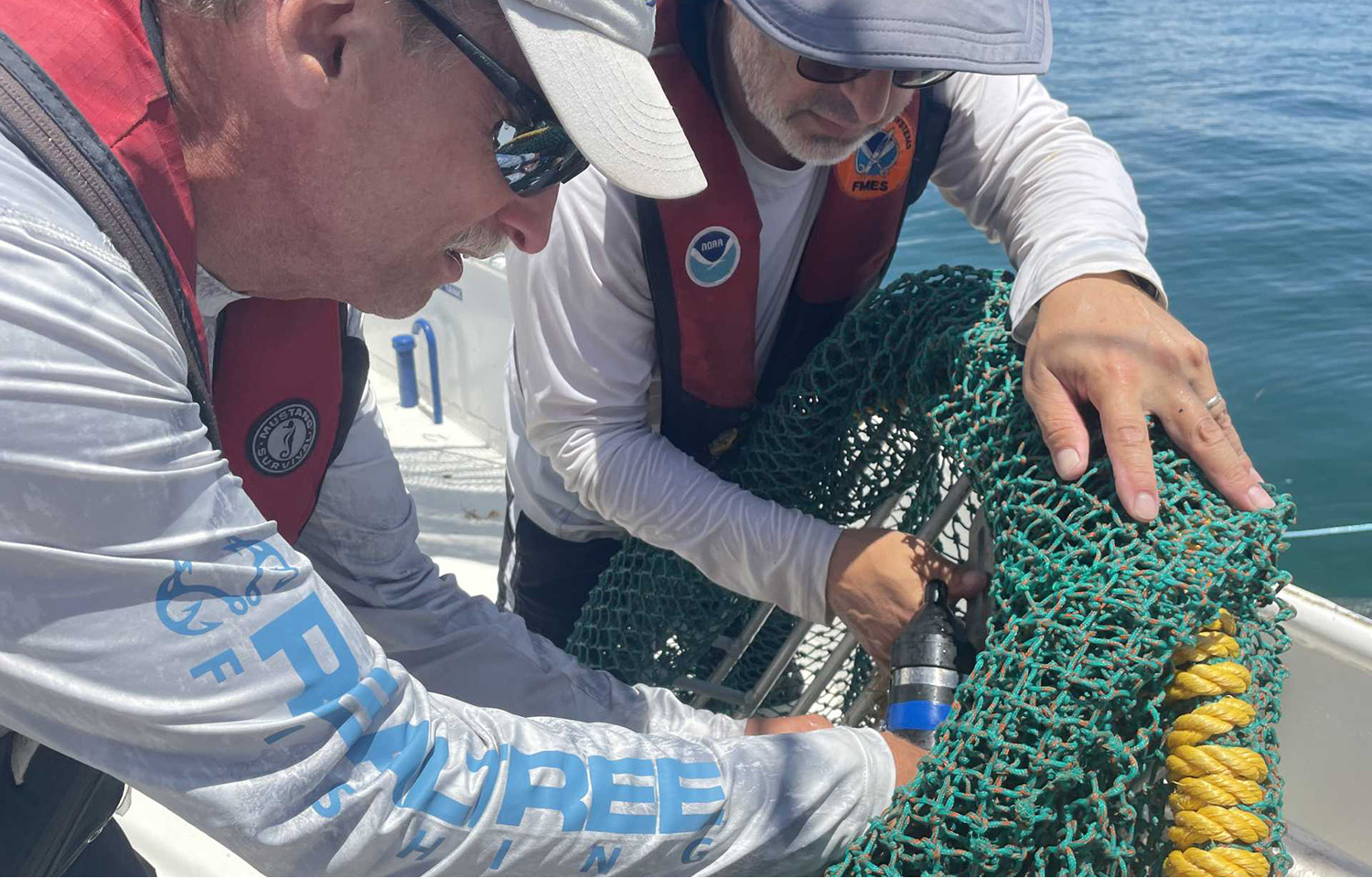
A new turtle excluder device (TED) design being tested in the Gulf of Mexico, currently referred to as the Gulf of America by the administration of U.S. President Donald Trump, aims to save juvenile turtles from bycatch without diminishing shrimp catch.
TEDs have long been used by shrimp trawlers to reduce sea turtle bycatch. The current industry standard, while successful at reducing bycatch of adult sea turtles, often fails to exclude juvenile turtles, which can fit between their 4 inch-spaced bars.
A new joint project from the Open Ocean Trustee Implementation Group (TIG) and NOAA has addressed this problem by testing a TED with a 2.5-inch spacing bar.
The project was conceived, designed, and tested with the input of the commercial shrimp industry, which partnered with Open Ocean TIG to express their concerns and address the issue of juvenile bycatch. So far, it has been successful.
“The outcomes [of the project] all show that not only does this modified design reduce juvenile sea turtle bycatch, but it also causes no significant decrease in shrimp catch,” the organization said.
Gary Graham, a commercial shrimper who took part in the partnership, said that “if that smaller grid size can help reduce the bycatch, I’m all in favor of it.”
When the TED project was first announced in 2019, Open Ocean TIG Lead Laurie Rounds said that her organization was committed to “reaching out to shrimp fishermen and talking with them about some good opportunities for voluntary ways we could work with them to be able to both support the shrimp fishery and their target catch while developing a good restoration benefit for these Gulf resources.”
The Open Ocean TIG was formed after the 2010 Deepwater Horizon oil spill to restore and limit the impacts of the spill on the Gulf. It is funded by around USD 8.8 billion (EUR 7.6 billion) of oil spill settlement funds, which are allocated by the federal government.
The 2010 spill, in which a BP oil rig dropped at least 4.9 million barrels of oil into the Gulf, was the largest offshore oil spill in U.S. history. Since then, NOAA and others have conducted numerous projects aimed at restoring the marine landscape.
The TED project, which has recently been allocated more funding, will now move into its next stage, which will support shrimpers who would like to voluntarily test new TED designs on their boats.
