






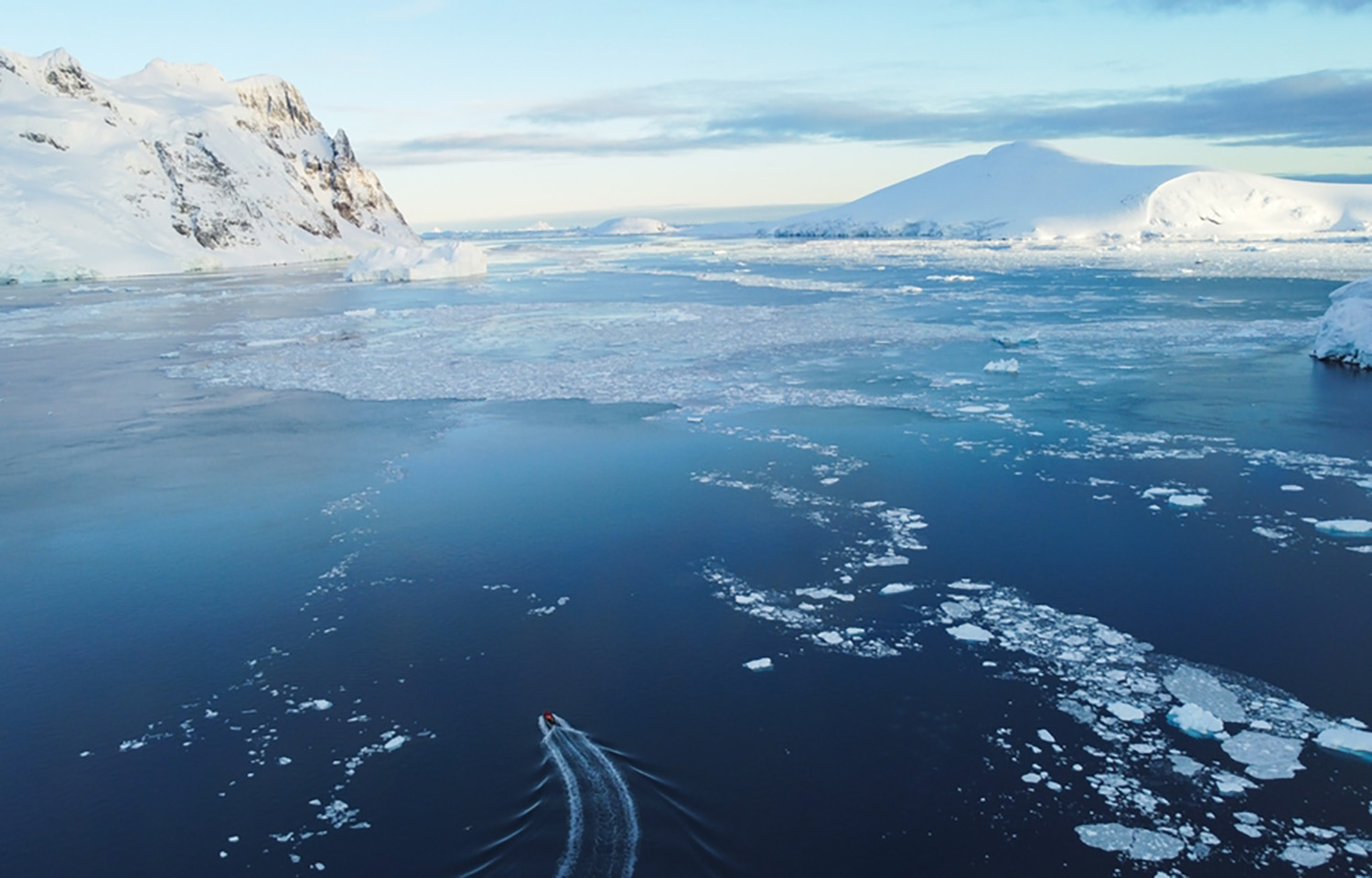
Coinciding with the entry into force of the High Seas Treaty, U.K.-based conservation nonprofit Sustainable Markets Initiative (SMI) has launched its Ocean Stewardship Initiative, with the aim of transforming global ocean commitments into practical action, starting with one of the world’s most ecologically fragile regions: Antarctica.
Founded by King Charles III when he was Prince of Wales, SMI has positioned the new initiative as a response to faltering implementation of sustainability targets and treaties, which the initiative has identified as a persistent gap in ocean governance.
Developed in partnership with Aker BioMarine and Aker QRILL Company, with advisory input from the Marine Stewardship Council (MSC), the Ocean Stewardship Initiative’s first delivery track focuses on supporting the establishment of a vast marine protected area (MPA) in the Antarctic Peninsula, alongside a modernized framework for managing the region’s krill fishery.
SMI CEO Jennifer Jordan-Saifi told SeafoodSource that the initiative is deliberately designed to be a “staged and voluntary engagement model,” providing a starting framework and collaborative platform rather than a fully prescribed program with fixed requirements.
“At this point, participation in the Ocean Stewardship Initiative does not come with a single, rigid set of operational requirements or data-sharing obligations,” Jordan-Saifi said, explaining that the model recognizes the fact companies operate in very different regulatory, geographic, and commercial contexts.
Some companies, for instance, may simply engage with the initiative by endorsing the shared ambition and participating in dialogue, gaining an understanding of how industry, science, governments, and civil society can work together constructively. Others may opt for more involvement and contribute technical expertise, operational insight, or analysis based on their experience.
“Importantly, the initiative is open to companies joining at an introductory or observer stage, allowing them to follow the work closely as it evolves, before deciding whether and how to deepen their involvement over time,” Jordan-Saifi said. “As the initiative matures, clearer guidance and expectations will be co-developed with participants, informed by practical experience rather than pre-set assumptions.”
The initiative’s first focus is helping establish a long-running proposal under the Commission for the Conservation of Antarctic Marine Living Resources (CCAMLR) to establish a large-scale MPA covering around 70 percent of the Antarctic Peninsula. If approved, the MPA would be among the world’s largest no-take zones, protecting Antarctic mammals and nearly 200,000 square miles of the Southern Ocean.
The proposal would also increase the proportion of the Antarctic Ocean under protection by up to 15 percent, making a significant contribution toward the global goal of protecting 30 percent of the world’s oceans by 2030.
The MPA is designed to be implemented alongside a science-based krill fishery management framework, which would expand ecosystem monitoring and distribute fishing effort more evenly in areas that remain open to regulated fishing.
For Jordan-Saifi, this combination of protection and management aligns perfectly with the initiative’s logic, which aims to reduce uncertainty by aligning conservation goals with fisheries management.
“The Antarctic marine protected area exemplifies how protection and science-based management can progress within governance systems. Supporting CCAMLR demonstrates that industry engagement can foster stability, predictability, and credibility, benefiting conservation and well-regulated access,” she said.
While Antarctica may seem remote from most markets, SMI argues that the lessons learned there have direct relevance for global seafood supply chains. Jordan-Saifi said that lessons from Antarctica are meant to create a “transferable playbook” for other regions, “promoting clearer rules, better science, and durable outcomes in sensitive environments.”
SMI is also careful to frame the initiative as not being an added compliance layer but as a way for companies to engage earlier and more constructively in shaping how ocean protection is implemented.
From a commercial perspective, it’s about reducing regulatory and reputational risk, strengthening trust with buyers and policymakers, and helping create solutions that are both environmentally and economically sustainable, Jordan-Saifi said.
“In the long run, this kind of engagement supports more stable operating conditions and clearer signals to markets, rather than reactive or fragmented regulation,” she said.
Furthermore, though the Antarctic MPA is a concrete and time-bound first delivery, Jordan-Saifi stressed that the Ocean Stewardship Initiative is intended to be more “long term in nature” and expandable to other fisheries, sectors, and geographies over time.
“Its broader purpose is to demonstrate how responsible industry leadership can help turn global ocean commitments into practical, scalable action and, in doing so, help define how future fisheries are managed sustainably,” she said.
