


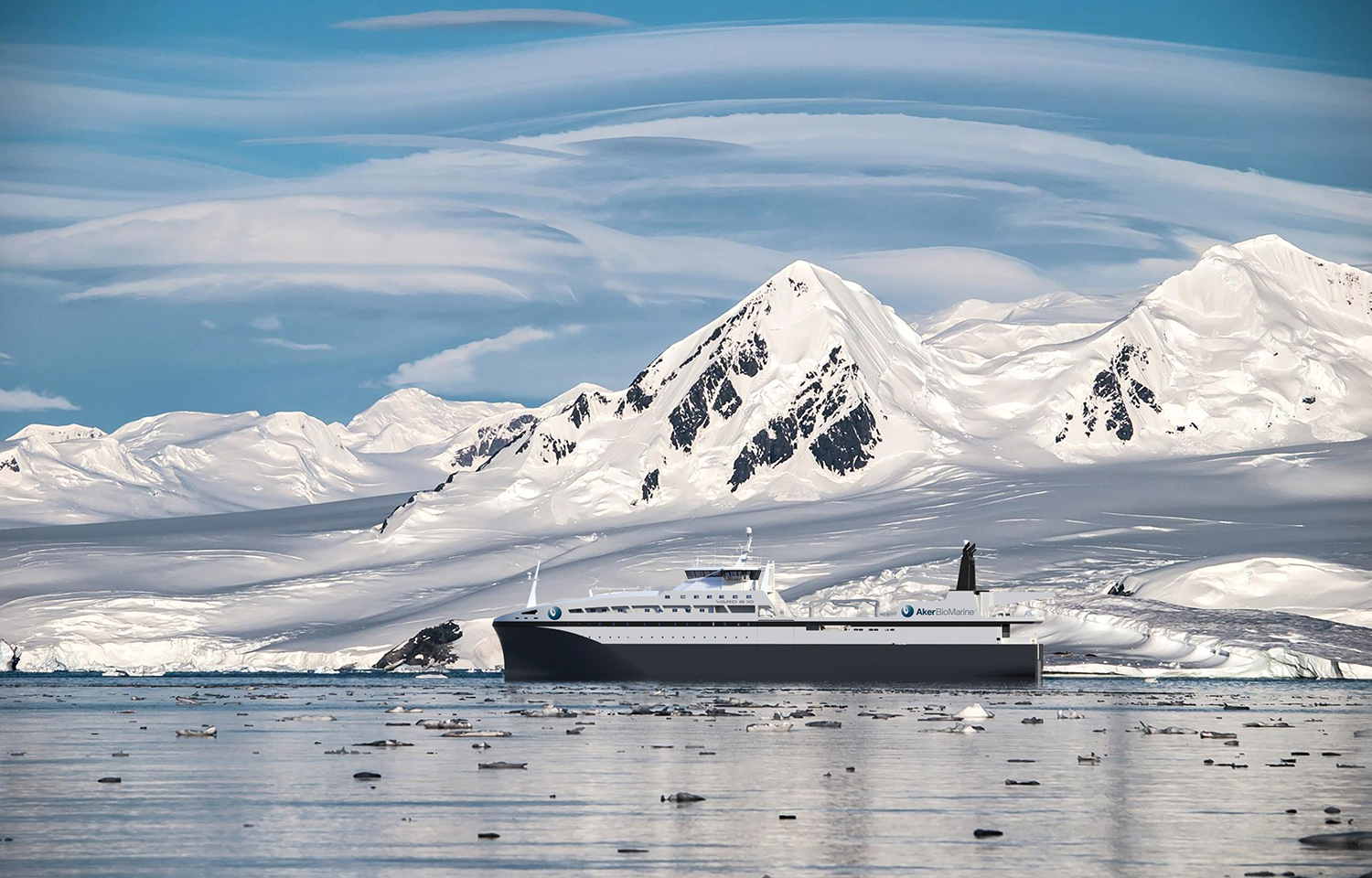
Key krill fishing and processing firms Aker QRILL Company and Aker BioMarine said they are optimistic member nations of the Commission for the Conservation of Antarctic Marine Living Resources (CCAMLR) are close to a consensus on new fishery measures after the commission met in Hobart, Australia without any significant announcement.
In a joint statement to SeafoodSource, the two companies said “genuine progress” had been made toward “establishing new fisheries measures” and marine protected areas (MPAs) around the Antarctic Peninsula.
“While no formal agreement was reached on these issues this year, the meeting revealed that the possibility of consensus is closer than many thought,” the Aker statement said.
This summer CCAMLR took the unprecedented measure of closing the Antarctic krill fishing season after fishers reached a catch limit of 620,000 metric tons (MT). The limit being reached so quickly comes amid rapid expansion of effort targeting the fishery, especially in China’s krill fishing fleet – which is now almost double the size of that of Norway, which was long the leading player in the fishery.
In its statement after the Hobart meeting, CCAMLR said the body of 27 nations renewed dozens of conservation measures strictly regulating fishing activity for the 2025/26 fishing season. The organization said it “further strengthened its fisheries management and work to counter illegal, unreported and unregulated fishing through the introduction of a new requirement for all fishing vessels to tranship only with a vessel listed in a newly created CCAMLR Record of Carrier Vessels.”
The CCAMLR statement noted “many members” expressed concerns at the lapse in 2024 which had distributed the krill catch in the South Atlantic across four marine Antarctic subareas.
“While considerable progress was made [in Hobart] to develop new measures for precautionary krill fishery management and protected area management in the Antarctic Peninsula, the Commission was unable to reach a consensus decision on any new measures within the time available,” CCAMLR said.
A mostly western alliance of CCAMLR members have been pushing for three MPAs, but these have been vetoed by China and Russia. However the statement from Aker QRILL Company suggests one of these MPAs may come to pass at next year’s meeting.
“Nations that have been gridlocked for years actually looked like finding common ground. That doesn't happen by accident,” Aker QRILL Company Chair and Aker BioMarine CEO Matts Johansen said.
Aker said it remains committed to supporting the Antarctic Peninsula MPA proposal – a measure that the company claims would close nearly 70 percent of the area where the company operates.
Johansen said several nations at the meeting took joint responsibility for bringing 27 parties together to build consensus on complex proposals.
“The effort was intense, with development throughout the week right to the very end,” he said. “While the efforts did not result in immediate agreement, they laid critical groundwork to build on in 2026. What matters now is how we use the next 12 months."
The meeting in Hobart was overshadowed by the arrest by Russian security forces of Crimea-based Ukrainian scientist Leonid Pshenichnov, who backed the establishment of MPAs as a conservation measure to limit krill fishing and protect food sources for wildlife. CCAMLR didn’t respond to a request for comment on Pshenichnov’s situation.
Meanwhile, Aker is looking to next year’s meeting in Hobart, home to the CCAMLR secretariat.
"We're not stepping back," Johansen said. “We'll be working throughout 2026 to help build the consensus needed. When nations gather in Hobart next October, we want the hard work already done – so the meeting is about finalizing, not negotiating from scratch."
