






The administration of U.S. President Donald Trump is dismantling a deep-ocean observation system put in place over a decade ago, leaving gaps in scientific data that assists in everything from storm forecasting to fishery health.
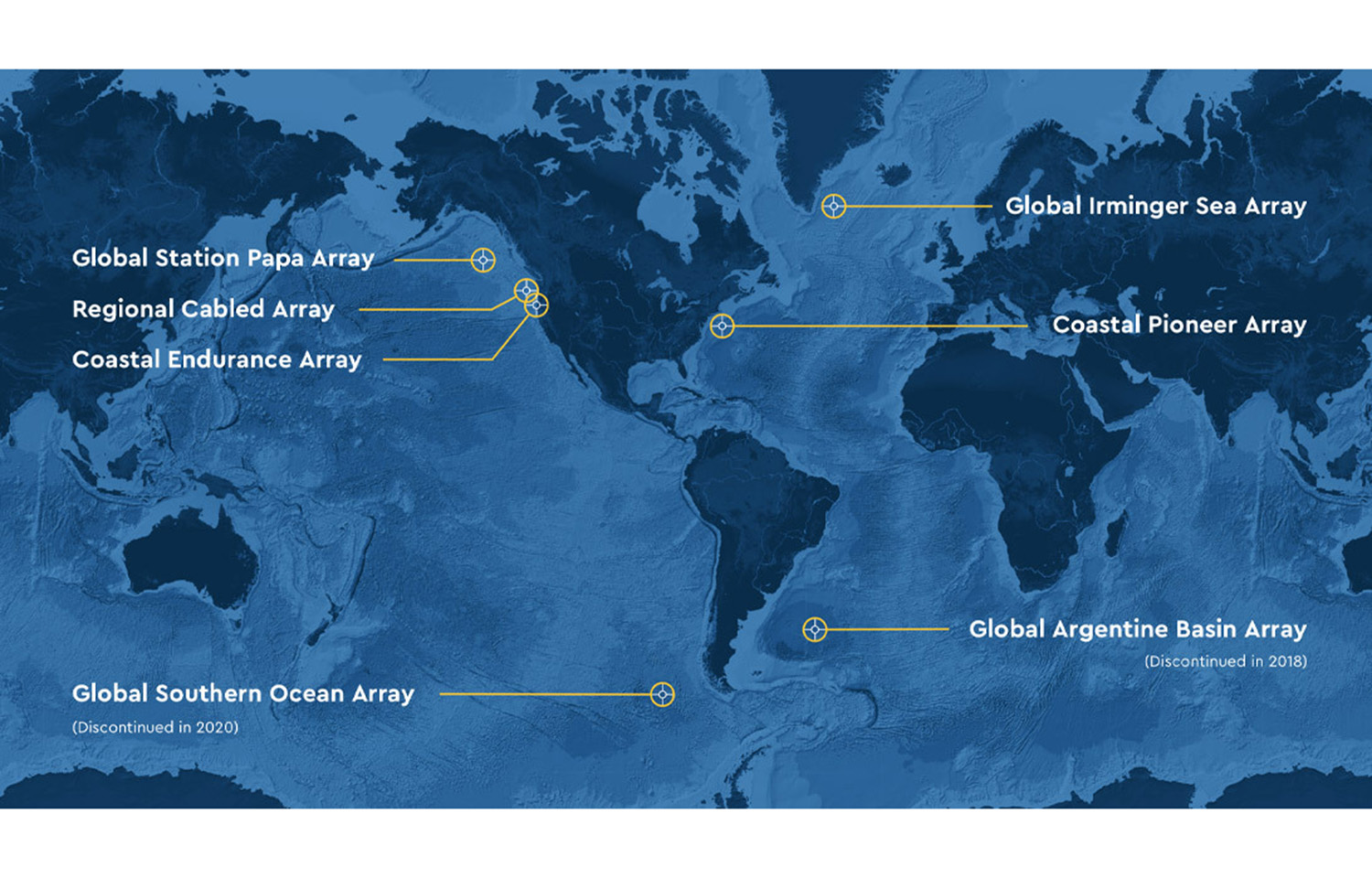
The Ocean Observatories Initiative (OOI) consists of six different underwater monitoring arrays that the U.S. National Science Foundation (NSF) said is the most advanced continuously-operated observing systems in the world. Using hundreds of different instruments, the arrays provide openly-accessible data to oceanographers, researchers, educators, and the public.
The network of instruments cost USD 368 million (EUR 316 million) to install, and the New York Times said the array cost roughly USD 48 million (EUR 41 million) each year to maintain.
The official announcement from the NSF said the plan for removal includes all in-water infrastructure from the Irminger Sea, Station Papa, Endurance, and Pioneer Arrays, “subject to ship scheduling and other operational constraints.”
“All recovered equipment will be retained by the operating institution pending further guidance from NSF,” the NSF said. “We encourage the community to use the ten-plus years of OOI data by including it in proposals, publications, presentations, and conversations with colleagues. Continued engagement demonstrates the scientific impact and wide-ranging applications enabled by the OOI and its data, underscoring its importance as a resource for the oceanographic community.”
The NSF offered a further update on the “descoping” of the project a few days later, clarifying that the descoping process is already underway at the Endurance Array, off the coast of the U.S. state of Oregon, and the removal of the Pioneer Array observing the U.S. East Coast is slated for June 2027.
“Over more than a decade, OOI has delivered the world’s most advanced continuously operating ocean observing systems, supporting science, engineering, education, and workforce development across the ocean sciences community,” Jim Edson, principal investigator for the OOI at NSF, said. “We are profoundly grateful for the extraordinary efforts of the scientists, engineers, operators, educators, students, and partners who made this facility possible and who continue to advance its legacy through the use of its data.”
Nonprofit groups called the Trump Administration’s decision to cancel the project a “devastating blow” to science.
“Walking away from a USD 368-million investment in a state-of-the-art system, a feat of engineering already paid for by the American people, is absolutely myopic,” Ocean Conservancy Associate Director of Scientific Initiatives Chris Robbins said.
Some of the stations have been instrumental in monitoring the Atlantic Meridional Overturning Circulation, also known as the Gulf Stream, which is an ocean current system that bring warmer waters from the tropics through the Arctic and into the North Atlantic Ocean. The current is largely responsible for the temperate weather in Europe and Iceland, and data shows the weakening of that current could cause declines in U.S. fisheries.
Ocean Conservancy also pointed out the monitors are being removed right as an El Niño cycle begins, limiting the ability of scientists to determine what impacts temperature changes will have on fisheries.
“This system is a vital scientific asset that quietly protects American lives, communities and the economy through unfettered access to world-class scientific data,” Robbins said. “Its loss would create an irreparable blind spot for our country in predicting earthquakes, fishery health, storm forecasting, coastal flooding and more. It just doesn’t make sense.”
