






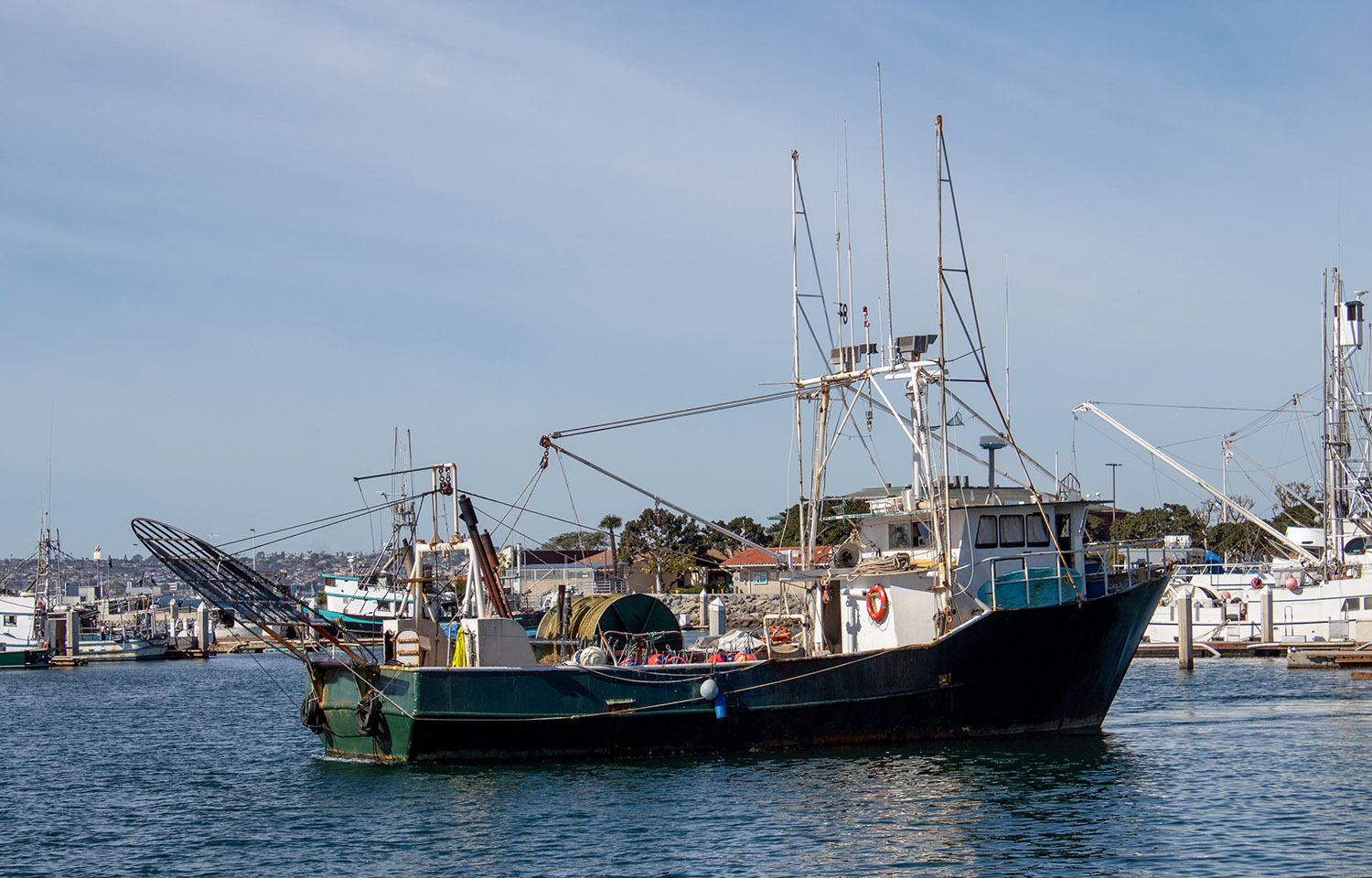
Lawmakers in the U.S. House of Representatives have once again introduced legislation to reauthorize and update the Magnuson-Stevens Act (MSA), the primary legislation governing U.S. fisheries.
Legislators say updating the MSA – which was last revised in 2006 – is critical to ensuring federal law reflects the challenges facing fisheries today.
“The ocean is the beating heart of our planet: it feeds us, regulates our climate, and supports coastal economies across the country,” U.S. Representative Jared Huffman (D-California) said in a statement. “But our oceans and fisheries are under mounting pressure from climate change, habitat degradation, and shortsighted management. We need to ensure our laws reflect the urgency and complexity of this moment. While some are focused on rolling back environmental protections and ignoring climate science, we’re doing the hard work to safeguard our oceans. That means using the best available science, listening to those on the frontlines, and making sure our policies work on the ground for the people and ecosystems that depend on healthy, sustainable fisheries.”
Huffman reintroduced the Sustaining America’s Fisheries for the Future Act alongside U.S. Delegate James Moylan (R-Guam) and U.S. Representative Ed Case (D-Hawaii). Previous efforts to reauthorize the MSA in 2020 and 2022 ultimately fell short, and a version of the bill introduced last year never made it out of committee.
Despite previous struggles to build wide support for the bill, the lawmakers behind the push maintain that it is critical to update federal law.
“MSA has been and will continue to be our main authority for establishing and administering responsible approaches and is overdue for updating to assure it continues to work into the next generations,” Case said. “This is especially important in our Pacific given increasing competition for the ocean’s resources and the corresponding danger that absent sound national and international policies will do irreparable harm unless we do an update to the MSA.”
Addressing climate change is a major focus of the reauthorization bill. The legislation would require regional fishery management council to consider climate change in setting priorities and planning and would create a climate-ready fisheries innovation program to develop tools for addressing climate change in fisheries.
The Sustaining America’s Fisheries for the Future Act would also increase the presence of underrepresented groups and communities when it comes to fisheries management. The bill would remove term limits for Tribal representatives on the Pacific Fishery Management Council and add two seats for Alaskan Tribes on the North Pacific Fishery Management Council. The legislation would also acknowledge the importance of subsistence fishing and ensure fishing communities are consulted on limited access privilege programs.
The bill also includes fisheries-related provisions sourced from other bipartisan pieces of legislation that have been introduced in recent years, such as a grant program to support working waterfronts.
The legislation has already received backing from nearly 20 fishing and conservation groups, including the Alaska Longline Fisherman’s Association, the Alaska Marine Conservation Council, the Aleut Community of St. Paul Island, the American Fly Fishing Trade Association, the American Saltwater Guides Association, the Cape Cod Commercial Fishermen's Alliance, the Center for American Progress, Earthjustice, the Environmental Defense Fund, the Maine Coast Fishermen’s Association, the Marine Fish Conservation Network, Monterey Bay Aquarium, the National Audubon Society, the Natural Resources Defense Council, Oceana, Ocean Conservancy, Pew Charitable Trusts, and the Tanana Chiefs Conference.
“We are grateful the changes prioritize investment in working waterfronts and fishermen-driven science,” Cape Cod Commercial Fishermen's Alliance Fisheries Policy Director Aubrey Church said in a statement. “We need an adaptive, flexible, forward-looking statute that allows American fishermen to continue to bring home seafood that is second to none and be more competitive in the global marketplace, as well as a management process that emphasizes fishermen’s voices and is nimble enough to meet the challenges of a rapidly-changing ocean and world economy.”
