





A bipartisan group of U.S. Representatives has re-introduced a bill in the latest bid to reauthorize the Magnuson-Stevens Act (MSA).
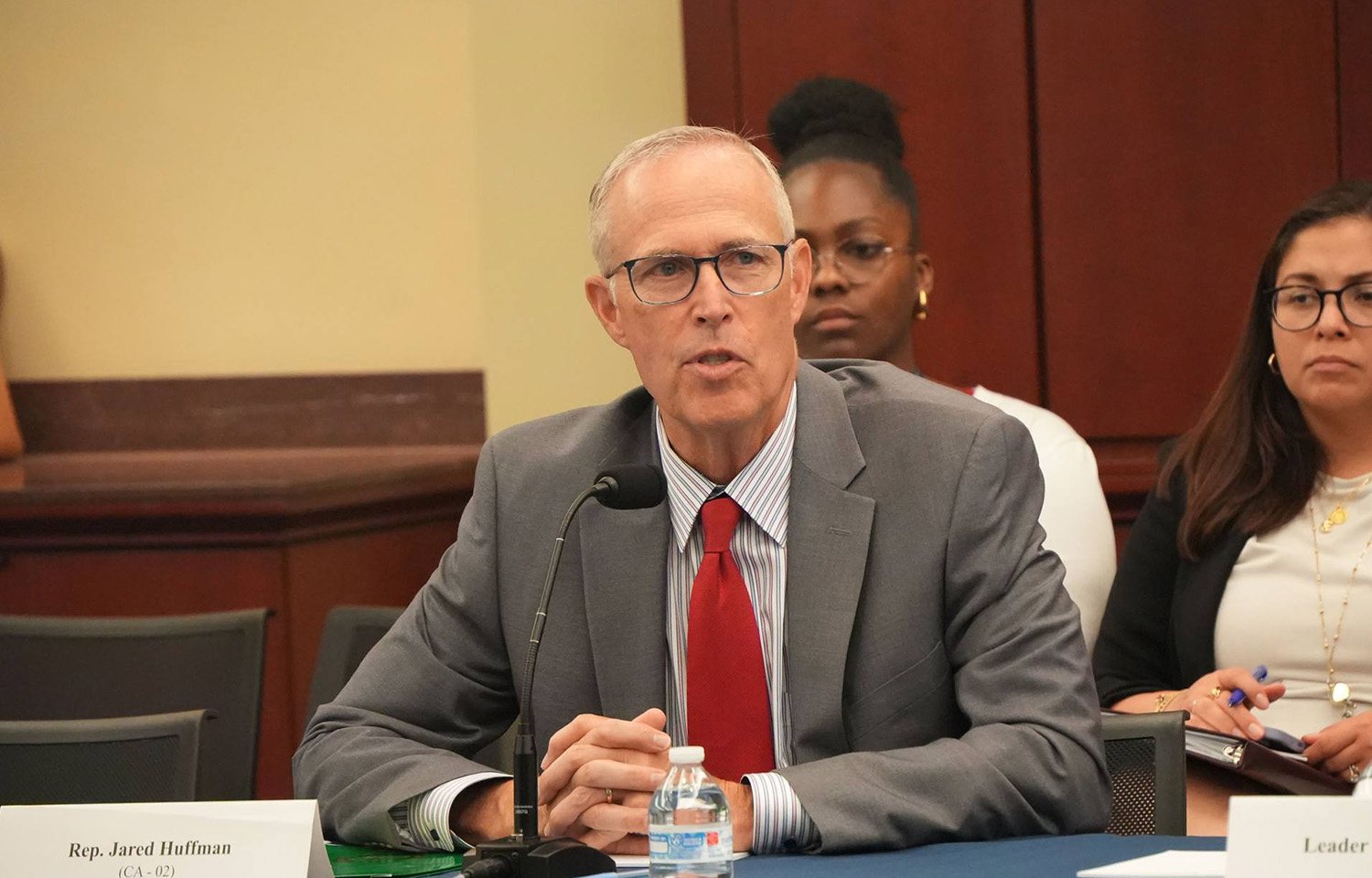
U.S. representatives Jared Huffman (D-California), who is the ranking member of the U.S. Natural Resources Subcommittee on Water, Wildlife, and Fisheries, along with Ed Case (D-Hawaii), Mary Peltola (D-Alaska), and U.S. Delegate James Moylan (R-Guam), reintroduced the “Sustaining America’s Fisheries for the Future Act” in a bid to renew the MSA – the law governing fisheries management at a federal level. The law was enacted in 1976 and was last reauthorized in 2006.
The new bill is the latest attempt over the past four years to reauthorize the MSA after similar efforts in 2020 and a recent effort in 2022 ultimately fell short. Huffman – who has spearheaded the MSA renewal efforts – said he has sought extensive stakeholder input in a bid to finally cross the finish line and update the MSA.
“Whether it’s the seafood we eat, time spent on the water as recreational anglers, or local economies supported by working waterfronts, communities coast to coast depend on healthy oceans and fisheries. Our main tool for managing these resources has been effective for decades, but new approaches are necessary in this era of climate change, technological advancements, and increasing ocean use,” Huffman said in a release. “Right from its inception, our process has been one of the most deliberative, transparent efforts to reauthorize the MSA.”
Huffman told SeafoodSource that the latest bill is similar to past ones but that he and his colleagues have continued to work on refining the bill since it failed to make it through Congress in 2022. He also added that reauthorization is a higher priority in the face of the recent Supreme Court decision that overturned the Chevron deference, which is likely to upend how regulatory authority can be used by federal agencies like NOAA.
“I think we’re all trying to assess what this Supreme Court decision means for federal fisheries management. So much of it depends on regulations and things that happen on the implementation side by people other than Congress," Huffman said. “So, that is probably yet another reason why we need to get Magnuson reauthorized and, if necessary, clean up any gaps created by this new ruling.”
As part of gathering stakeholder input, Huffman and Case performed a nationwide listening tour, heard from 80 different experts on topics ranging from climate change to modernizing data systems, and took public comments both in person and online.
“It is long past time for us to modernize and update MSA,” Peltola said. “Alaskans know how important it is to keep our fish stocks healthy, and I want to thank Rep. Huffman for his continued leadership on this issue.”
Work on MSA renewal stalled in 2022 with the death of long-time U.S. Rep. Don Young, an Alaska Republican who worked with Huffman on MSA renewal. That work restarted once Peltola took Young’s place in Congress.
Despite the renewed efforts, Peltola said in 2023 that the reauthorization had a slim chance of becoming law.
Huffman also said that renewal will be challenging.
“Hope springs eternal, but this is the least-productive Congress in American history," he said. "I don’t think people are holding their breath for this Congress, but the election is a few months away; we will have a chance to do this, I am sure, at some point. I hope it’s next year, and it’s good to have a bill that is ready for that moment.”
The MSA renewal process has also faced criticism from the seafood industry. In 2022, over 150 fishing companies and a coalition of groups representing the sector including the National Fisheries Institute (NFI), National Restaurant Association (NRA), National Retail Federation (NRF), and National Council of Chain Restaurants (NCCR) came out against the most recent renewal attempt – which at the time was labeled H.R. 4690.
“We believe enactment of H.R. 4690 would harm American seafood consumers by constraining supply, raising consumer prices, and exacerbating the supply chain uncertainty that continues to undermine the food industry,” they said in a joint statement.
