





Increased shipping costs and U.S. tariffs on imports have caused challenges for seafood firms across the globe.
Jacksonville, Florida, U.S.A.-based BSF, which rebranded from Beaver Street Fisheries earlier this year, is no exception and made the decision recently to become one of the latest firms in the sector to pass along fuel surcharges to buyers.
“Due to the cost of containers from around the world to Florida, we had the introduction of fuel surcharges for the very first time in our company’s history,” BSF Executive Vice President Mark Frisch told SeafoodSource. “The freight lines are putting it on us. Our margins are getting crushed, and it does not have anything to do with seafood prices.”
Frisch explained the company is in the early stages of rolling out the fee, which will be set up as a separate line item on invoices.
“We want to be clean and transparent,” he said.
BSF’s decision comes after U.S. food distributors such as Sysco began adding fuel surcharges in March due to the higher cost of shipping perishables. Similarly, Japanese seafood firm Nissui recently announced it would raise shipping prices anywhere between 2 and 30 percent on multiple household goods starting 1 September due to rising costs.
Simultaneously, BSF has encountered challenges in receiving USD 10 million (EUR 8.8 million) worth of refunds on U.S. tariffs it has paid.
BSF, along with several other seafood suppliers, sued the U.S. government to be reimbursed for tariffs they have paid since they were first implemented last year, and though U.S. President Donald Trump’s tariff program was deemed illegal by the U.S. Supreme Court in February, his administration has continued to file oppositions to tariff refunds in court, holding up the refund process for such firms as BSF.
“We were unable to pass these tariff costs 100 percent on. We took a severe hit to our margin,” Frisch said.
He confirmed BSF has started receiving some refunds but has “yet to get to a seven-figure amount of refunds received.”
“I am hopeful and expect to receive the full tariff amount,” Frisch said.
In addition to those losses, inflation is impacting both BSF’s retail and foodservice business in the U.S.
“Our volume is challenged. Because seafood is often thought of as a higher cost or special occasion, when there are challenges in the economy and there is uncertainty, the shopper and diner are more mindful about where they are spending their money,” Frisch said.
Despite all of the economic speed bumps BSF has encountered, the company continues to set its sights on future growth.
The company’s rebrand earlier this year aimed to rectify perception issues the firm believed it was encountering. Its previous brand identity implied it was still a primarily local operation, the company said in a release in March, and it wanted to showcase through the rebrand that it has grown from a regional seafood wholesaler in Florida to national distribution with an international sourcing network, importing products from suppliers in more than 52 countries.
"When customers are making careful seafood sourcing decisions, perception matters," Frisch said at the time. "If a company cannot communicate capabilities, sourcing expertise, and operational competence, it can create barriers.”
BSF has also brought in a new research and development team this year to develop new products for market, along with executives in human resources, IT, and finance.
Elsewhere, the company is making a “big investment” in artificial intelligence, according to Frisch, who declined to elaborate.
“We are leaning into it in a big way. I’m all about what it can bring to us and the industry as a whole big investment for us,” he said.
The company has also exhibited at shows to promote their wide range of products, including at the international Deli Dairy Bakery Association (IDDBA) event held 7 to 9 June in Orlando, Florida. At the event, BSF aimed to encourage more grocery deli departments to feature seafood.
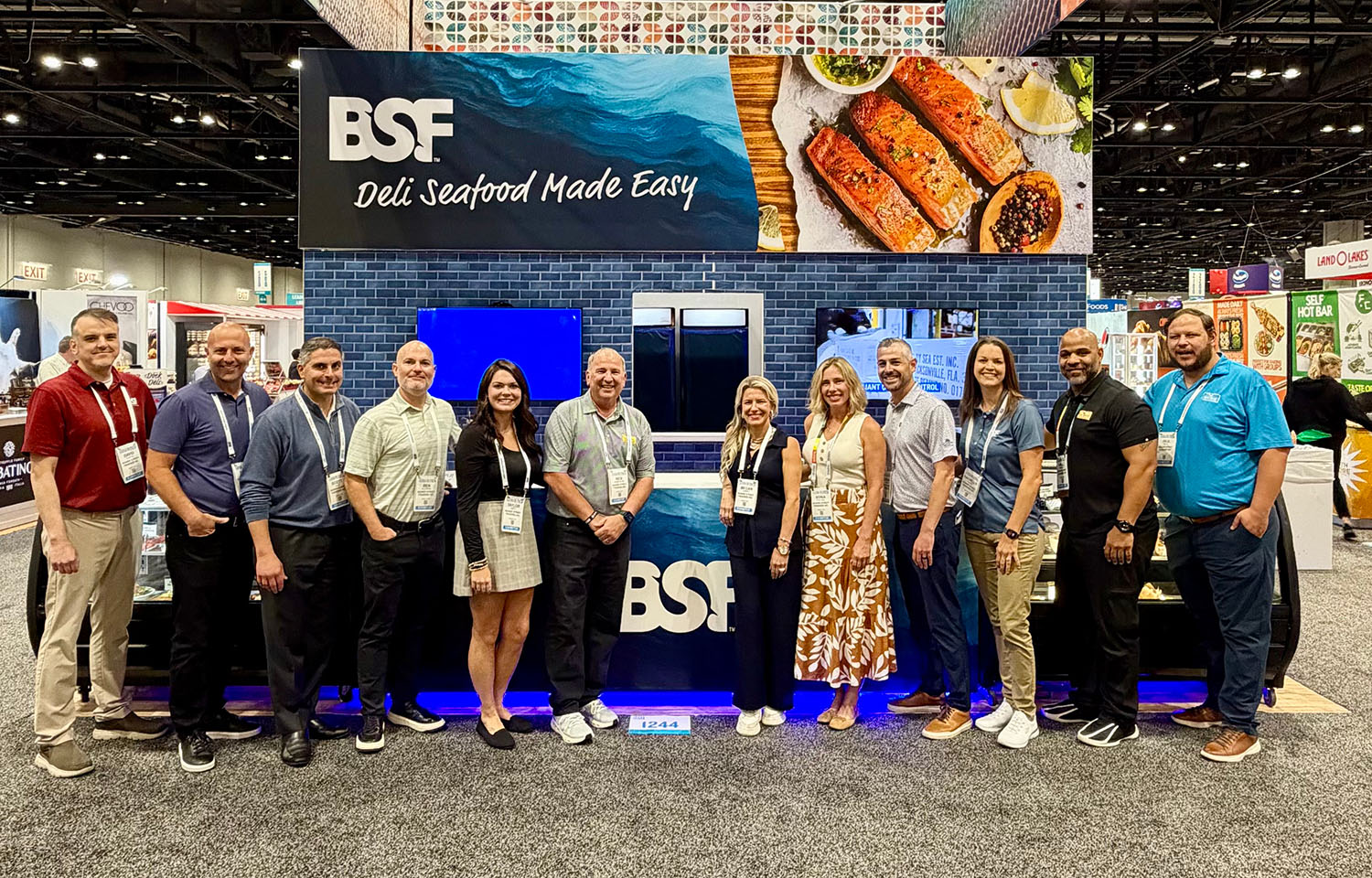
“As the supermarket becomes like a takeout experience rather than going to a restaurant for takeout … there is more demand for seafood being sold in an environment like that,” Frisch said, pointing to IDDBA research that found 28 percent of shoppers now buy deli-prepared foods as a restaurant substitute, up from 12 percent in 2017.
Grocery shoppers are time-crunched, Frisch said, and are more likely to buy a full meal with a salmon fillet, potatoes, and vegetables that they can quickly heat in the oven over buying the three ingredients from a grocery store separately.
To that end, BSF showcased a take-and-cook family meal solution from the cold case and a breaded seafood trio meal deal designed to bundle with existing deli sides at IDDBA. It also demonstrated a tuna ceviche concept, “demonstrating what a grab-and-go cold seafood program can look like when it’s built around flavor, freshness, and easy deli execution,” BSF said.
