

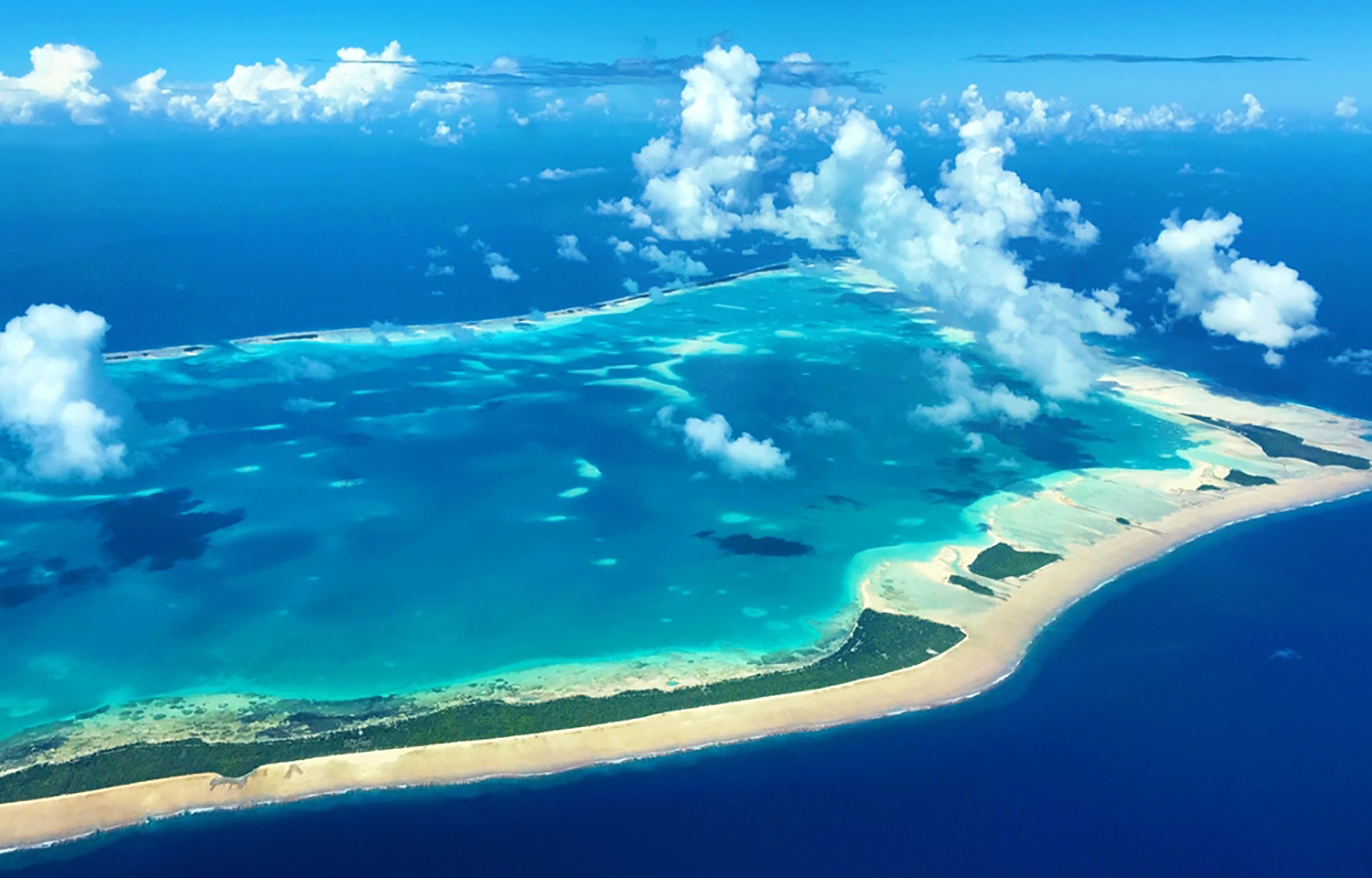
In April, the administration of U.S. President Donald Trump issued an executive order allowing commercial fishing from 50 to 200 nautical miles off the shore within the Pacific Islands Heritage Marine National Monument.
The national monument was founded as the Pacific Remote Islands Marine National Monument in 2009 under President George W. Bush and then expanded in 2016 under President Barack Obama.
Obama’s expansion entailed barring commercial fishing from taking place in the monument between 50 and 200 miles offshore. Trump’s order effectively reverses the expansion implemented under Obama.
In response to the order, three conservation groups – EarthJustice, the Conservation Council for Hawai‘i, and the Center for Biological Diversity – have sued the administration, claiming Trump’s proclamation, as well as the subsequent government efforts to carry it out, violates the Antiquities Act of 1906.
“President Trump’s proclamation threatens to destroy one of the world’s last healthy and wild ocean ecosystems. Commercial fishing would remove large numbers of fish, sharks, turtles, and other marine life as both intended catch and unintended bycatch. This would completely disrupt the underwater ecosystem and wreak havoc on the food chain. Many of these creatures and areas are culturally important to the people of Oceania, for traditional and modern navigation, and as a valuable food source,” Conservation Council for Hawai‘i Executive Director Jonee Peters said in a statement.
In his order, Trump disputed claims that the move would hinder sustainability efforts in the national monument.
“I find that appropriately managed commercial fishing would not put the objects of scientific and historic interest that the [monument] protects at risk,” Trump said in the proclamation. “With respect to fish in particular, fisheries in the region are effectively managed by the National Marine Fisheries Service and the Western Pacific Regional Fishery Management Council [WPRFMC].”
Similarly, the WPRFMC has consistently questioned the conservation benefits of restricting fishing in the area, going back to Obama’s original proposals for expansion.
“The areas covered by the monument are important for the region’s longline and purse seine fisheries, which were already pushed out of valuable fishing grounds with the original 2009 Pacific Islands Remote Marine Monument designation,” the council said in a 2014 statement deriding plans for expansion.
Now, the WPRFMC has released a statement clarifying the impacts and scope of Trump’s proclamation, highlighting that it applies specifically to three islands – Wake, Johnston, and Jarvis – located near the Marshall Islands, Line Islands, and south of the Hawaiian islands. According to the WPRFMC, the proclamation does not alter fishing restrictions around the main Hawaiian islands nor the Northwestern Hawaiian islands.
It also emphasized that the 0- to 50-mile area remains protected in the monument and encompasses important lagoons, reefs, and unique ecosystems of the islands.
“These areas are well beyond the reach of fishing gear or shallow, reef-dependent species. U.S. fishing activities targeting migratory tunas occur near the surface, [at a maximum depth of around 1,300 feet], using gear such as deep-set longlines, which do not contact the seafloor or sensitive habitats,” WPRFMC Council Executive Director Kitty Simonds said.
The council explained that the 50- to 200-mile areas in the monument are deep, open-ocean zones, often ranging from 3,000 to 19,700 feet in depth, and cited 2022 research finding that open-ocean closures offer no effective conservation of highly mobile species like tuna and other pelagic fish.
Additional research in 2024, which WPRFMC cited, showed weak evidence that the establishment of the Papahānaumokuākea Marine National Monument, which covers islands and atolls off the Northwestern Hawaiian islands, aided in creating more tuna abundance and no benefit that it benefited the neighboring fishery.
The WPRFMC, as well as Trump’s order, additionally highlighted that there are multiple existing laws to properly manage and care for the monument’s unique habitats, vulnerable marine species, natural resources, and ecosystems. Therefore, the prohibition that was in place on commercial fishing from 50 to 200 miles offshore was viewed as unnecessary for effectively managing the area, the council said.
Pacific Island communities that rely on fishing for their livelihoods have also pushed back on the creation of national monuments that restrict fishing activity.
When former President Joe Biden attempted to expand the monument boundaries even farther – covering an area of 770,000 square miles – and designate it a national marine sanctuary, Commonwealth of the Northern Mariana Islands Governor Arnold Palacios asked Biden to consider the impact it would have on small communities who rely on fishing.
“It really is about communications, respect for each other, respect for what we represent, and respect for federal and regulatory agencies,” Palacios said in 2023. “Government policies have profound impacts on small communities. I am not opposed to conservation and management measures—that is the purpose of the Council. But we need to start talking, respecting, and considering the consequences of our decisions.”
Similarly, American Samoa Department of Marine and Wildlife Resources Archie Soliai Chair said federal actions have been done “without consultation of our Pacific communities and are very disrespectful.”
“Where is the environmental justice and equity that this administration has prioritized?” he said.
