



A plan by a Danish company to install a salmon aquaculture operation in the Falkland Islands has some of its residents calling for a referendum on the practice.
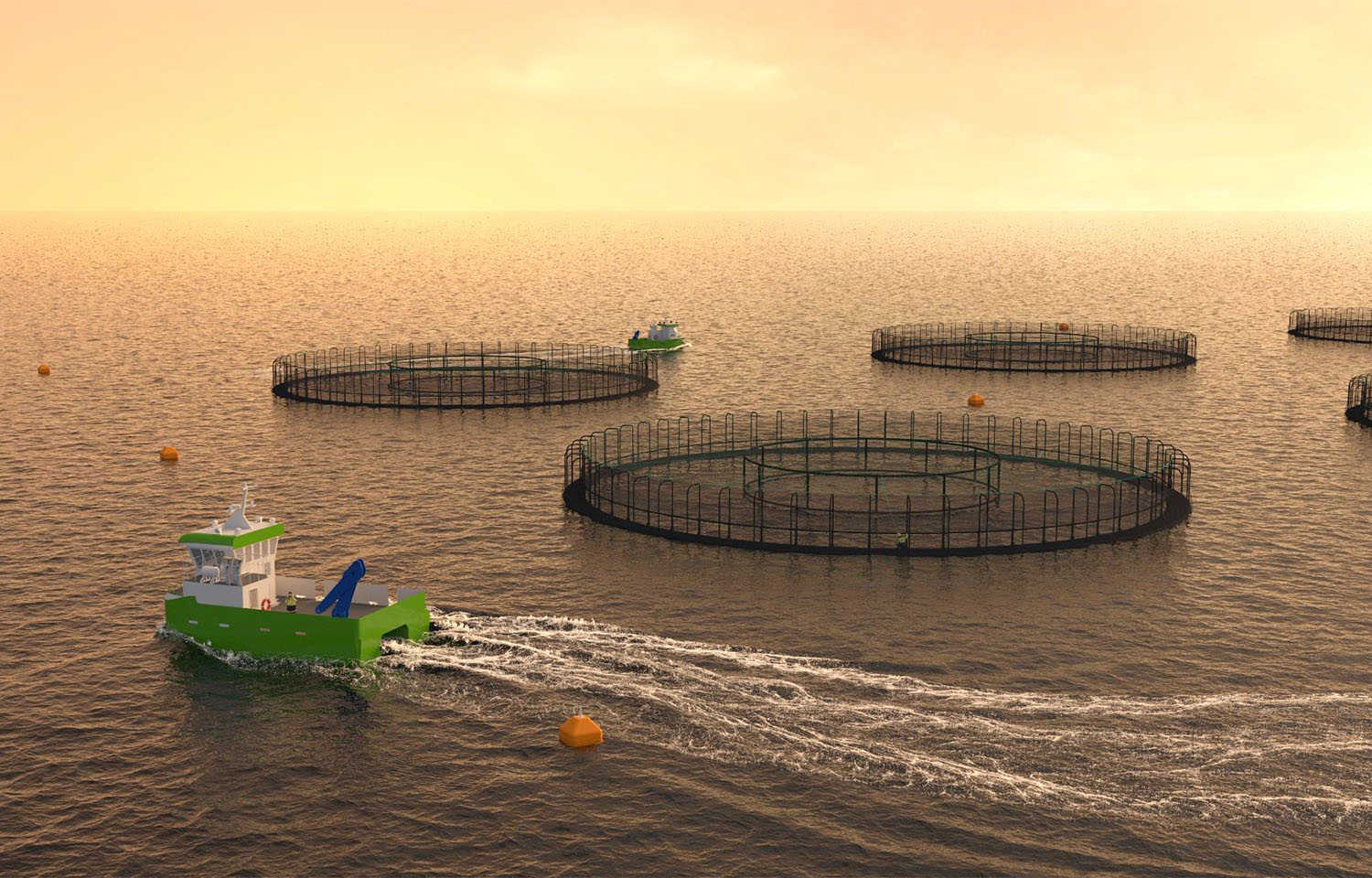
Unity Marine, a company with operations in the Falkland Islands that is headquartered in Denmark, has floated a potential salmon aquaculture operation off the remote territory's coast. The latest version of the plan, v.2.1., said the company is targeting annual production of up to 50,000 metric tons (MT) of Atlantic salmon.
“If the proposed schedule is followed, the company will initiate construction on the islands in 2027, commence production in 2028, and harvest the first fish in 2031,” the company’s plan states. “The steady state production target of 50,000 MT of salmon can be achieved in 2032-2036 depending on the speed at which each phase of the project is implemented.”
The company said it has already carried out extensive on-site investigations through multi-week sea surveys and land-based site investigations, finding that the Falkland Islands are “ideally suited for salmon farming.”
“The company has screened 30 suitable marine sites for salmon farming surrounding East Falkland,” the company said. “The current plan is to utilize 16 of these sites. It is believed that there are many additional suitable sites surrounding the Falkland Islands around both East and West Falkland.”
That proposal has resulted in heavy pushback from some residents of the islands, which has a population of just 3,500 people. Salmon Free Falklands (SFF), a group formed in 2020 to push back against salmon farming, claims that so far, the process for reviewing the project has been skewed toward industry and lacked clarity. The Falkland Islands government (FIG) opened a public consultation on 7 August that will run until October, but the organization has sharply criticized the effort and called for more action, including a referendum.
The government has publicly acknowledged that it does not yet have a comprehensive regulatory framework for salmon farming and that it lacks a means of response to Unity Marine’s proposal.
“If, following the consultation, the Executive Council decision is to allow salmon farming, FIG would first need to develop and adopt a complete regulatory framework before any applications could be accepted for formal review,” a letter from Falklands Islands Director of Natural Resources James Wilson said. “Such a framework may require, among other things, detailed environmental impact assessments and socioeconomic impact assessments related to specific projects. Any future applications would be reviewed and verified by FIG and external experts as appropriate.”
SFF has criticized the consultation, saying it does not go far enough to address issues, is biased in favor of the salmon-farming industry, and that it still leaves the decision out of the hands of the public.
“In response to an enquiry from SFF regarding how FIG would decide whether or not salmon farming should go ahead, James Wilson replied, ‘The key point to stress is that a public consultation is not a vote but a way of seeking public feedback on proposals,’” SFF said on its website.
SFF said the country’s own executive council has agreed in the past to take steps against salmon farming, and it became an election issue for the region. In particular, its 2021 general elections saw salmon farming become a major campaign issue, with every elected candidate either expressing skepticism or outright opposition to salmon farming near the islands.
“In March 2022, directly following the receipt and scrutiny of the report by the consultancy firm MacAlister Elliott & Partners Ltd (MEP), Executive Council agreed to recommendations that effectively put a stop to salmon farming in Falklands waters while explicitly not banning any other form of aquaculture,” SFF said.
In 2023, Unity Marine took the government to court over its ban, and according to SFF, the company and the council “held negotiations behind closed doors” over the issue.
“The result of these behind-closed-doors negotiations is that ExCo’s decision against salmon farming was quashed,” SFF said.
SFF is calling for a full referendum on the issue, rather than the public consultation, to allow its residents to decide whether salmon farming is appropriate for the Falkland Islands.
Unity Marine Managing Director James Wallace told SeafoodSource in 2025 the project could benefit the region’s economy and that its discussions with residents found a mix of support.
“Our recent discussions with stakeholders reflected a cross-section of local sentiment, with some vocal opposition countered by a more traditional Falklands outlook, which sees natural resources, used responsibly, as the lifeblood of our remote nation,” Wallace told SeafoodSource. “It's deeply disappointing that some of our leaders continue to be influenced by activist outrage and hostile media pressure. The government now has a responsibility to inform itself properly and act on facts, not fear.”
