






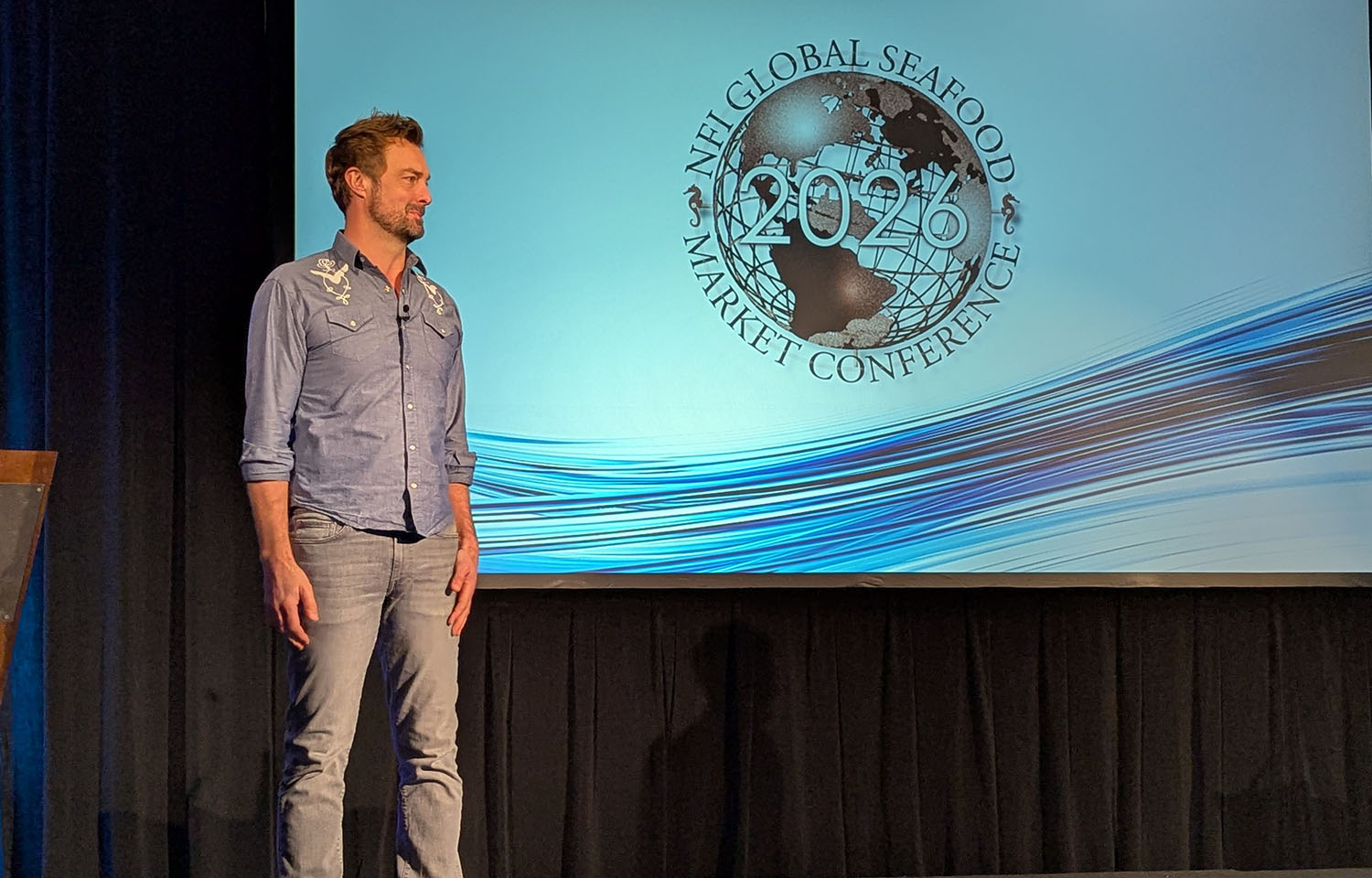
Chef, sustainability advocate, and self-described seafood evangelist Barton Seaver has a mission for the seafood industry: Demand a presence at the table as culinary trends shift.
Seaver, who delivered the keynote at the Global Seafood Market Conference in Hollywood, Florida, U.S.A. said his current mission in life is to make sure seafood is a part of the shifting trends in restaurants and get more people across all demographics eating seafood.
“The culinary world is changing. It has changed over the last 20 years, but we haven’t been in the room while it has,” Seaver said during his 21 January presentation.
Those changes are in how the world approaches what is considered “fine dining,” he noted, and food worth celebrating has shifted from where it was.
“When I was going through culinary school, it was center of the plate protein, continental European cuisine, French and Italian. That’s what we learned; that's what fine dining was. If you look at the Michelin ratings, they gave stars to French and Italian restaurants. You look at James Beard Awards, who did they award? White men cooking European food – that’s it,” Seaver said.
Those awards are now given out to global cuisines rather than to continental European food, with taco stands, street food, and small restaurants that are very different the traditional idea of “fine dining” getting recognition.
“It’s a democratization of food culture, and that is a very positive thing. And in most of those cultures, center of the plate is not how menus are formulated,” Seaver said. “When these conversations have been happening, whether it’s in the culinary schools, whether it’s at conferences, whether it’s at United Nations, whether it’s at congress, seafood hasn’t necessarily been at the table.”
Seaver said during his own training as a chef, seafood was only a footnote compared to the large focus on beef and other products.
“Chefs don’t have the confidence to see seafood as their preferred protein,” he said. “We’re not really taught seafood. We learn everything about braised beef, ground beef, steak beef, the difference between fillet and strip and all this stuff. You exit culinary school with a very good understanding of meat. You cut one salmon in the two years of your culinary school and you use that piece of salmon to learn how to sauté.”
Seaver said he’s been working to change that in a variety of different ways. One of those is a publication dubbed “Seafood and the menu” that functions as an insert in “Flavor & The Menu,” a foodservice-focused publication distributed to thousands of chefs.
To build on that, Seaver also created Seafood Literacy, which helps train cooks in how to cook seafood so that a chef with new ideas for a menu can have the support needed to actually make it a reality on customer plates.
“We’re trying to universalize the language in a culinary culture where seafood is just a fluency – seafood literacy,” Seaver said.
His latest effort, “The Blue Food Cookbook,” co-authored with celebrity chef Andrew Zimmern, was also an attempt to gets seafood’s sustainability story in front of more audiences.
“The impact of this book has been astounding,” Seaver said.
He said 684 stations aired interviews related to the book, reaching 84 million people. Millions more saw segments on Good Morning America and Access Hollywood about it.
“The message is beginning to get out,” Seaver said.
As the message begins to reach more people, there are additional opportunities to make sure that message is reaching people in the right way, he said. The industry needs to meet people where they are, especially when it comes to chefs and fine dining establishments that can drive food trends.
“What we haven’t done is said ‘Chef, what matters to you?’ listen, and then repeat back at her why in her own words seafood is something that she can use to accomplish that,” Seaver said.
He said he is actively working with Restaurant Associates, a division of Compass Food Services, to begin working on ways to do exactly that. Restaurant Associates works with companies like JP Morgan, Amazon, and Microsoft to provide food at company headquarters.
Seaver said he has built a “seafood that matters” campaign featuring one or two seafood species, and educates those culinary professionals on what makes that species unique or impactful – whether that be sustainability, innovation, or the heritage it has. The program started with Riverence trout as an example of a company providing a good seafood product in a sustainable way.
“We did recipe contests, We brought chefs out to there. We made it a personal experience, and guess what? Thousands of pounds got moved,” Seaver said.
Seaver said front of the house training, back of the house training, videos, recipe suggestions, and more all helped gradually get chefs thinking more about how to utilize seafood in their menus. While there was initial reluctance in the program, it eventually became enthusiasm.
“By month three, chefs were like ‘What’s next? Let’s do two species this month!’ We menued seafood more often, more pounds of it, and it became now something that Restaurant Associates sees as a competitive vantage place in the market,” Seaver said.
Seaver said he wants the seafood industry to be a part of the continued effort and that the time is now to work together to build momentum for positive messaging about seafood.
“We need to show up with the positive narrative,” Seaver said. “The current is here to begin to push this industry forward, and we need to take advantage of that.”
