



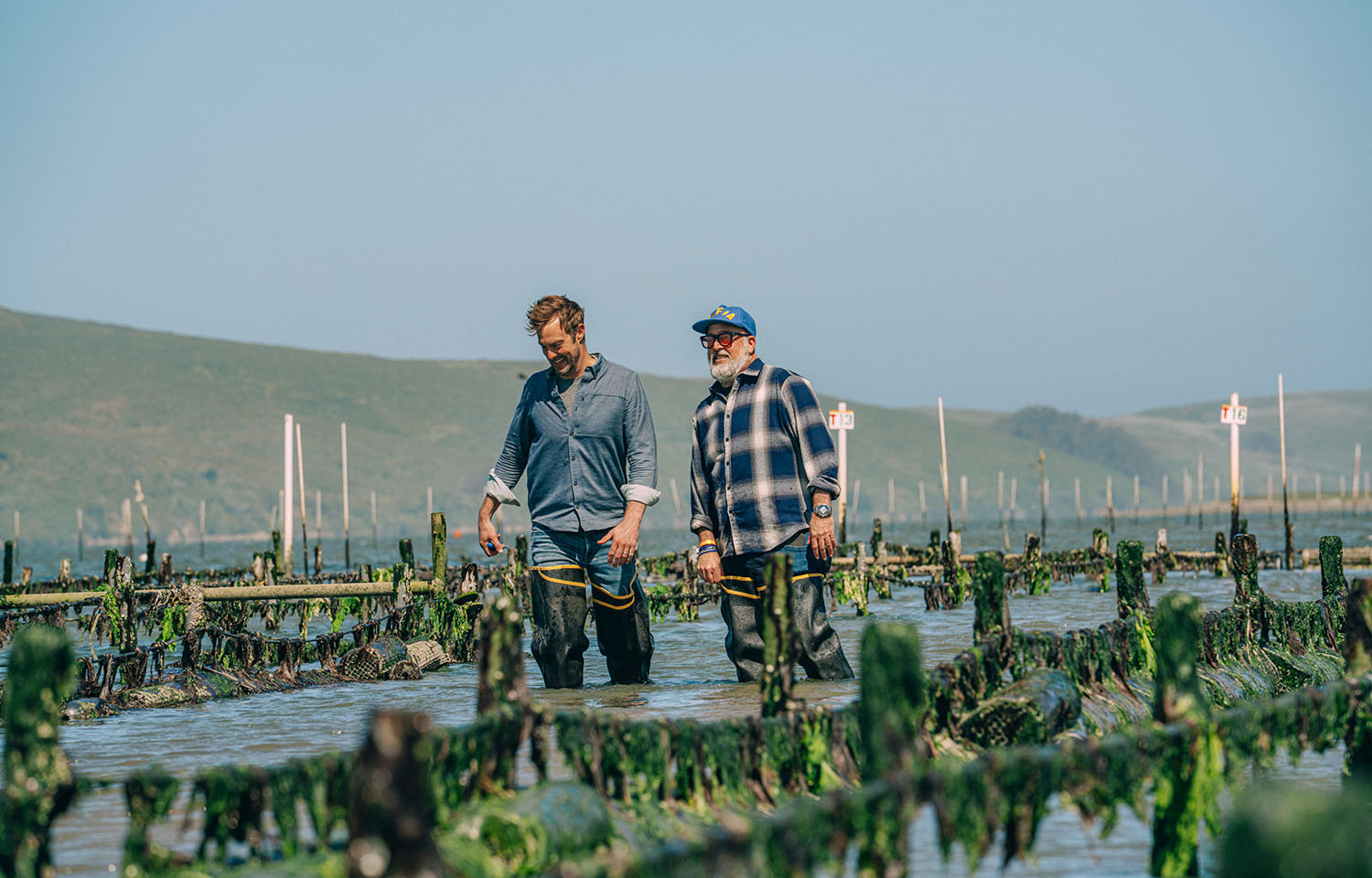
Andrew Zimmern fell in love with seafood nearly 60 years ago on the shores of New York.
Growing up, Zimmern – a chef, James Beard Award winner, and Emmy-winning TV personality – spent several months a year on the ocean and, throughout that time, enjoyed everything it had to offer, including its seafood.
“I’m the product of my parents, and they clammed and pulled mussels out of the jetties and threw a line in the water for striped bass,” he said. “We didn’t call it foraging. We didn’t apply anything other to it than the fun of collecting one’s own food.”
Zimmern said since then, he has spent a lifetime as a lover of food and of seafood and got his first job ever in a restaurant on Long Island cooking seafood at 14.
Now, at 64, Zimmern said his viewpoint on seafood has evolved over the years, and he got involved in advocating for the industry after Jennifer Bushman – a strategic development consultant for the seafood industry who has worked with several major brands and is a co-founder of the “Hope in the Water” documentary series – sent him some farmed salmon.
“That kickstarted our relationship – and my interest in aquaculture – and the result of that relationship was the production of ‘Hope in the Water,’” Zimmern said.
Zimmern produced the show with his production company Intuitive Content, and during the development of that show, Bushman and Zimmern talked about writing a standalone cookbook that could tell similar stories to “Hope in the Water” but that also stood on its own as a source of both information and recipes. As those discussions evolved, Bushman tapped into the expertise of Barton Seaver, a chef, seafood sustainability advocate, and author of several books related to seafood including “The Joy of Seafood” and “American Seafood: Heritage, Culture & Cookery from Sea to Shining Sea.”
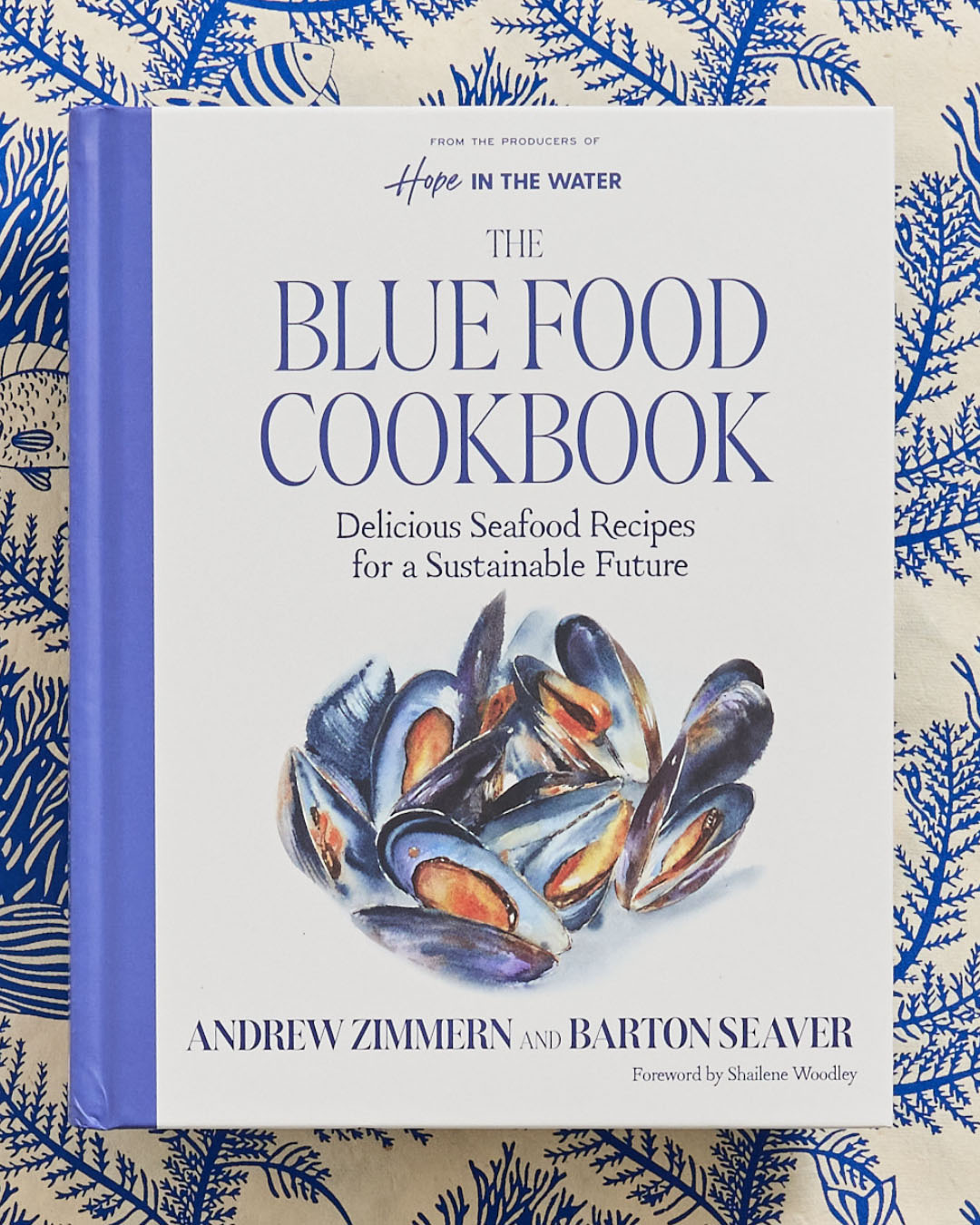
Seaver said “The Blue Food Cookbook” – which was released on 28 October – that resulted from those discussions and months of hard work serves as a means of showcasing what seafood can be to the public.
“Seafood needs a little bit of handholding; it needs champions. Despite the fact that Andrew and I, Jennifer, and others have been champions for a while, we need to keep building new stages to keep giving the same message,” Seaver said.
Seaver said the seafood industry has evolved over the decades he, Zimmern, and Bushman have been involved, as enormous effort from stakeholders the world over has focused on improving it in terms of sustainability to the point it’s now capable of being used as a way to solve other global challenges.
“The time is now for a new platform, a new stage, from which to proudly champion and give permission to people to fall in love with seafood in ways that matter to them,” Seaver said. “Every message needs a messenger, and what messenger is better than Andrew. So, I’m thrilled and proud to be invited into his ecosystem and thrilled to see what we can accomplish through this.”
Seaver said the book is meant to be an approachable, friendly overview of the world of seafood that can give consumers confidence in their ability to select and cook seafood.
“Once people become familiar, comfortable, confident, and competent at the seafood counter, great. They’re hooked; we got them,” Seaver said. “We know that the results are going to be self-fulfilling. Once you fall in love with a piece of salmon that you’re comfortable cooking and you’ve got a couple dishes under your belt, it’s now in your repertoire, and that’s the real victory – creating this intrinsic motivation but also that confidence and competence.”
Zimmern said confidence is the top goal above all others with The Blue Food Cookbook.
“That includes confidence in understanding how to buy seafood, where to buy seafood, and how to store seafood because you hear disparate answers everywhere,” Zimmern said. “I would hope that they read common-sense language that makes sense in this book. I would want them to be more confident in the kitchen cooking seafood, the result of which would be eating seafood more often.”
Confidence can also come in the form of being courageous and comfortable enough to ask questions of staff at the places providing seafood and of other people who may know more about it. Zimmern said “The Blue Food Cookbook” was written to inspire that confidence through telling the story of the seafood industry and the products and recipes that occupy it.
“I think and have thought for the last 20 years we can do so much through the stories around the water and the food that comes from it, much more so than we can from land-based agriculture or animal raising because a lot of those stories have been told,” Zimmern said.
Despite years of effort, modern consumers can still be confused by seafood and can shy away from it, Zimmern said, especially amid confusing and sometimes conflicting information or major headline news stories like the recent recalls of shrimp related to radioactive material.
“One week it’s radiation, and the next week it’s plastics in fish. It’s unbelievable. ‘Hope in the Water’ was designed as a narrative and a set of stories told by people in their own words who had solutions to waterborne problems that would allow us to protect our water systems while, at the same time, producing out of them,” he said.
Seaver said there’s a lot of worthy discussion to be had about seafood and its problems, but a lot of that discussion is still tied to outdated views of how the industry operates.
“We live in a soundbite culture, and the story of seafood soundbites, though manifesting on a current topic, are based on legacy biases,” he said. “A lot of these things are these foundational, legacy biases that continue to mire the conversation, even the good conversations about seafood.”
“The Blue Food Cookbook” is meant to be a reset button that brings those discussions into the modern context in which they exist, Seaver said.
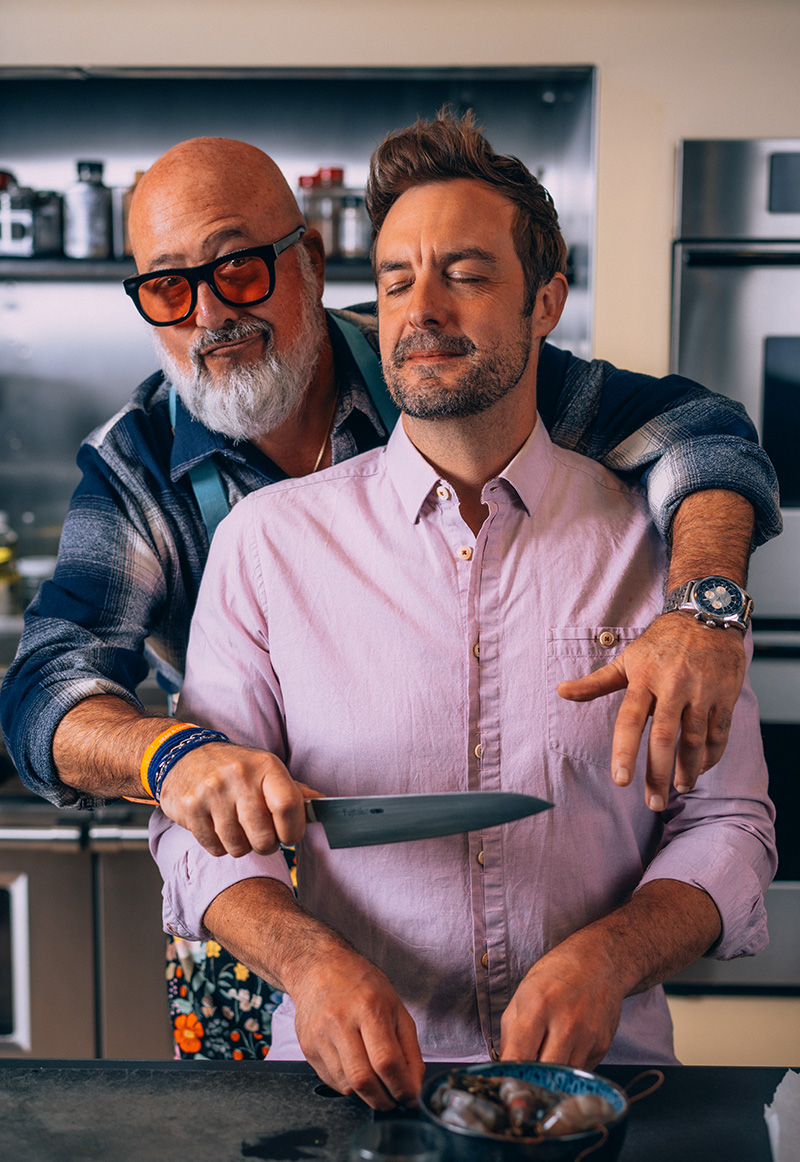
Outside the 100-plus pages of information about the industry, “The Blue Food Cookbook” also simply serves as a great cookbook, Zimmern said, with 104 recipes for all types of fish.
“I couldn’t be prouder of it. I’m thrilled with the way the book looks and the way it reads,” he said.
Photography for the recipes in the book was done by Eric Wolfinger, a two-time James Beard Award winner, and hundreds of retailers have picked up the new book, which released on 28 October. HarperCollins has called it a “once-in-a-decade” title, and it has upcoming features scheduled in The New York Times and Food & Wine Magazine.
Bushman said the cookbook was created through the help of a whole team of support, and the hope is that it can break through the publishing space, which often shies away from seafood-focused publications.
“This is an unbelievable best-in-class team with all of the best intentions. That’s really what this book means to all of us,” she said. “You don’t put all of this time and effort nor donate all of your time and effort to a project like this if it isn’t really because you feel like you’re building a narrative that’s a cause for the common good.”
