





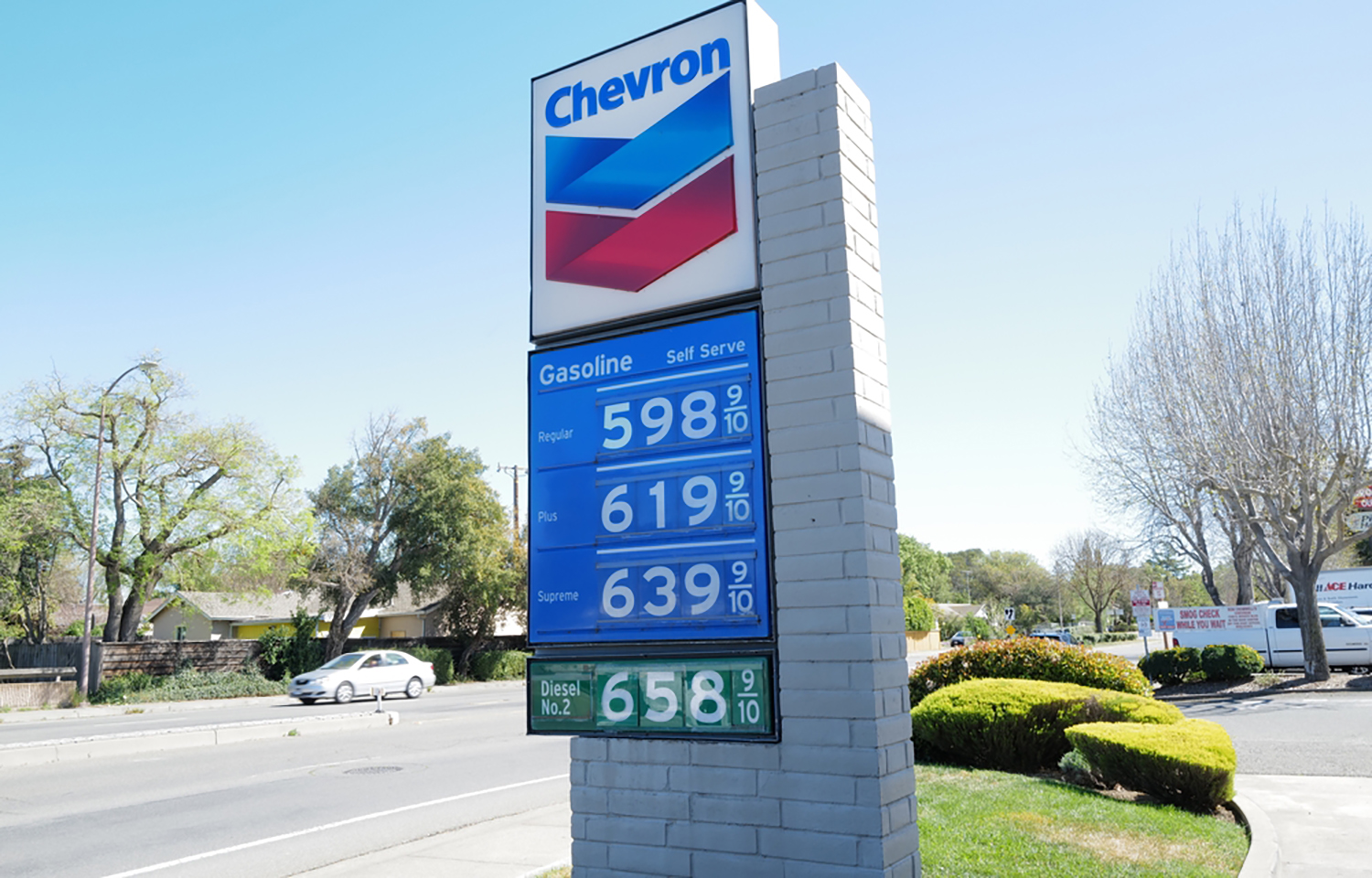
Americans are feeling the effects of higher gas prices across the U.S., which hit an average price of USD 4.16 (EUR 3.55) per gallon for the week of 6 April.
As a result, many are deciding to cut back on trips to restaurants, worrying an industry that is already dealing with a wide range of pressures, such as shifting trade and immigration policies and rising operational costs like labor, food, insurance, and energy.
“The majority of consumers are affected by higher gas prices and are already seeing it affect their discretionary income. As a result, they have already started to cut back on trips to restaurants, and I would expect traffic declines to increase as well as check averages,” FoodServiceResults CEO Darren Tristano told SeafoodSource.
Citing Black Box Intelligence data, Restaurant Business recently reported that once gas prices hit a certain level, restaurant traffic has historically declined in the U.S. More specifically, when gas prices have exceeded USD 3.50 (EUR 2.98), traffic declines by 2.4 percent on average, and when the price exceeds USD 3.80 (EUR 3.24), traffic drops 2.9 percent.
Family dining chains in particular lose customers when gas prices rise, followed by casual dining chains, per Black Box Intelligence.
Conversely, fast-casual chains typically realize the biggest traffic jump, as more lower- and middle-income consumers focus on value meals, which results in continued spending but at lower price points, Tristano explained.
“Offering deals and value to consumers will be a big play until gas prices return to lower levels in the USD 3.00 (EUR 2.56) range,” he said.
Upscale restaurants, which have benefited from trends playing out across the U.S.’s K-shaped economy in 2026, are largely insulated from the impact of higher gas prices, according to Black Box Intelligence.
“When gas prices cross that USD 3.50 threshold, we don’t just see a reduction in consumer spending; we see a fundamental migration of market share,” Black Box Intelligence Chief Insights Officer Victor Fernandez said.
Prior to the recent surge in gas prices, consumers had already been cautious with their spending for some time, reflecting ongoing financial stress and broader economic uncertainty, National Restaurant Association (NRA) Chief Economist Chad Moutray told SeafoodSource.
Moutray explained that though restaurant spending has nevertheless remained resilient, further pressures, such as rising gas prices, present “a real challenge for restaurant operators.”
“We’ve continued to see consumers prioritize dining out, even as they scale back in other discretionary categories, including travel and larger-ticket purchases,” Moutray said. “As fuel costs consume a greater share of household budgets, consumers will inevitably look for ways to trim spending elsewhere, and their restaurant visits may start to slow with the strain.”
This comes as over 40 percent of operators were not profitable last year, according to the NRA's State of the Restaurant Industry report, and slowing traffic has been a persistent challenge in recent years.
In an environment with higher fuel costs, it becomes even more essential for restaurants to deliver exceptional value – doubling down on food quality, service, and overall experience to earn every visit in an increasingly competitive landscape, Moutray emphasized.
“Despite these headwinds, the restaurant sector has demonstrated remarkable resilience in recent years, and the NRA continues to project modest growth this year,” Moutray said. “If elevated fuel prices persist for an extended period, that resilience will undoubtedly be tested.”
It’s not only restaurants that are impacted.
The grocery industry is already feeling the impact of higher gas prices, with 51.3 percent of Americans surveyed by shopping data firm Snipp said they have changed how often they shop in-store – 29.8 percent by consolidating trips and 21.5 percent by going less frequently. The survey also found that 66.4 percent have already changed their overall spending habits as a direct result of gas price increases.
“What stood out the most in this research is just how deeply rising gas prices are reshaping everyday consumer behavior,” Snipp CRO Chris Cubba told The Food Institute. “What’s most surprising is that spending pullbacks are not just confined to discretionary goods and are now extending into essential goods as well.”
