






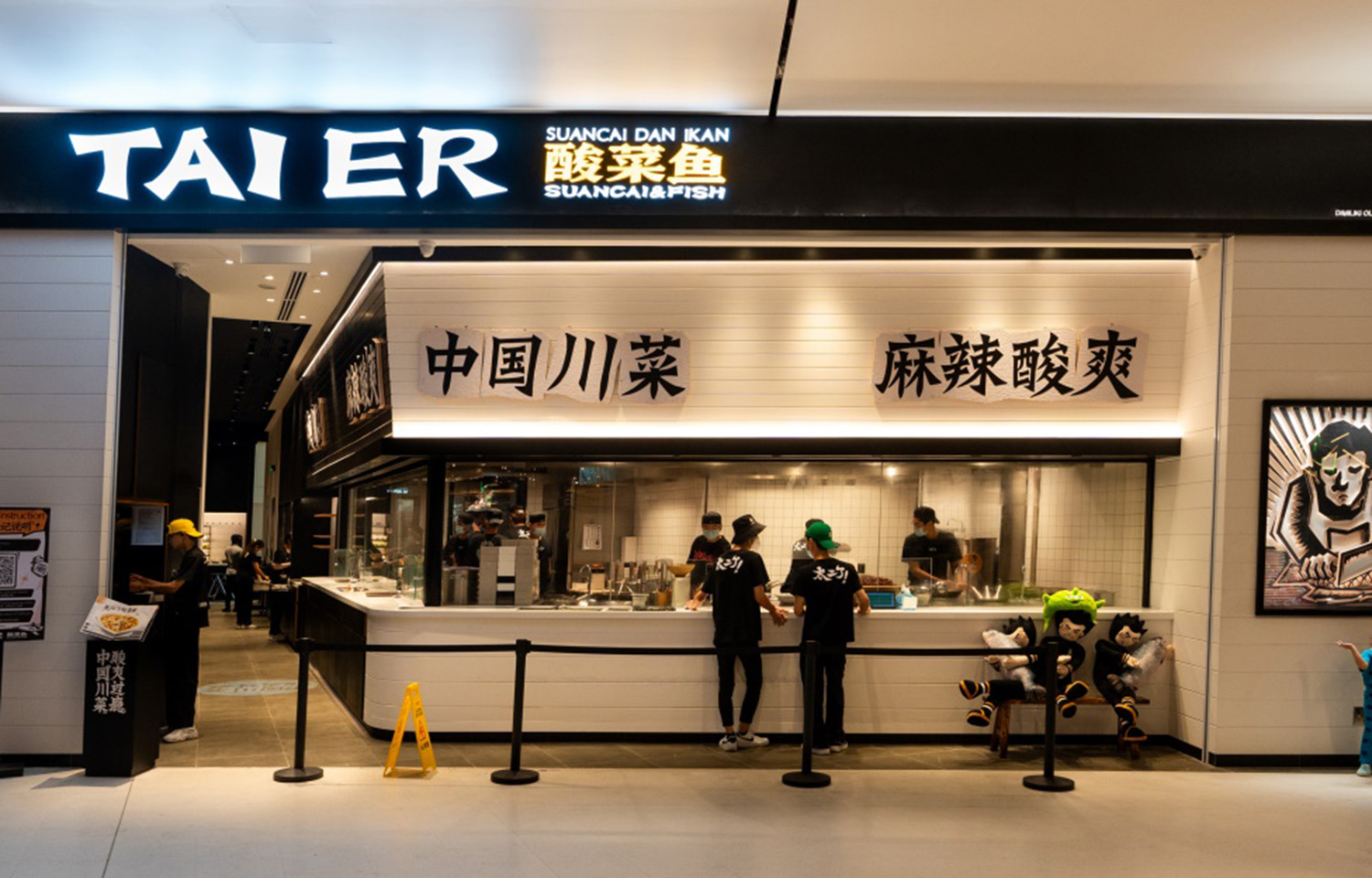
Jiumaojiu International Holdings, which operates the quick-service Tai Er fish soup restaurant chain, is curtailing its plans for new openings.
Jiumaojiu lifted its revenue in the the first half of 2024 by 6.4 percent to more than CNY 3 billion (USD 428 million, EUR 389 million), but its profit dropped 71.5 percent as it cut prices to hold onto customers, according to its H1 2024 results.
In response, the company is curtailing its plans for new openings, according to its H1 2024 financial report.
“In consideration of the changes in the external environment, looking ahead, the group will adopt a more prudent restaurant network expansion strategy and adjust its expansion target for 2024,” it said.
The company has dropped its goal of opening 100 new Tai Er self-operated restaurants in mainland China to 80. Jiumaojiu, which opened 134 new Tai Er stores in 2023, also plans to open 13 new self-operated Tai Er restaurants outside mainland China in 2024.
Jiumaojiu Chairman Guan Yihong said his company would “fast-track the regional and international expansion of Tai Er” and pointed to new franchising in Xinjiang, Tibet, and Taiwan, as well as Australia and New Zealand. Jiumaojiu already operates Tai Er restaurants in Canada, Indonesia, Malaysia, Singapore, Thailand, and the United States, as well as one Lai Mei Li restaurant in Singapore.
Jiumaojiu isn’t the only Chinese seafood restaurant chain looking to international markets to compensate for weaker sales at home. The Yu Ni Zai Yi Qi chain, which trades as Together With Fish, opened a new outlet in the Convoy district of San Diego, California, U.S.A.
Restaurant chains also appear to be targeting the convenience space for more earnings. In its H1 2024 report, Jiumaojiu announced that work has started on its supply chain center in Southern China, as well as on its central kitchen in Eastern China and a production plant for hot pot base and compound condiments in Southwest China.
Jiumaojiu and other consumer-facing firms have been dogged by weak consumer sentiment.
Three years of falling real estate values means Chinese urbanites’ assets have shrunk, leading to a “downgrade in consumption,” according to Ren Zeping, one of China’s most prominent economists who diagnosed the issues facing China’s economy recently on his Wechat account. Ren pointed to 20 months of negative producer price index growth, indicating manufacturing malaise and a CPI hovering at zero, suggesting severe deflationary pressure.
