


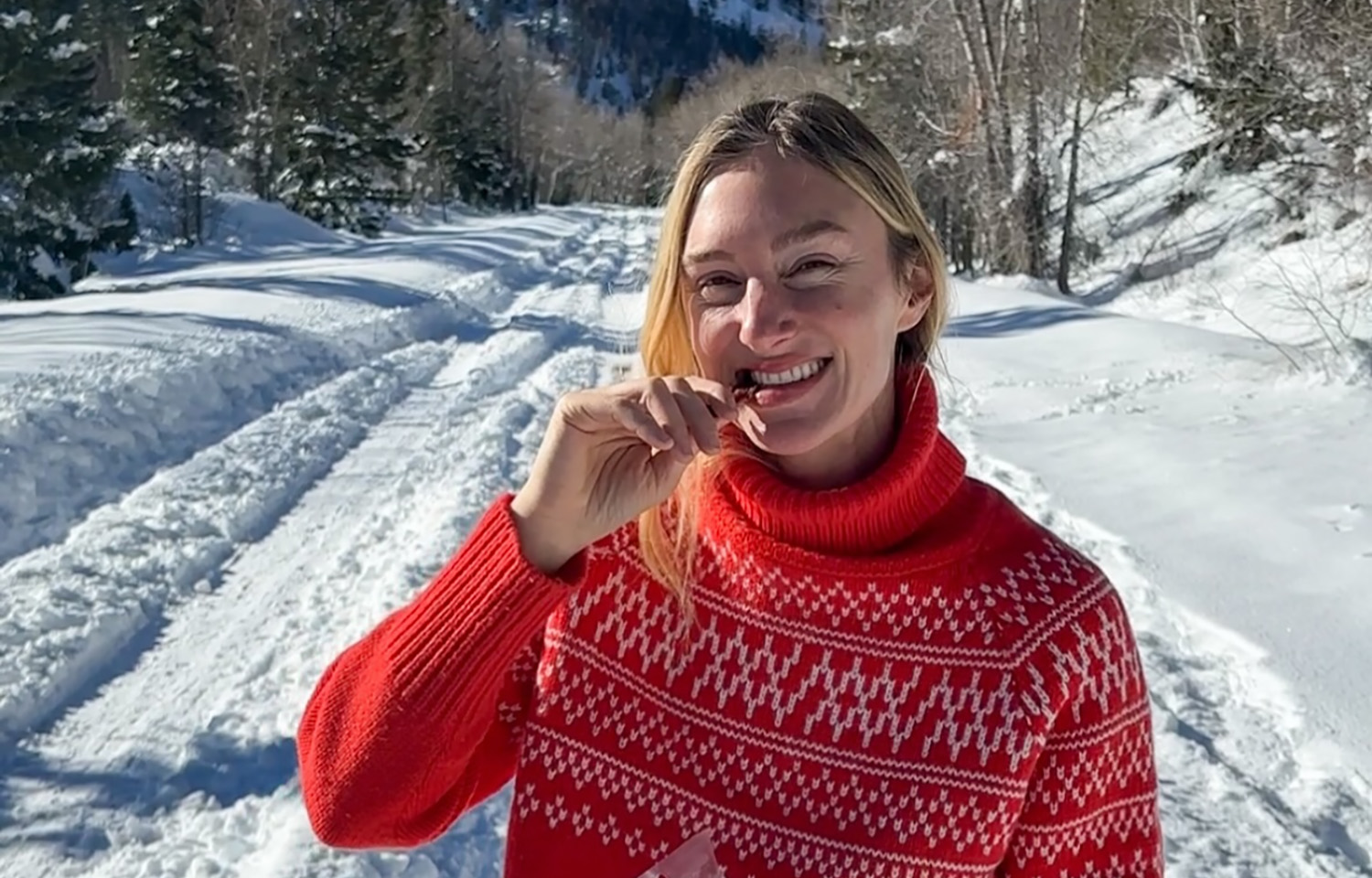
Fable Fish Co-Founder Meghan Luck was inspired to produce her award-winning salmon jerky while working in the Alaskan wholesale business.
“We saw literally hundreds of tons of really beautiful, filleted fish go and be used as byproduct and sold as a commodity," Luck told SeafoodSource at Seafood Expo North America, held March 15 to 18 in Boston, Massachusetts. "[This fish is] underutilized and undervalued in the supply chain because it doesn’t fit a really specific specification for a portion program or for a different wholesale program.”
Luck is a third generation Alaska fisher who grew up eating what the land produced. She ate wild game that her parents hunted, foraged for berries and mushrooms, and enjoyed smoked sockeye salmon, caught by her father, as her favorite snack.
“That was all really normal for me, and I didn't realize how unique it was," Luck said. "A big part of why I love Fable Fish and why I’m so passionate about it is is that I know how special it is to eat that way, and I know how satisfying it is – in small ways – to give people that gift.”
She said she wanted to give consumers access to wild Alaskan sockeye in a way that would be accessible for their budgets and familiar to their diets and lifestyles.
“Everybody knows what jerky is,” she said.
Fable Fish was also a product of Luck’s observation of the healthy snack food market.
“Protein is a huge priority for people’s diets right now. I like to believe that [Fable Fish salmon jerky is] really well aligned in a space that allows people to take that product and immediately recognize it and also recognize how special it is," Luck said.
Many consumers looking for high protein snacks will be used to seeing innovative products which add protein to other substances to increase performance, such as protein water, or caffeinated, protein-packed energy drinks.
Fable Fish, she said, wasn’t looking for a “unique niche.”
“It’s really cool to just have a product that is what it is. People resonate with that. A lot of times with our snacks, there’s not a lot of food left in our food," Luck said.
Unlike other high-protein, shelf-stable snacks, she said, Fable Fish jerky is a whole – and largely unadorned – food. Fable Fish is also unlike most salmon jerkies in that it is cut from long strips of whole muscle fish with the skin left on.
“The raw material itself is sockeye salmon from Bristol Bay, [and it is] such a pure, nutrient dense, beautiful fish, that if you just do as little as possible to it, and essentially smoke it in a way that my family has smoked fish in our backyard our whole lives … that’s all you have to do with this product. We want to keep it as simple as possible. That’s intentional," she said.
Luck sources her fish from a seasoned Alaska seafood veteran, her father Matt Luck, with whom she co-founded the company.
She emphasized that the partnership with her father has allowed the company to bring a product to market that “the end user doesn’t [usually] get to enjoy … as much” and make it accessible, benefiting all stakeholders in the process and cutting back on waste. That can be especially helpful when there are unusually large salmon runs that drive down prices.
“The raw material for this program is byproduct from a center cut program," Luck said. "We sort out the napes and tails from those portion programs, which are smaller, two ounce portions that do not fit into a spec for a tail program or portion program.”
“They’re a little bit smaller, but they’re beautiful pieces of fish," she added.
The sockeye is cured using “essentially the spices you have in your kitchen cabinet” and then smoked on racks for seven hours.
“That’s it,” said Luck.
It was important to her that the process was nothing more than what her family had done for decades, but at commercial scale.
“We keep the skin on, which I love,” Luck said. “I love this idea that you can see where it came from.”
“I wanted to make a product where people can say, ‘Oh, this is fish. I can see it’s fish because I can see the muscle fibers,'" she added, noting the format allows consumers to honor the process and origin of their food.
Asked about the outlook in Alaska, Luck said she was made optimistic both by what she had learned from previous generations of Alaska fishers and by the work being done by her peers. Luck said she had learned from her father’s flexibility and how he had weathered the closure of fisheries that had once made up a large share of his business, emphasizing that his willingness to try new things could often create unexpected market opportunities.
“One thing that I’ve seen my dad do ... is really be entrepreneurial about the kinds of fisheries you get into, and all these different opportunities," she said.
She added that she was excited to see other young fishers harvesting lesser known species like sable fish and Dungeness crab.
“There are so many opportunities across the state, and in my mind that’s really beautiful because it’s also educating consumers about the fact that these fisheries exist, and that that product exists, and that it’s just as delicious as the product they are familiar with," she said.
Luck is also inspired by the new generation of Alaskan producers who are aiming to showcase the state’s seafood bounty through a focus on hyper-local production and interconnection with other industry stakeholders.
“I’m so impressed by a lot of the [people] – specifically women – in our fisheries who are out there building businesses for themselves that really honor the beauty and tradition and even the aesthetic of Alaska,” said Luck.
Social media marketing made many of these opportunities possible, she said.
“There are a lot of [fishers] out there who are doing things that weren’t really available to my father’s generation, just because of the way that our media works," she said. "I think there’s capacity to tell the story of Alaska in a way that there hasn’t been before."
