



U.S. consumer interest in nutrition and dietary trends have spiked, and one macronutrient has taken center stage: protein.
There is perhaps no place that reflects this trend more than American snack aisles. Food products traditionally low in protein like cereal, oatmeal, pancakes, cookies, and snack mix now boast of containing protein levels of 20 grams or more on the front of their packaging. Over the past decade, research shows that the number of high-protein products has increased fourfold, expanding from predominantly animal-based sources to plant-based sources of protein.
However, according to Ashley Koff, a registered nutritionist and founder of The Better Nutrition Program, added protein does not necessarily make a product healthier, especially if it’s already processed.
“If we add a protein source to a poor-quality product – one that has too much salt, sugar, has enriched flour versus whole grain so the fiber and key nutrients are lost, we don't fuel our body better,” she said.
Instead, Koff and many nutritionists like her are recommending a whole-food diet, echoing a larger societal, and now political, shift away from ultra-processed foods, which have been linked to an increased risk of chronic disease.
At the intersection of a whole-food diet and high-protein snacks are many ready-to-eat seafood products. While some in the industry have been slow to catch on, others have started to capitalize on the trend.
Tinned Fish
Tinned fish has seen a sudden boost in popularity, fueled largely by social media influencers hopping on board TikTok trends like the “seacuterie board” and the “tinned fish date night.”
Many aspects of tinned fish lend well to social media – the first being the aesthetic, as many European-inspired designs are found on tinned fish packaging. The second aspect is its convenience. Additionally, many social media influencers are pointing out its health benefits, including its high protein content and omega-3s.
To meet consumer demands, tinned fish company Freshé, owned by New Hampshire, U.S.A.-based EcoFish, recently revamped its packaging.
Freshé has made protein a staple of its marketing, with a tagline of “small meals, big protein.” The company offers several snack-friendly products, including its “Gourmet Tuna Meal,” which comes in flavors like Sicilian Caponata, Aztec Ensalada, and Thai Sriracha, all of which have varying protein amounts of up to 16 grams featured on the front of the can.
EcoFish Founder and President Henry Lovejoy told SeafoodSource in September about the firm’s new packaging and how it’s benefiting from tinned fish’s surge in popularity.
“Consumers have evolved a lot in the past 10 years [with] many now seeking higher-quality natural and sustainable options in all food categories,” Lovejoy said. “This is bringing consumers into the space who previously avoided it. They are happy to pay more for quality and sustainability.”
Flavored Tuna Packets
Alongside traditional canned tuna offerings, many seafood companies have ramped up production of flavored tuna packets to meet consumer demands for on-the-go products.
In January, El Segundo, California, U.S.A.-based Chicken of the Sea launched new flavors of seafood pouches, which included partnerships with McCormick and OLD BAY seasoning.
Featured prominently on top of the packaging next to its calorie count is a protein count of 14 grams.
“With less time for sit-down meals, consumers are looking for convenient, on-the-go types of products and are increasingly prioritizing healthy eating and protein-rich foods,” Chicken of the Sea Director of Marketing Griffin Raasch told SeafoodSource. “We’ve seen a lot of exciting innovation and collaborations happening throughout the food category over the last few years focusing on convenience and flavor.”
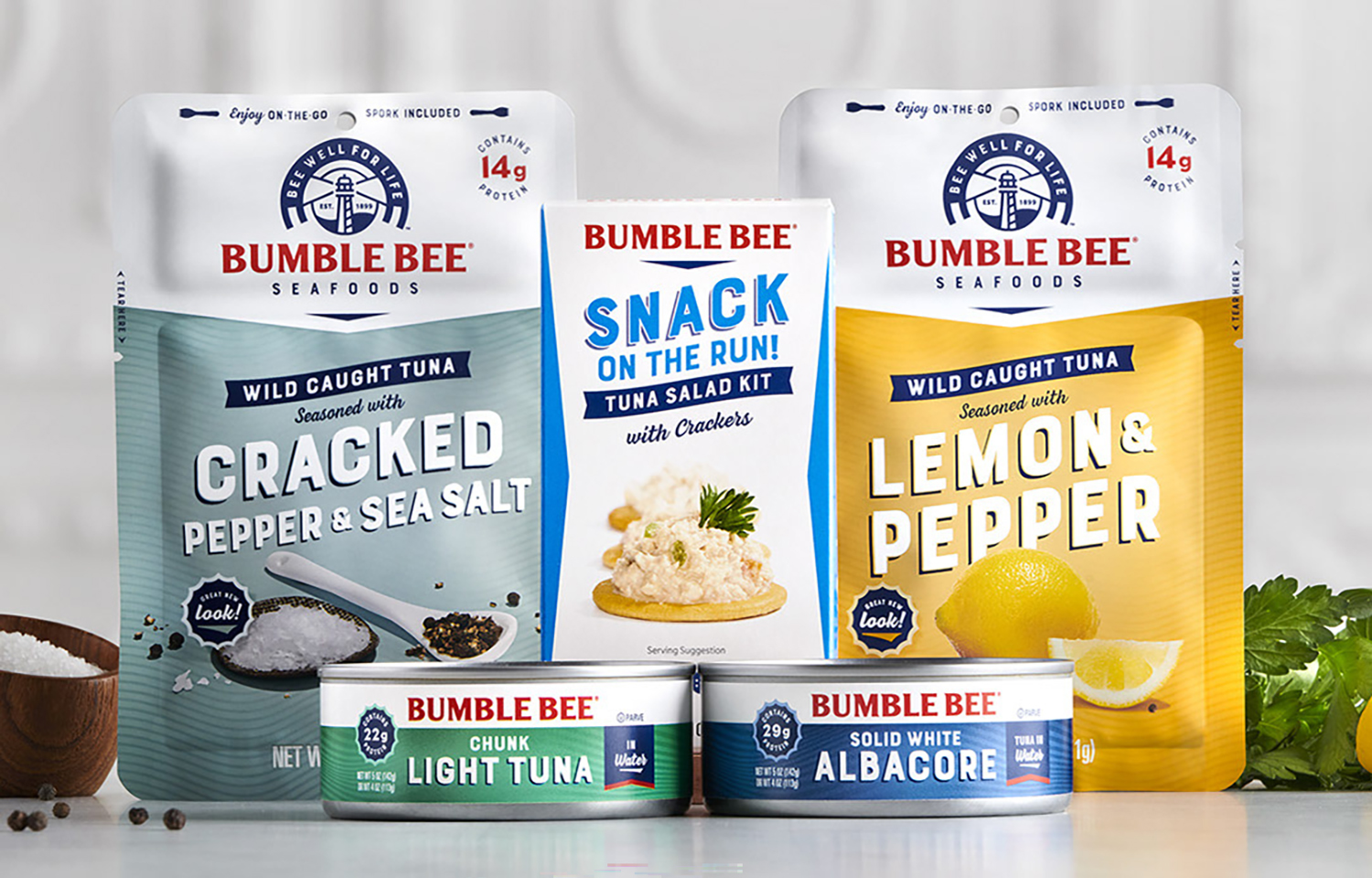
Other brands have also leaned into on-the-go flavored tuna products. This summer, San Diego, California, U.S.A.-based Bumble Bee debuted a line of single-serve flavored tuna cans called Snackers. The 3-ounce cans come in a variety of flavors, including Lemon Pepper and Thai Chili.
"The way people snack has changed over the years. They want flavor, they want protein, they want it to be mindlessly easy, and it can't cost a fortune,” Bumble Bee Senior Director of Innovation and Insights Jeremy Zavoral told SeafoodSource in August.
Bumble Bee also offers snack kits like its Protein on the Run line, which includes crackers and flavored tuna, and its Tuna Salad on the Run, both of which come in a variety of flavors.
Jerky
Several seafood companies are also trying their hand at jerky – a protein-rich American snack staple.
One of the companies trying to popularize seafood-based jerky is Glenwood Springs, Colorado-based company Fable Fish, which makes its jerky using Alaskan sockeye salmon.
At this year’s Seafood Expo North America, held March 15 to 18 in Boston, Massachusetts, Fable Fish Co-Founder Meghan Luck told SeafoodSource that her observation of the health snack food market was what inspired her to make salmon jerky.
“Protein is a huge priority for people’s diets right now. I like to believe that [Fable Fish salmon jerky is] really well aligned in a space that allows people to take that product and immediately recognize it and also recognize how special it is," Luck said.
Unlike other high-protein, shelf-stable snacks, Luck explained Fable Fish jerky is a whole-food option, cut from long strips of whole muscle fish with the skin left on.
“It’s really cool to just have a product that is what it is. People resonate with that,” she said. “A lot of times with our snacks, there’s not a lot of food left in our food.”
