






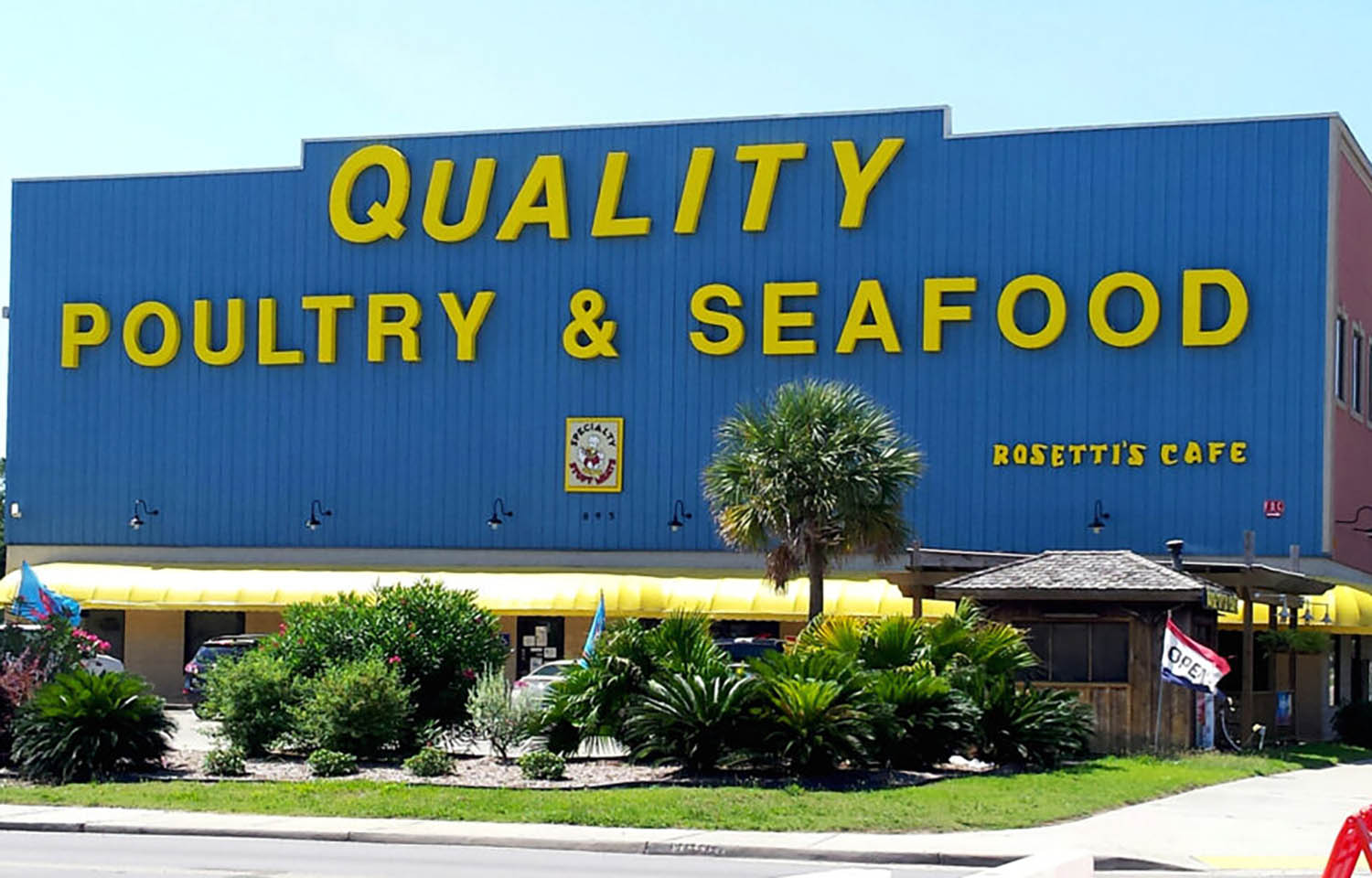
A seafood distributing and wholesaling company in the U.S. state of Mississippi recently pled guilty of conspiring to mislabel seafood and marketing imported seafood as premium local species, all as part of a case against historic restaurant Mary Mahoney’s Old French House.
Biloxi, Mississippi, U.S.A.-based Quality Poultry and Seafood (QPS) has agreed to pay USD 1 million (EUR 899,000) in forfeitures and a criminal fine of USD 150,000 (EUR 135,000) for its role in supplying Mary Mahoney’s with seafood. After the U.S. government previously declined to name which distributor was involved in the case, the Biloxi distributor to major restaurants, casinos, and retailers was implicated in the scheme, along with QPS Sales Manager Todd A. Rosetti and Business Manager James W. Gunkel.
Mary Mahoney’s, also based in Biloxi, pled guilty, along with Owner Bobby Mahoney and Co-Owner Anthony Cvitanovich, to federal charges of conspiracy, misbranding seafood, and wire fraud on 30 May, resulting in fines totaling USD 1.35 million (EUR 1.2 million).
The historic restaurant admitted to selling frozen imported fish from Africa, India, and South America and advertising the products as locally sourced premium species between December 2013 and November 2019, according to the U.S. Attorney’s Office for the Southern District of Mississippi. Cvitanovich admitted that between 2018 and 2019, he was involved in mislabeling approximately 17,190 pounds of fish sold at the restaurant.
“The scheme involved the fraudulent sale of fish by Mahoney’s and its wholesale supplier that was described on Mahoney’s menu as premium, higher-priced local species, such as snapper and grouper from the Gulf of Mexico, when the fish was actually other species from abroad, including Lake Victoria perch from Africa, tripletail from Suriname, and unicorn filefish from India,” the U.S. Attorney’s Office said in May.
QPS admitted to participating in the fish substitution scheme through November 2019, the U.S. Attorney’s Office said. QPS recommended and sold foreign-sourced fish to its restaurant customers that could serve as convincing substitutes for local species the restaurants advertised on their menus, according to the indictment, while also labeling the cheap imports it sold to customers at its own retail shop and café as premium local fish.
“QPS and company officials went to great lengths in conspiring with others to perpetuate fraud for more than a decade – even after they knew they were under federal investigation,” Assistant Attorney General for the U.S. Justice Department’s Environment and Natural Resources Division Todd Kim said. “Mislabeling seafood harms local wholesalers and fishermen who compete to sell locally sourced, premium fish in a market unfairly flooded with less expensive fish, frozen and imported from overseas.”
U.S. Attorney Todd W. Gee for the Southern District of Mississippi echoed Kim’s claims, saying that when imported substitutes are marketed as local domestic seafood, it depresses the value of authentic U.S. Gulf Coast seafood, “which means that honest local fishermen and wholesalers have a harder time making a profit.”
“This kind of mislabeling fraud hurts the overall local seafood market and rips off restaurant customers who were paying extra to eat a premium local product,” Gee said. “These convictions should serve as a warning: Restaurants and wholesalers will face criminal prosecution if they are not honest with customers about what they are actually buying.”
QPS, Rosetti, and Gunkel will be sentenced on 11 December 2024.
Meanwhile, Mary Mahoney’s, QPS, Rosetti, Gunkel, and others are also facing a class action lawsuit, filed in early August.
The plaintiff, Todd McCain from Alabama, who said he purchased what the restaurant claimed was snapper three times between 2013 and 2018, alleges that Mary Mahoney’s and Cvitanovich engaged in racketeering. At the time of filing, the complaint also listed another unnamed seafood wholesaler, along with its business manager and other executives, as co-conspirators in the suit. The complaint also lists several “doe defendants.”
The lawsuit is asking for damages to be paid to customers who purchased foreign fish at Mary Mahoney’s between January 2012 and November 2019, up to USD 10,000 (EUR 8,986) each.
