






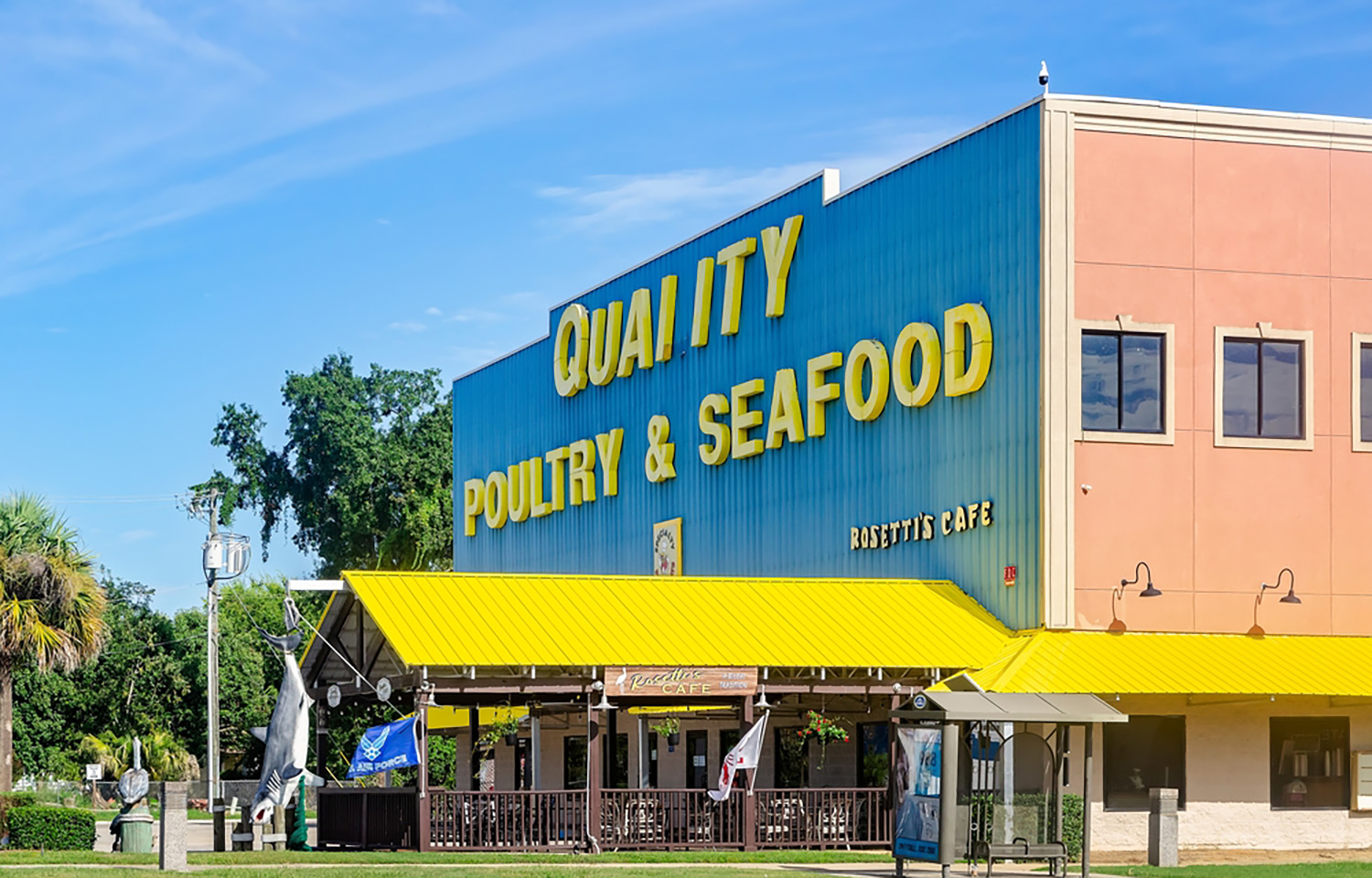
Biloxi, Mississippi, U.S.A.-based seafood wholesaling firm Quality Poultry & Seafood (QPS), as well as two of its executives, was sentenced in district court on 11 December in connection to a federal seafood mislabeling case.
Mary Mahoney’s Old French House, a seafood restaurant in Biloxi, admitted to selling frozen imported fish supplied by QPS that it falsely advertised on its menu as locally sourced premium species between December 2013 and November 2019.
At its sentencing in November, the restaurant was put on probation and issued a USD 149,000 (EUR 142,000) fine. Mary Mahoney’s Co-Owner Anthony Cvitanovich was sentenced to four months of home confinement and three years probation and ordered to pay a USD 10,000 (EUR 9,500) fine.
At the 11 December QPS sentencing, Judge Sul Ozerden of the United States District Court for the Southern District of Mississippi placed the wholesaler on five years probation and fined it USD 500,000 (EUR 476,000). The firm must also forfeit USD 1 million (EUR 952,600) to the U.S. Marshal Service and pay a USD 400 (EUR 381) special assessment fine.
QPS Sales Manager Todd Rosetti, whom Ozerden called “the ultimate authority in this scheme,” will serve eight months in prison, one year of supervised release, and six months of home detention. He will also pay a USD 1,000 (EUR 953) fine.
QPS CFO James Gunkel was sentenced to one year of home confinement and two years of probation and will also pay a USD 1,000 fine.
Meanwhile, QPS and Mary Mahoney’s are seeking to both dismiss a civil complaint related to the false labeling since they have already been charged in the criminal case.
The civil complaint, brought by Todd McCain, an Alabama resident who visited the restaurant, alleges he purchased what the restaurant claimed was local snapper three times between 2013 and 2018.
The lawsuit is asking for damages to be paid to customers who purchased foreign fish labeled as local Gulf Coast fish at Mary Mahoney’s between January 2012 and November 2019, with the possibility of receiving up to USD 10,000 (EUR 9,500) each.
QPS and Mary Mahoney’s said the civil complaint should be dismissed for numerous reasons.
In Quality’s motion to dismiss, it said that McCain cannot prove he suffered injury by dining at Mary Mahoney’s. Additionally, because there is no actual conspiracy between McCain and QPS but “only a speculative or conjectural one,” Quality said his claims should be dismissed.
McCain alleges that he ordered red snapper from Mary Mahoney’s menu, but it is possible that he may have been served some other type of fish that resembled or could pass as a convincing substitute for snapper. However, he does not know if the fish that he ate was actually red snapper or a substitute, QPS said.
“He has not and cannot allege an actual, particularized injury,” the motion said.
Additionally, when plaintiffs claim that they overpaid for an item, they must “sufficiently and plausibly allege an actual de facto economic injury; they cannot base their standing theory on their mere subjective belief in a product’s quality or the mere suggestion that some, but less than all, products were defective in some way,” QPS said in the motion.
“McCain concedes that he has suffered no physical harm from dining out at a popular restaurant in Biloxi,” the motion said. “He certainly does not allege that he suffered physical injury from consuming fish at Mary Mahoney’s. Generously construed in his favor, his complaint alleges buyer’s remorse if he was served mislabeled fish.”
Similarly, Mary Mahoney’s and Cvitanovich state that McCain cannot prove injury, that the statute of limitations has expired, and federal racketeering (RICO) claims he had brought forth are not applicable.
“As an initial matter, the plaintiff should have discovered the ‘injury’ (i.e., that he ate what was allegedly foreign fish) the moment he consumed the fish. Otherwise, either the plaintiff consumed genuine Gulf Coast fish, or the plaintiff has suffered no concrete injury in fact because he could not discern the difference,” the motion said.
Though McCain alleges that the defendants’ misconduct disregarded public health and safety and could have resulted in “numerous public health hazards,” he does not allege that any such public safety hazards actually befell him or the class, according to Mary Mahoney’s.
