






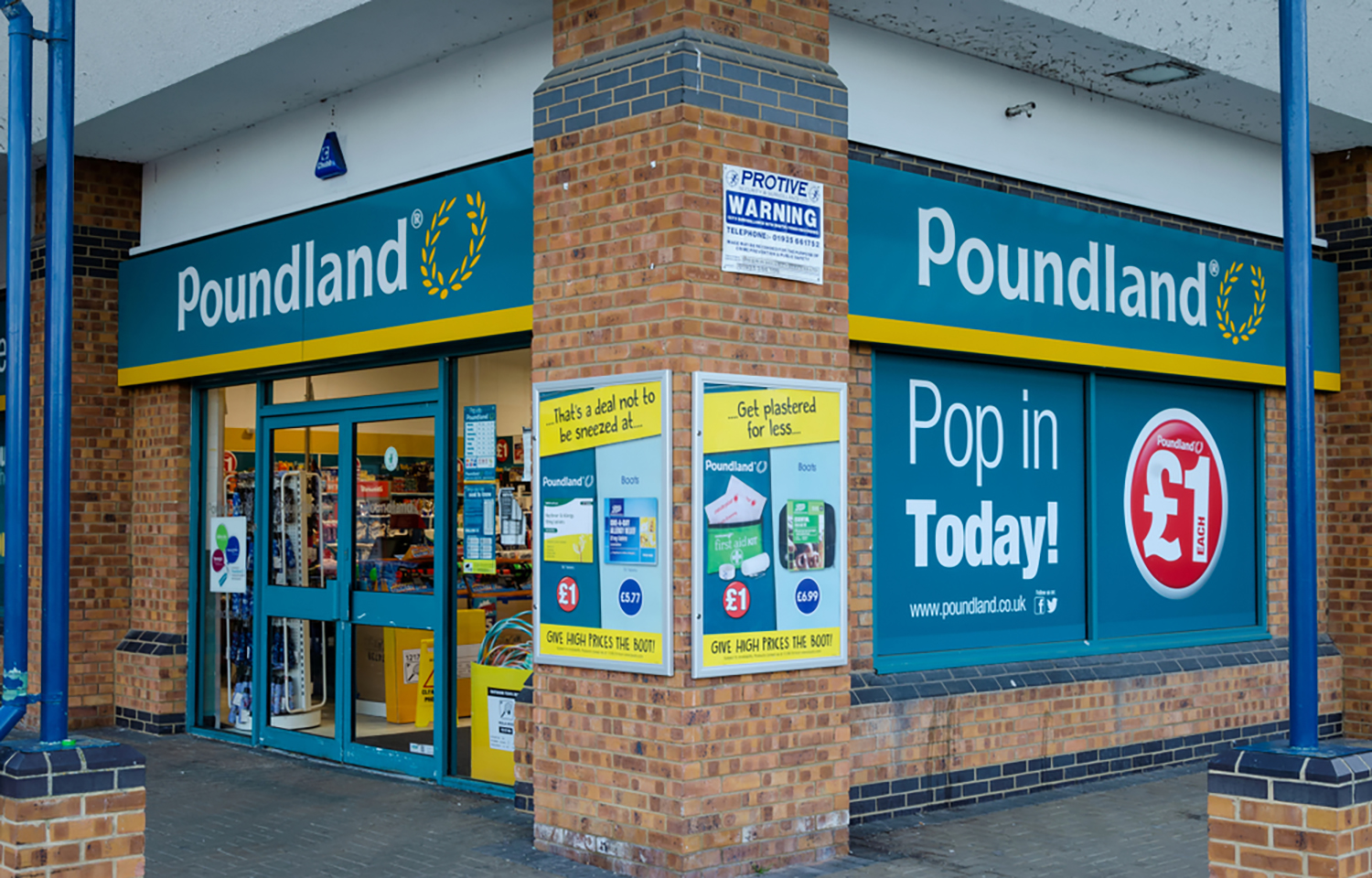
After being sold in early June to a U.S. investment firm, Willenhall, U.K.-headquartered grocery chain Poundland has announced that it plans to close up to 150 stores and two distribution centers.
Poundland, the operator of around 850 stores in the U.K and Ireland prior to the anticipated closures, was sold for the “nominal” sum of GBP 1.00 (USD 1.35, EUR 1.17) to Boston, Massachusetts, U.S.A.-based Gordon Brothers and revealed soon after the sale that it would initially close 68 stores, as well as distribution centers in Darton, South Yorkshire, and Bilston in the West Midlands, in a restructuring plan.
Poundland is seeking rent reductions from landlords at several locations, and combined with leases expiring on some stores, it said it could close an additional 70 or more stores after that.
"While Poundland remains a strong brand, serving 20 million-plus shoppers each year, our performance for a significant period has fallen short of our high standards, and action is needed to enable the business to return to growth,” Poundland Managing Director Barry Williams said. "It's no secret that we have much work to do to get Poundland back on track.”
It is "regrettable" that the turnaround plan includes store closures, Williams explained, while adding that it was "necessary if we're to achieve our goal of securing the future of thousands of jobs and hundreds of stores.”
Poundland carries a wide selection of tinned seafood and expanded into fresh seafood options at a value price point in 2022.
As part of the restructuring, Poundland will stop selling frozen food and instead focus on its GBP 3.00 (EUR 3.50) meal deal and essential grocery staples such as milk, according to the BBC.
Other U.K. retailers have also struggled financially this year.
Tesco and Sainsbury’s both lowered their profit expectations for 2025 in April and cut costs and services due to higher business tax rates and expenses.
“Retail operates on tight margins, and it would be impossible to absorb all GBP 5 billion [USD 6.6 billion, EUR 5.8 billion] of new costs which hit the industry in April,” British Retail Consortium Director of Insight Kris Hamer said.
