






U.K. food inflation remained steady at 3.3 percent in February, and seafood realized slight deflation, but retailers are still concerned about a spike in prices this year.
The Office of National Statistics reported that the overall Consumer Prices Index (CPI) rose by 2.8 percent in February 2025 compared to February 2024, but declined slightly from 3 percent in January versus January 2024. Grocery research firm Kantar also found that overall grocery inflation rose 2.1 percent in February, while fish prices fell by 0.7 percent.
Despite the somewhat positive inflation news, food inflation has jumped significantly in recent months and is forecast to hit 5 percent by the end of 2025 as a result of the costs arising from the Autumn Budget, British Retail Consortium Director of Insight Kris Hamer said.
“Retail operates on tight margins and it would be impossible to absorb all GBP 5 billion (USD 6.5 billion, EUR 6 billion) of new costs which hit the industry in April. On top of this, retailers are still burdened by an outdated business rates system. It is vital that the government’s reform of business rates doesn’t impose additional costs onto retailers,” Hamer added.
The cost increases Hamer mentioned include an increase to the National Insurance contributions, which seafood processors have opposed citing a financial burden on employers. That increase, coupled with an increase in the minimum wage, higher business tax rates, and more will cost the sector billions.
“Inflation will likely rise across the board as the year progresses with geopolitical tensions running high and the imminent GBP 7 billion [USD 9 billion, EUR 8.4 billion] increase in costs from the Autumn Budget and the poorly designed packaging levy arriving on the doorsteps of retailers,” BRC CEO Helen Dickinson said.
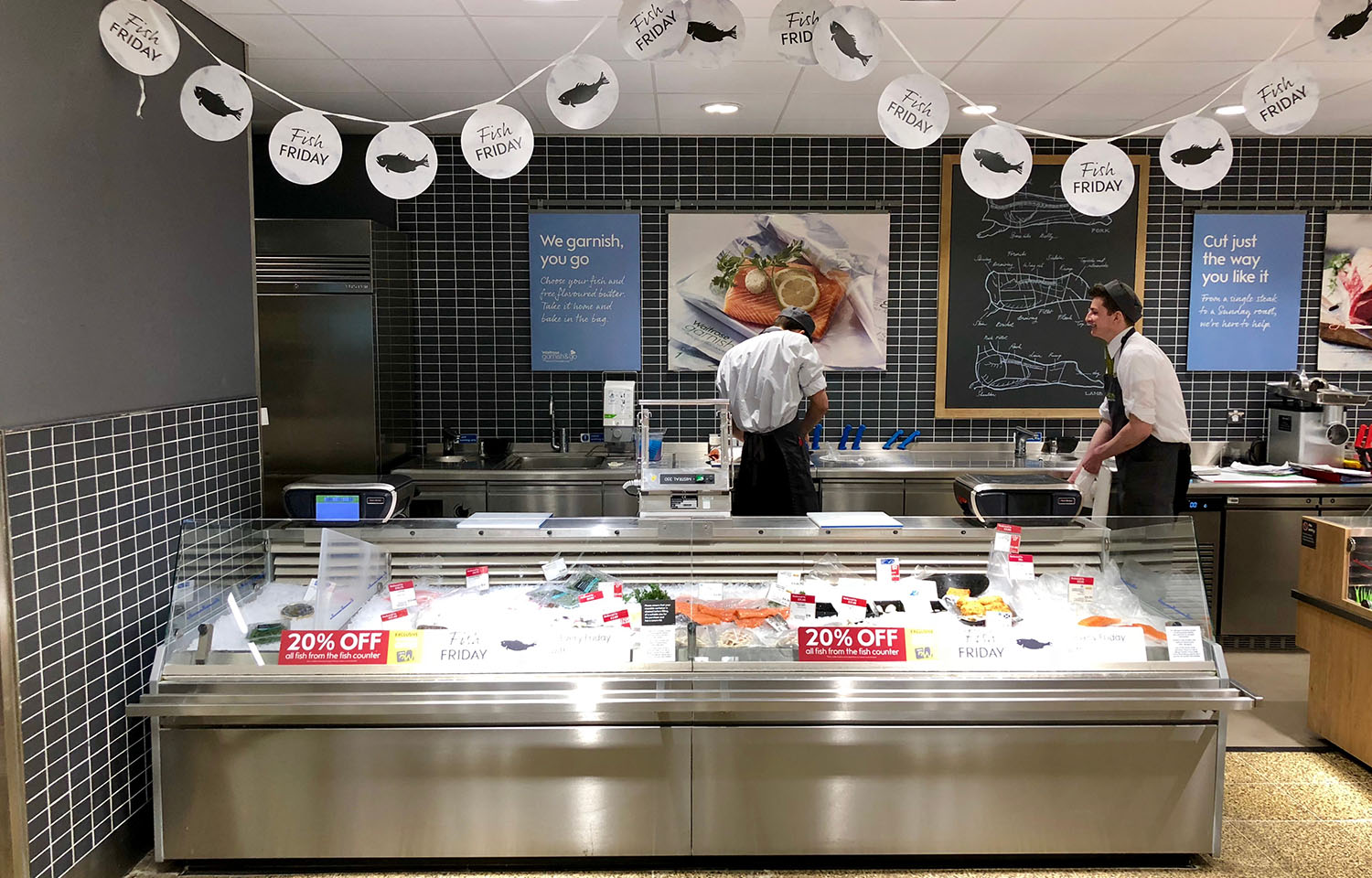
Inflationary and budgetary concerns are already hitting food retailers this year, as they have announced significant staff reductions as well as other cutbacks that seafood suppliers and distributors. Morrisons is eliminating fish counters in 35 of its stores and is also closing 35 meat counters, 52 cafes, all 18 of its market kitchens, 17 convenience stores, 13 florists, and four pharmacies over the next few months.
Sainsbury’s said in late January that it plans to slash 3,000 jobs and streamline divisions, resulting in a proposed 20 percent reduction of senior management positions. Similarly, Morrisons cut 200 jobs earlier this year, and then said around 365 employees “will be at risk of redundancy” with the elimination of fish counters, market kitchens and other services.
