



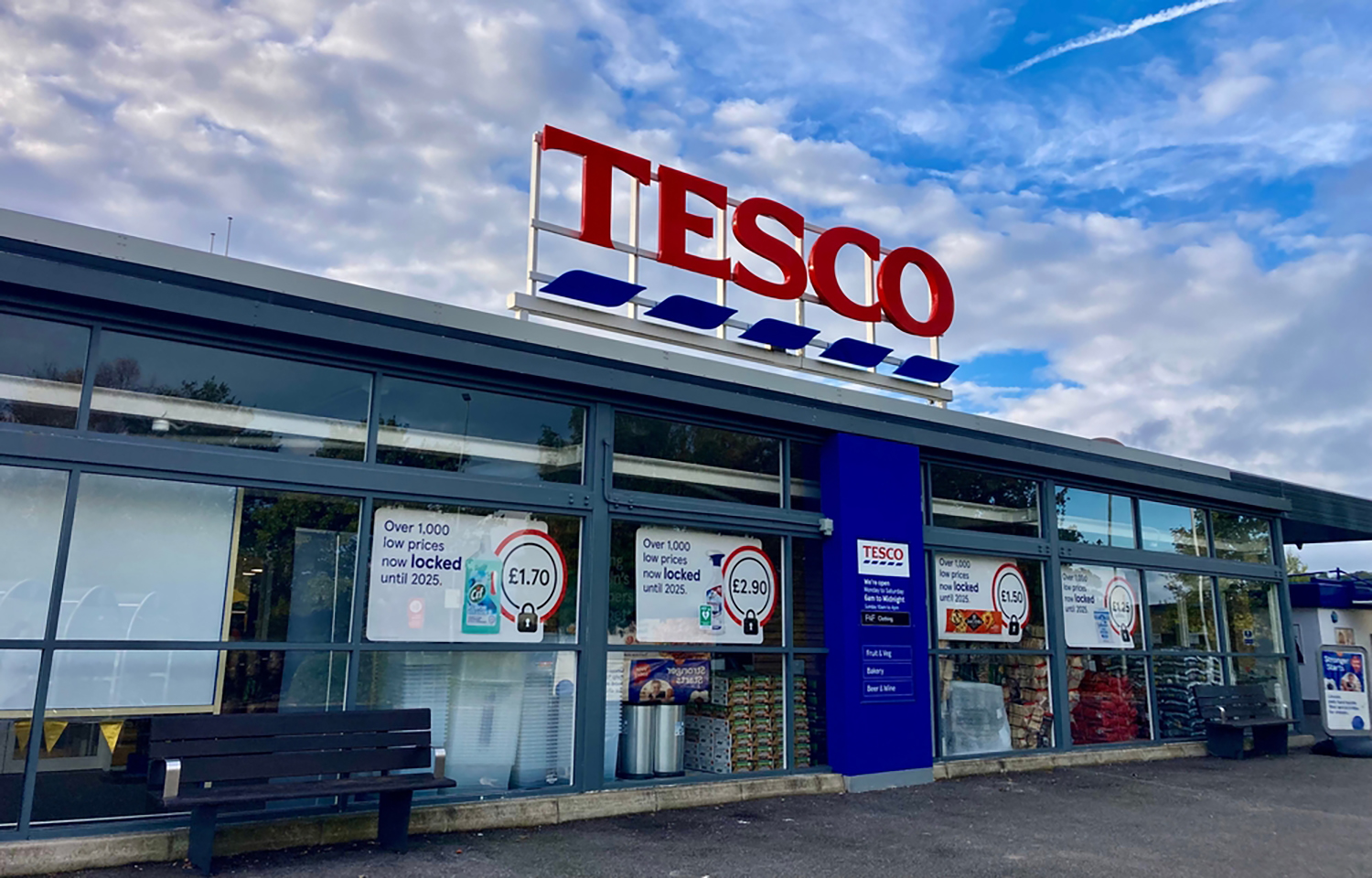
Tesco and Sainsbury’s are among U.K. retailers lowering their profit expectations and cutting costs and services due to higher business tax rates and expenses.
Tesco said it needs to cut GBP 500 million (USD 663 million, EUR 583 million) in costs due to the GBP 235 million (USD 312 million, EUR 274 million) it and other retailers are now facing in national insurance contributions (NICs) and other operating expenses.
Additionally, the retailer lowered its annual adjusted operating profit forecast for its next fiscal year to between GBP 2.7 billion (USD 3.6 billion, EUR 3.1 billion) and GBP 3 billion (USD 4 billion, EUR 3.5 billion), which is below the GBP 3.1 billion (USD 4.1 billion, EUR 3.6 billion) it brought in the previous year.
“We’ve ended this financial year with more people than we started the year. So, I think we’re using those savings to drive growth,” Tesco CEO Ken Murphy said when asked whether the cost-cutting measures would put jobs at risk, per The Guardian. “We never rule out job cuts. It [would] be naive to do that, but at the same time, I think our track record speaks for itself.”
Tesco said it already slashed GBP 510 million (USD 676 million, EUR 595 billion) in costs last year.
Similarly, Sainsbury’s warned about flat profits this year due to higher expenses and price wars with other grocery competitors.
Nevertheless, the grocery chain said due to cutting 3,000 jobs and closing cafes that its fiscal year sales (excluding fuel) for the 52 weeks to March increased 4.2 percent year over year to GBP 26.6 billion (USD 35 billion, EUR 31 billion).
“More people are choosing Sainsbury’s for their main grocery shop as a result, delivering our highest market share gains in more than a decade,” Sainsbury’s CEO Simon Roberts said.
During the period, Sainsbury’s expanded its Aldi Price Match program to more products than ever before, according to Roberts.
“Customer satisfaction with product availability is at record levels, and we’re continuing to add more innovative products to our ranges,” Roberts said, adding that Sainsbury’s long-term contracts with farmers and suppliers “demonstrate our commitment to resilience and sustainability across the U.K. food system.”
In addition to Sainsbury’s and Tesco, most U.K. grocers are struggling with higher tax rates and expenses.
Iceland Foods CEO Tarsem Dhaliwal warned that supermarket prices are likely to increase this year, thanks to higher labor rates grocers are facing from the U.K.’s Autumn Budget. Dhaliwal said he expects food inflation to spike 4 percent this year, while the British Retail Consortium (BRC) projects inflation will soar 5 percent.
“Retail operates on tight margins, and it would be impossible to absorb all GBP 5 billion [USD 6.6 billion, EUR 5.8 billion] of new costs which hit the industry in April,” BRC Director of Insight Kris Hamer said.
As a result of the squeeze, Morrisons said it would eliminate fish counters in 35 of its stores, along with 35 meat counters, 52 cafes, all 18 of its market kitchens, 17 convenience stores, 13 florists, and four pharmacies to cut costs.
Meanwhile, the Food and Drink Federation (FDF) said that food and beverage manufacturers’ confidence plunged 47 percent in the fourth quarter of 2024, a 41 percent decline from the previous quarter.
“As high levels of food and drink inflation continue, the pressure on businesses shows no sign of easing,” FDF Director of Industry Growth and Sustainability Balwinder Dhoot said.
