

At the end of April, U.K. supermarket chain Waitrose removed fresh, chilled, and frozen mackerel sourced from the Northeast Atlantic Ocean from its shelves, following an announcement in February stating its intention to do so.
In the February announcement, the retailer said it made the decision to no longer source mackerel from the Northeast Atlantic fishery because the stock doesn’t meet the company’s responsible sourcing requirements.
“Our customers trust us to source responsibly, and we are closely monitoring the fishery. We look forward to bringing mackerel back to our shelves once it meets our high sourcing standards,” Waitrose Head of Agriculture, Aquaculture, and Fisheries Jake Pickering said as part of the February announcement.
To replace the hole on its shelves, Waitrose has introduced a new fish product range featuring smoked herring, sea bass, and sardines, all of which are Marine Stewardship Council (MSC)-certified.
Before Waitrose made its decision, Atlantic mackerel had already disappeared from Dutch supermarkets including Jumbo, Lidl, and Albert Heijn, largely because the online consumer guide Viswijzer gave the fish a red listing for unsustainable fishing practices, pushing retailers to adhere to their sustainability commitments.
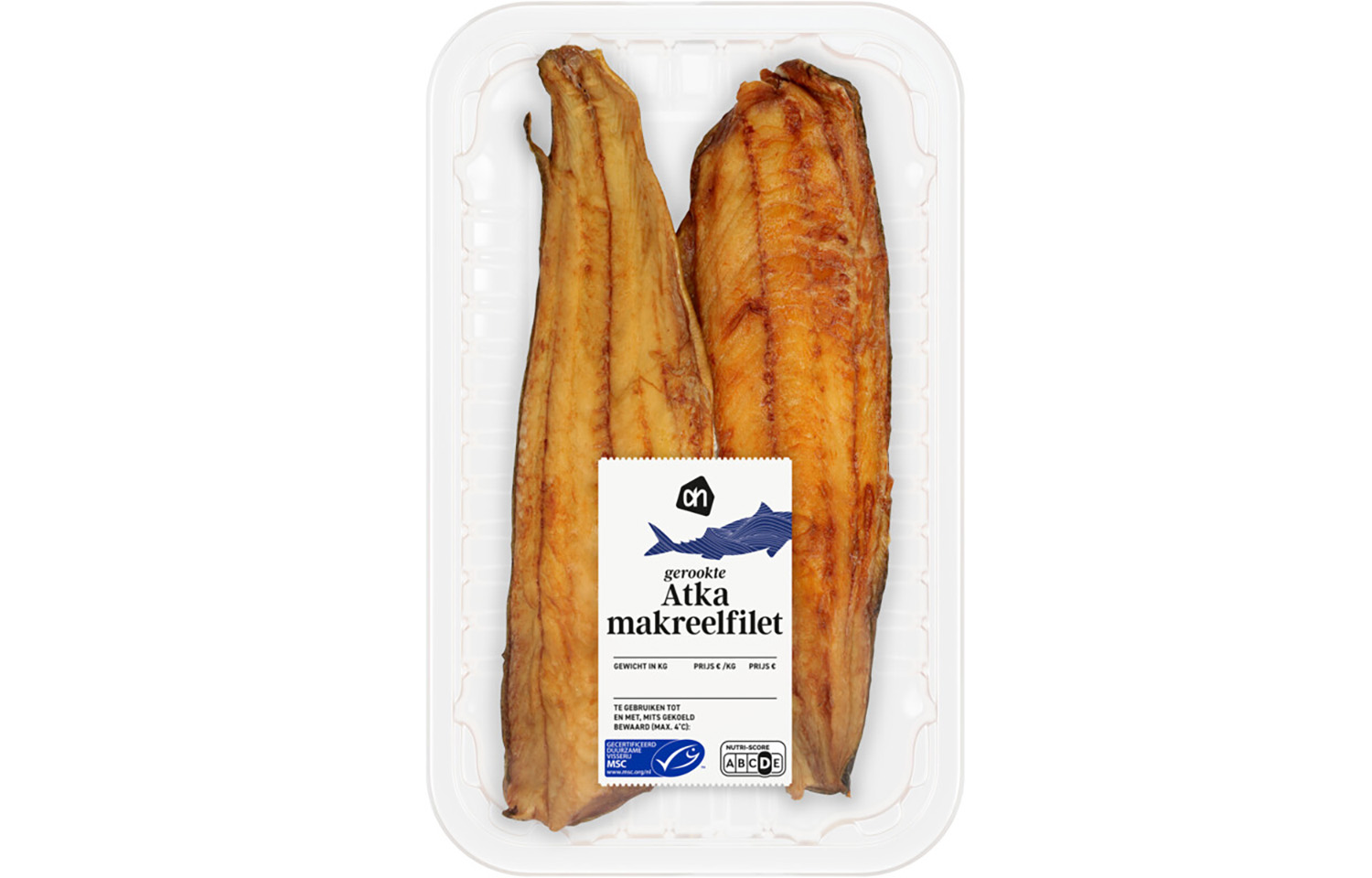
Albert Heijn has introduced a new smoked Atka mackerel product sourced from the North Pacific Ocean and Bering Sea as a substitute, even though it is more expensive than Atlantic mackerel.
MSC certification for Northeast Atlantic mackerel was suspended in March 2019 over concerns about overfishing, declining stock levels, and a lack of international agreement on catch quotas, which have consistently exceeded scientific advice doled out by the International Council for the Exploration of the Seas (ICES).
The fishery remains suspended from the MSC until agreement can be reached on catch quotas by all coastal nations that fish in the region, namely Norway, the Faroe Islands, Greenland, the E.U., the U.K., and Iceland.
Though countries have repeatedly agreed to set the collective total allowable catch (TAC) for the species in line with ICES advice, they have consistently gone on to fail at dividing that total up equitably, resulting in overfishing.
For 2026, four Northeast Atlantic coastal countries – the U.K., Norway, the Faroe Islands, and Iceland – managed to agree on a quota sharing arrangement between themselves. The TAC was set at 299,010 metric tons (MT), which marks a 48 percent reduction on the previous year; however, ICES called for a 70 percent cut.
This led several organizations like Viswijzer and the Marine Conservation Society (MCS) to downgrade the fish, and retailers have responded in kind.
The fishing industry has pushed back against some of these decisions, with Ian Gatt, who is the chair of the Scottish Pelagic Sustainability Group (SPSG), criticizing the MCS in particular for giving a misleading picture of the fishery and ignoring the hard work being carried out by fishers, government, and scientists to ensure the fishery is sustainable.
“The MCS decision-making process shows a lack of rigor and attention to detail,” Gatt told SeafoodSource. “While progress in resolving the issue of quota shares among the coastal states participating in the fishery is not going as fast as we would like, the MCS rating fails to reflect recent management and scientific developments that will deliver a significant reduction in fishing pressure.”
As such, SPSG said MCS should have amended its rating for mackerel to “under review” until the next round of scientific assessment becomes available in September.
Adam Wing, the head of trade marketing for the U.K., Middle East, and Asia for industry representative body Seafood Scotland, told SeafoodSource that he believes the U.K. has always fished within advisory limits but that the nation’s fishers were being penalized for the failings of other coastal nations.
“Consumers can quickly lose confidence in a product through a negative campaign, but mackerel is a healthy and affordable protein and needs to be accessible on the shelves. Canned mackerel is one of the products that we promote through our Seafood in Schools project as an introduction to eating seafood,” he said.
