



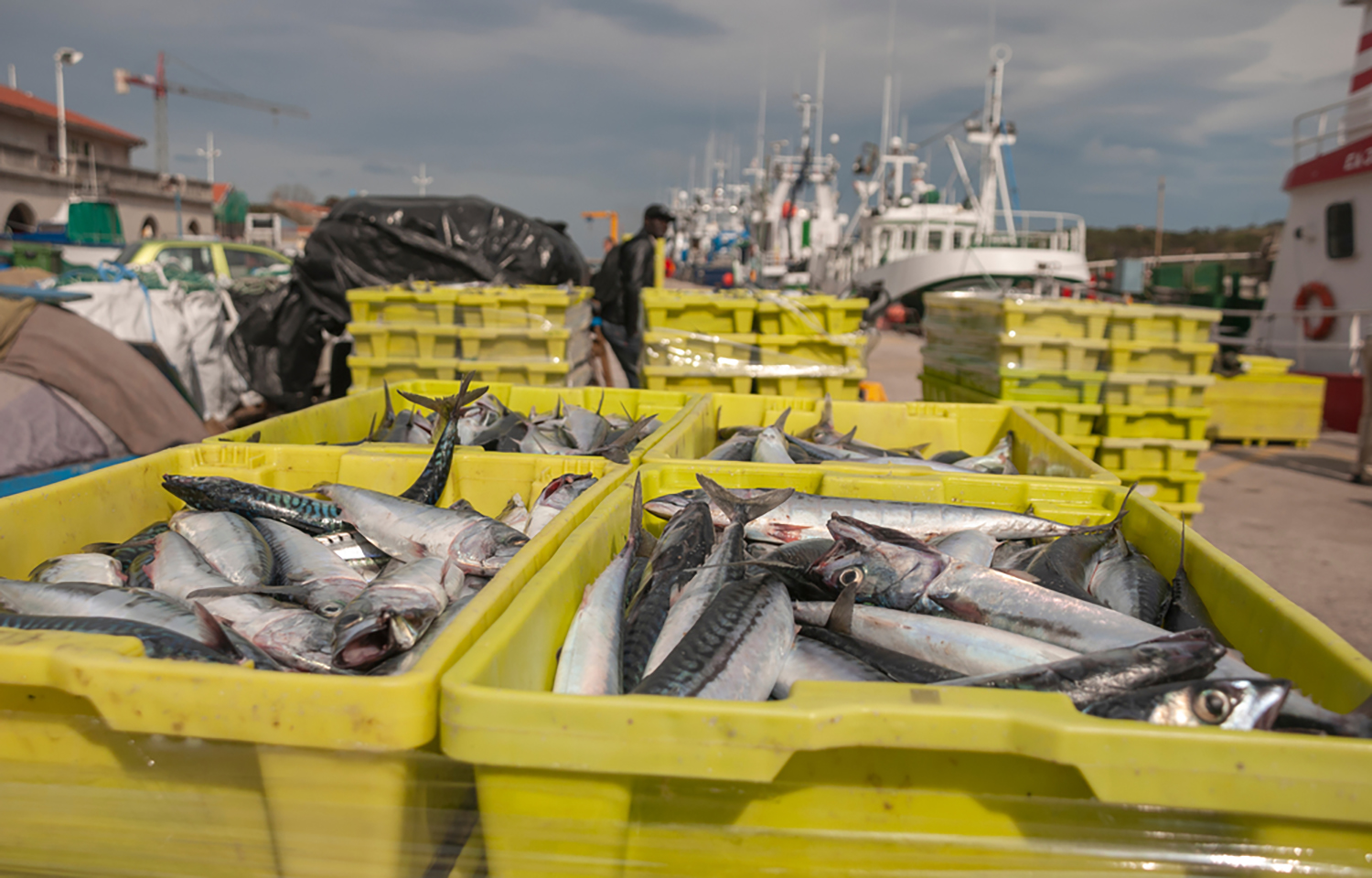
The Marine Conservation Society (MCS) recently downgraded Northeast Atlantic mackerel caught by midwater trawlers from a 3 to a 4 rating in the 2025 spring update to its Good Fish Guide, which measures the environmental impact of harvesting seafood species.
In tandem with the downgrade, the U.K.-based environmental charity recommended that businesses not source the species and has reignited calls to end the political impasse surrounding the species’ management and quota shares that has led to long-term overfishing of the stock.
MCS’s Good Fish Guide uses a 1 to 5 rating system, where fish rated 1 and 2 are considered "best choices” for consumers to eat, 3 can be eaten but not too often, and 4 and 5 are not recommended. The latest update also had mackerel caught in the Northeast Atlantic by hook-and-line fishing moving from a 2 to a 3 rating.
Explaining the mackerel downgrade, MCS said that while some management measures are in place, enforcement remains insufficient, and though countries like Norway, Iceland, the Faroe Islands, and the U.K. all fish this stock, there’s no unified management plan to prevent overfishing across the entire fishery.
The organization said that catch limits set by all nations fishing the stock have “consistently exceeded scientifically recommended levels” by between 5 percent and 80 percent since 2009, and in the period between 2020 and 2024, total allowable catches (TACs) were, on average, 39 percent higher than scientific advice.
Although actual catches have typically fallen below these TACs, they have still exceeded recommended levels by an average of 23 percent, MSC said, insisting that all parties must now work together to develop an appropriate strategy that leads to stock recovery.
“It’s deeply concerning to see a source of seafood that was once a sustainable choice in such decline. Mackerel is under immense pressure from fishing activities across multiple nations, and the stock will soon no longer be able to sustain itself,” Good Fish Guide Manager Alice Moore said.
MCS recommended that a “more sustainable alternative” to mackerel is herring from the North Sea and eastern English Channel or sardines from Cornwall certified by the Marine Stewardship Council (MSC).
The downgrading has drawn mixed reactions from seafood industry stakeholders.
In a statement criticizing the move, Scottish Pelagic Fishermen’s Association CEO Ian Gatt said MCS only considered fishing pressure and not the actual state of the stock, with Northeast Atlantic mackerel currently above the maximum sustainable yield (MSY) reference point for sustainable fishing, and as such, the stock size is “relatively healthy.”
Gatt also said MCS “has a reputation for headline grabbing” when it comes to its fish guide and that this is certainly the case with its latest guidance.
“Last year, it was brown crab they focused on, and the year before it was anglerfish. It was perhaps inevitable they would turn their focus onto mackerel next,” he said.
However, Gatt acknowledged that some work needed to be done to ensure the health of the stock.
“We accept there is currently overfishing happening because of other coastal states fishing their own unilaterally set quotas outside international agreement, but the fact is the U.K. has kept its original mackerel share and not increased it and has been working hard to mitigate fishing pressure, including through recent agreements with Norway and the Faroes,” he said. “MCS has failed to recognize this by downgrading their assessment score for mackerel.”
European fishing industry body Europêche also slammed the advice given by MCS.
“If buyers and retailers follow the advice of the NGOs, this will still not improve the chances of successful coastal states negotiations. What it will do is deal a major blow to the last fleet that is showing restraint and responsibility in this fishery: the E.U. fleet,” Europêche said.
It is calling for a reversal of the downgrades, and also for buyers and retailers to take into account the scientific advice and the different approaches to the fishery between the European Union and others. The organization also said the fishing industry expects buyer and retail members of the North Atlantic Pelagic Advocacy Group (NAPA) to keep to their commitment with regards to the fishery improvement program (FIP) for mackerel.
Meanwhile, the North Atlantic Pelagic Advocacy Group (NAPA) has renewed its call for an urgent end to what it calls “the irresponsible management of the fishery.”
NAPA has warned in the past that if sufficient improvements in management of Northeast Atlantic mackerel aren’t delivered until May 2026, its 50-plus retail, aquafeed, foodservice, and seafood processing members will reconsider their pelagic sourcing decisions, potentially turning to other species and regions.
“We are bitterly disappointed to still be in this position, and it is no surprise to see more and more calls for an end to this dearth of leadership,” NAPA Project Lead Rob Blyth-Skyrme said. “Coastal states must recognize their obligations to safeguard the future of Northeast Atlantic mackerel – and the damage caused by their continued inability to cooperate with one another. If they don’t come together to find a way forward, they are taking environmental and economic risks that threaten to destroy the businesses and communities they serve and who depend on the health of this species.”
Recognizing that international political agreements take time to craft and pass, though, NAPA has proposed interim steps coastal states can take to demonstrate they are committed to making progress in mackerel management. These include limiting high seas catches to 10 percent of total catches and focusing on increasing human consumption regarding the use of whole mackerel.
The latest Good Fish Guide update also saw monkfish caught in the North Sea move from a 3 to a 2 rating and blue marlin from a 5 to a 4 rating due to a slight improvement in fishing pressure. Farmed ratings reviewed remained the same, with certified responsibly produced pangasius and tilapia remaining green-rated and farmed bluefin tuna remaining red-rated.
The next update is due in October.
