






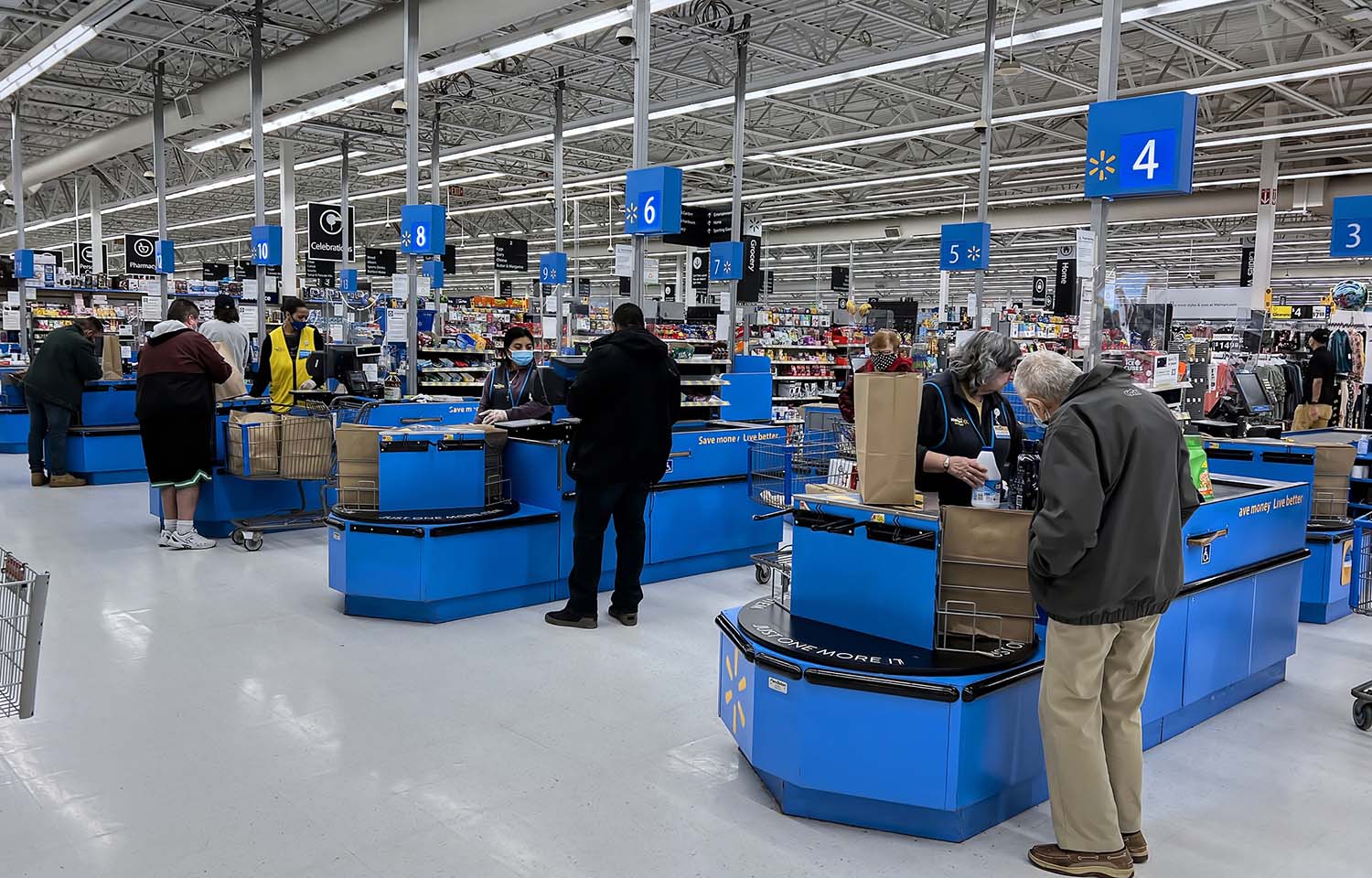
The U.S. grocery industry and seafood suppliers continued to struggle with economic challenges, as Walmart is reportedly cutting hundreds of store-support corporate employees and Kroger consolidates its Texas operations.
U.S. grocery prices rose in June, and around 80 percent of retailers and grocery suppliers believe that trade policies and tariffs will continue to impact pricing and disrupt supply chains, according to FMI - The Food Industry Association’s new report, The Food Retailing Industry Speaks 2025. The report also found foodservice operators are similarly worried about higher food costs and tariffs.
Walmart is cutting market coordinators that support some market managers, who are responsible for supervising around 12 stores managers each, per Bloomberg News. The company is also slashing some coach and coordinator roles at Walmart Academy, which trains store employees and managers, according to CNBC.
Walmart also said it would cut around 1,500 jobs in May. The massive global retailer is the largest private employer in the U.S. with about 1.6 million employees.
Meanwhile, Kroger said in an email that it is consolidating its Dallas and Houston, Texas, U.S.A., operations, which consist of over 210 stores and 26,000 employees in Texas and Louisiana, according to Grocery Dive. Reorganizing will help the Cincinnati, Ohio, U.S.A.-based grocery chain simplify operations and increase efficiency, allowing it to keep’ prices low and invest in its workers, according to Kroger Senior Vice President of Retail Divisions Valarie Jabbar.
Kroger named Dallas Division President Rudy DiPietro as the head of the new Texas division.
Meanwhile, most retailers and grocery suppliers expect operating costs to remain elevated this year, according to the FMI report.
“Our industry, long accustomed to operating on narrow margins, is once again feeling economically squeezed, with food retail profit margins settling at 1.7 percent,” FMI President and CEO Leslie G. Sarasin said. “These performance pressures remain persistent, and the outlook presented in our recent analysis highlights a broader trend – a sharp rise in costs associated with regulatory actions at the federal and state levels and their impact on the food industry in recent years.”
As regulatory burdens and complexity continue to grow, the grocery and food industry is bracing for even greater costs ahead, according to Sarasin.
"With more than half of suppliers and over one-third of retailers expecting increased compliance expenses in 2025, we are focused on advocating for changes to these policies and on providing tools to our members to help reduce the compliance burden,” Sarasin said.
Similarly, 74 percent of consumers and 66 percent of foodservice operators are worried tariffs and economic volatility will hurt the food industry – adding fuel to price pressures and procurement challenges, Datassential found in its 2025 Midyear Trends Report. Seventy-one percent of foodservice operators agree that tariffs are just one more challenge on top of inflation, labor shortages, and supply chain issues.
Additionally, the overall U.S. Consumer Price Index rose 2.7 percent in June versus June 2024, while food at home prices rose 2.4 percent and food away from home inflation soared 3.8 percent.
