






Overall grocery prices soared 3.2 percent year over year in August, according to the U.S. Consumer Price Index, coinciding with when retailers warned they may have to start passing along increased tariff and supply chain costs.
In early August, National Retail Federation Executive Vice President of Government Relations David French said tariffs introduced by U.S. President Donald Trump on 31 July would impact merchandise as soon as mid-August.
“We encourage the [Trump] administration to negotiate binding trade agreements that truly open markets by lowering tariffs, not raising them,” he said. "These higher tariffs will hurt Americans, including consumers, retailers and their employees, and manufacturers because the direct result of tariffs will be higher prices, decreased hiring, fewer capital expenditures, and slower innovation.”
With the month now complete, data shows that food-at-home costs inclined 2.7 percent in August year over year and 0.6 percent month over month.
“Food price inflation continues to experience challenges driven by input costs and market uncertainties,” Food Marketing Institute (FMI) Vice President of Tax, Trade, Sustainability, and Policy Development Andy Harig said, adding that the price incline is likely a result of “significant production cost increases flowing through the supply chain.”
Sectoral tariffs on materials like aluminum and steel are raising input costs, and broader country-specific tariffs could further pressure prices, especially for imported food items and packaging, FMI said during a recent webinar.
Around 80 percent of retailers expect tariffs to impact prices and supply chains, FMI’s SPEAKS 2025 report found. Limiting their ability to absorb those cost increases, retailers operate on extremely slim margins of about 1.7 percent, FMI said.
On the consumer side of the equation, the impact of tariffs on grocery prices is shoppers’ top concern, with 57 percent of U.S. consumers saying they are either “very” or “extremely” concerned, according to FMI.
FMI executives are continuing to pay attention to tariffs and other economic pressures that can impact production costs, supply chains, labor availability, and consumer purchasing power, according to Harig.
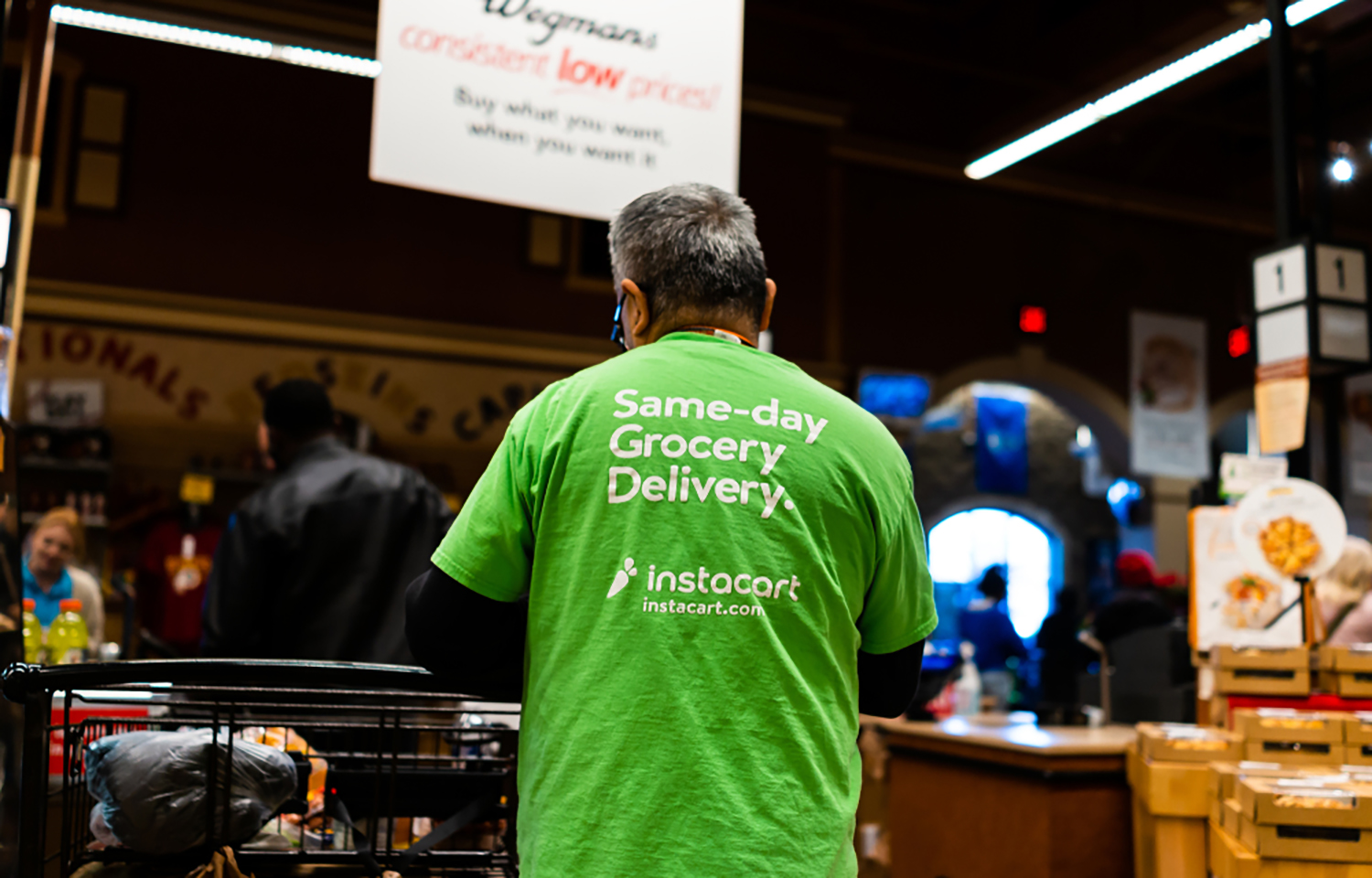
Despite the rise in grocery prices, U.S. online grocery sales hit a record high in August, rising 14 percent to USD 11.2 billion (EUR 9.5 billion), according to a recent Brick Meets Click Grocery Shopper Survey.
Sales of groceries via delivery jumped 30 percent compared to the prior year, fueled by a strong expansion of its monthly active user (MAU) base.
“As the U.S. e-grocery market continues to expand at an exceptionally strong pace, a key heads up for grocery operators is the growth of multi-method, multi-channel shopping, including cross-shopping with mass retailers like Walmart,” Brick Meets Click Partner David Bishop said.
Trying to take advantage of the e-commerce trends, retail giant Amazon announced in August that customers in more than 1,000 U.S. cities can now shop for perishable grocery products – including fresh seafood – as part of its home delivery service.
“This marks one of the most significant grocery expansions for Amazon as the company introduces thousands of perishable food items into its existing logistics network that is already optimized for speed and efficiency,” Amazon said.
