






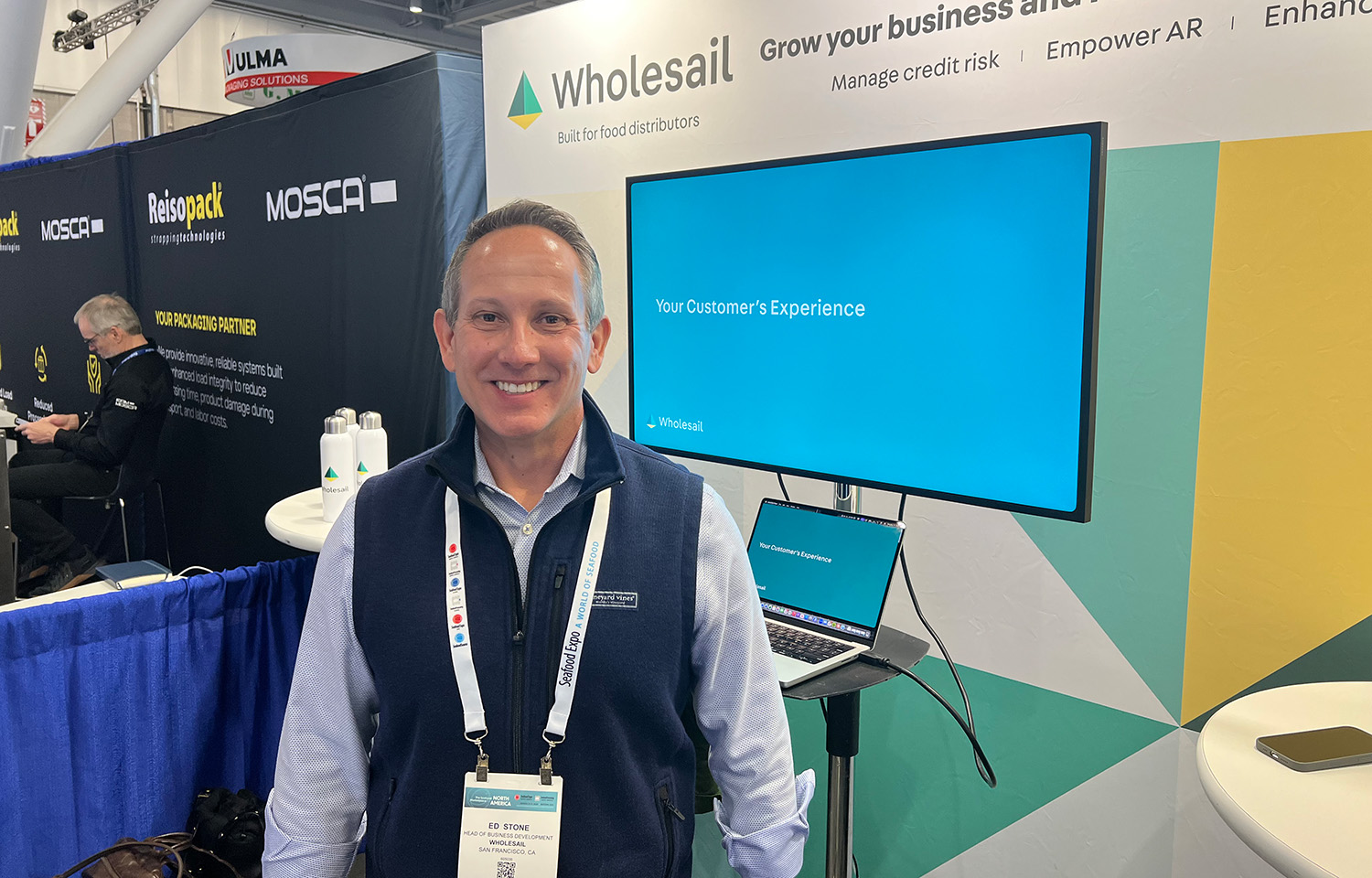
Through its digital payment platform, San Francisco, California, U.S.A.-based technology startup Wholesail is offering seafood distributors a more efficient way to connect with end customers, lessen risk in their supply chains, and get paid on time.
Wholesail CEO Eli Chait grew up in the restaurant business; at age 12, he was entering invoices for his father’s restaurant. Even at a young age, Chait saw that invoices were frequently lost and noticed the strain that put on the relationship between distributors and end customers like restaurants.
That issue remained prevalent when Chait started Wholesail in 2018, with the goal of “restor[ing] harmony and bring[ing] efficiency to the relationship between companies and their customers,” according to the company.
“A restaurant might have 20 or more different suppliers they’re dealing with, and a lot of that is still paper-based so how do they know what they owe at any given time?” Wholesail Head of Business Development Ed Stone told SeafoodSource at the 2026 Seafood Expo North America. “If a restaurant doesn’t have visibility of everything they owe, they could think they’re OK from a cash flow perspective but maybe they’re not. Wholesail is built to make it easy for the end buyer of seafood, for example, to know where they stand with the vendors they deal with. It helps both buyers and distributors.”
Though the accounts payable and receivable component of the business remains a core focus, Wholesail has also recently offered credit risk analysis services through its platform within the past year, granting distributors the ability to determine whether an end customer is trustworthy before a partnership is fully established.
“We are trying to help distributors who want to do business with a customer [identify] how risky they are to do business with and what kind of terms they should extend to them. A lot of the time distributors are flying blind,” Stone said. “They are being asked to be a lender, but they’re not a bank and … don’t have the tools to vet [a customer] before giving them a loan.”
The data Wholesail uses leverages information from distributors’ existing customer portfolios, ranking end buyers through their past histories of completing payments on time and, therefore, their risk of default as a partnership matures.
“That tells a distributor that their accounts receivable team only has to focus on those customers who are the highest risk. Maybe they don’t need to spend time chasing people who pay just a day or two late,” Stone said.
That data, according to Stone, is anonymized so distributors do not have the ability to see other distributors' customer lists.
Stone also confirmed that the firm is mainly present in a handful of major locations around the U.S. but is actively working with major broadline distributors to widen that reach.
“Customers tell us, ‘Now that we see what you do, you not only helped us get onboard very quickly and helped us achieve the business results we wanted to achieve but also when my buyers have a question, they come directly to you. So, it’s not a burden on me to deploy wholesale,’” Stone said.
