




Friend of the Sea (FOS), the sustainability certification scheme overseen by the World Sustainability Organization (WSO), is introducing new labels for its certified products and services.
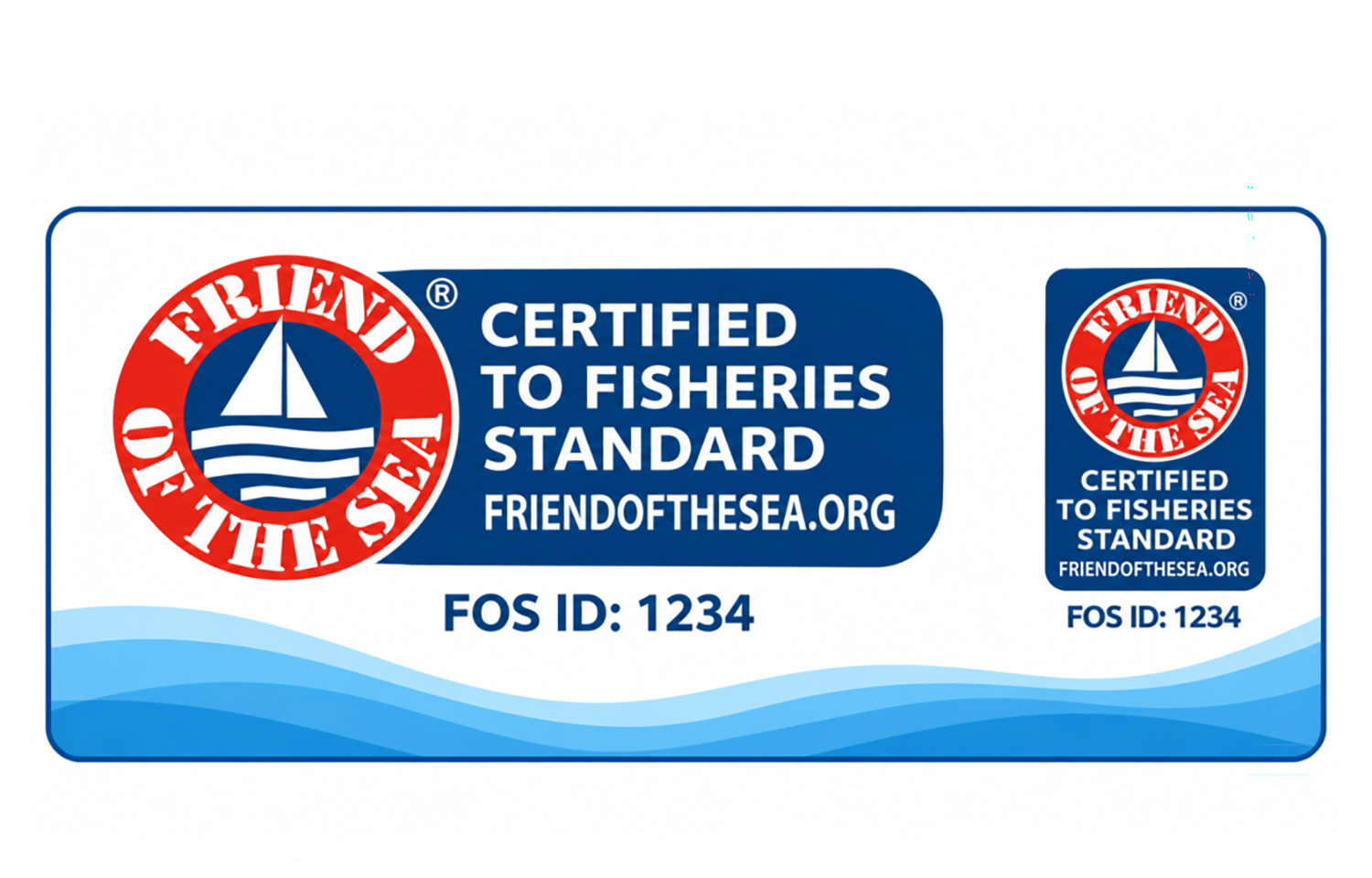
The new labels combine the existing Friend of the Sea logo, which has been used since 2008, with a sector-specific certification claim, such as “Certified to Fisheries Standard,” alongside a unique FOS ID that connects the label to its relevant certification record.
That record allows consumers and supply chain stakeholders to use the verification directory on the organization’s website to check the company, certified products or species, applicable standard, certificate validity, and expiry date.
Friend of the Sea said the changes are designed to strengthen transparency, traceability, and the credibility of environmental claims while making it easier for consumers and supply chain stakeholders to establish exactly what a certification covers.
The rollout comes as the E.U.’s Empowering Consumers for the Green Transition Directive enters into application. The directive has applied in E.U. member states since 27 September and introduces tighter rules around environmental claims and sustainability labels.
Friend of the Sea Founder and Director Paolo Bray told SeafoodSource the previous labeling approach was already compliant with the directive but that the organization decided to make the scope of its certification more explicit as its program has expanded beyond fisheries and aquaculture into areas including omega-3 and marine collagen production.
“Certification marks vary in how readily consumers understand them, and broad sustainability language should always be supported by the actual scope of the standard,” Bray said. “Our choice is to make that scope explicit and directly verifiable through the FOS ID.”
The approach, he added, is intended to prevent “practical misunderstandings” about what a certification covers.
“For example, assuming that certification of the fish oil in a supplement covers every ingredient or that one certified product means a brand’s entire range is certified … illustrate the ambiguities we aim to prevent, rather than a quantified pattern of consumer complaints,” he said.
Claims are now available for all sectors covered by Friend of the Sea, including fisheries, aquaculture, omega-3, marine collagen, and sunscreen, across 22 standards listed in its Official Product Claims Register. The label includes the Friend of the Sea web address and the FOS ID, positioned directly below it.
“Each ID identifies a defined certification scope, which may cover several products or species. Certificate documents and originating fishery or farm details depend on the relevant record; the ID is not an individual package serial number or a public batch-tracking system,” he said, adding that commercially sensitive information, including prices, contracts, proprietary formulations, and personal data, remains protected.
According to Bray, the new system also gives Friend of the Sea a more structured mechanism for reviewing how certification claims are presented on packaging and in promotional material.
“Companies must submit their complete packaging or promotional layout for written approval, allowing us to review the label, FOS ID, accompanying wording, and placement together,” he said.
Its guidelines also prohibit companies from combining the Friend of the Sea label with generic, unverified environmental claims.
“Where certification covers only an ingredient or component, that limitation must be explicit. Certification of the fish ingredient in a prepared meal, for example, must not imply certification of the entire meal,” Bray said.
Additional explanation from Friend of the Sea's Official Product Claims Register is optional, but clear disclosure of a limited certification scope is mandatory where applicable.
Since its launch in 2008, more than 1,600 companies have joined the Friend of the Sea program and obtained certification for products or activities within its scope. These include fisheries, aquaculture producers, processors, marine ingredient businesses, and related sectors.
