



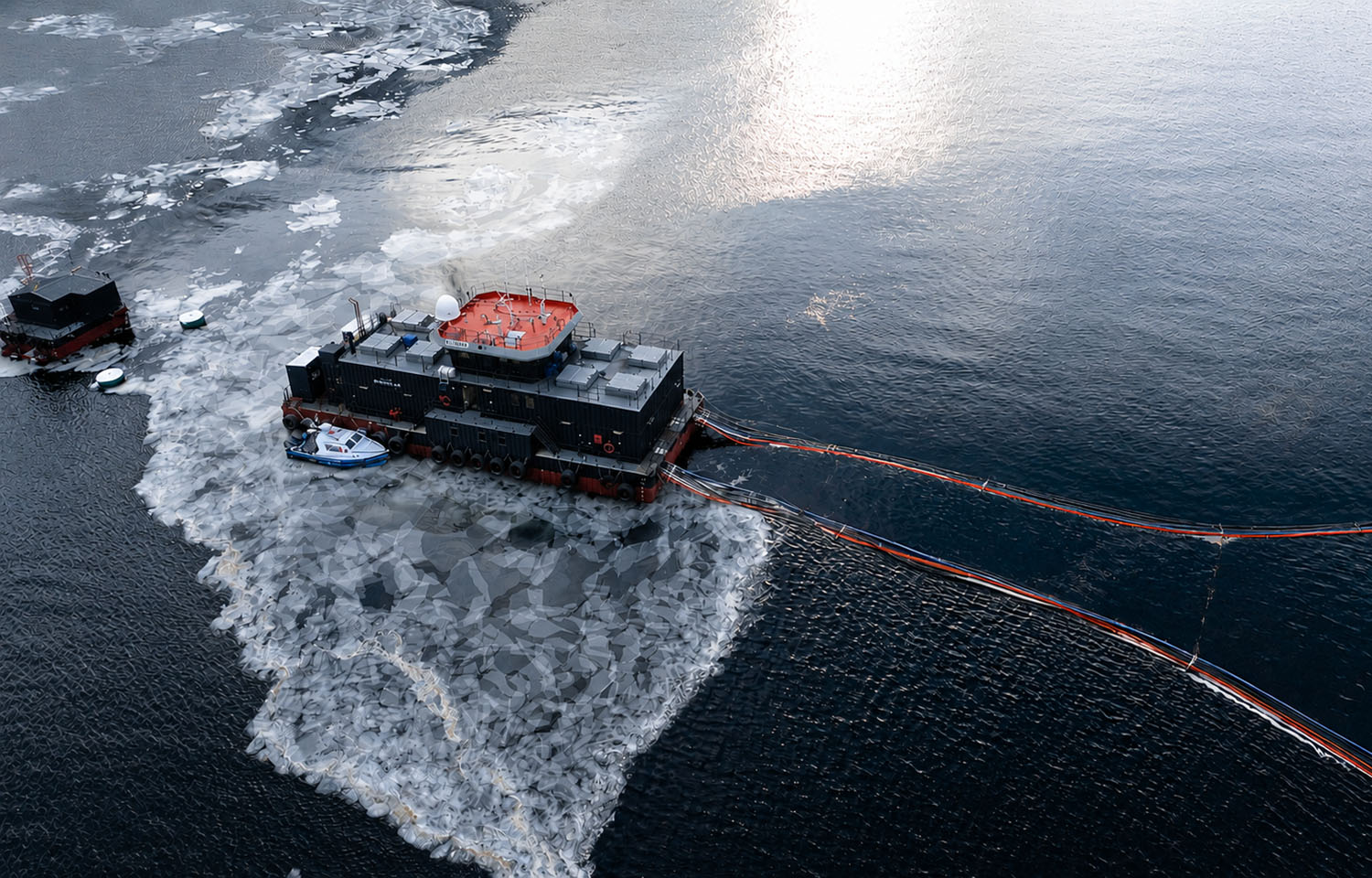
Chilean salmon-farming firm AquaChile has begun to employ hybrid energy systems on some of its pontoons, leading to a 35 percent cut in diesel consumption.
The company plans to roll out the energy systems at 14 hybrid pontoons, cutting down on the use of diesel generators.
Pontoons, considered the operational core of farming centers, are usually powered by diesel generators as they lack connection to a conventional electricity grid. The pontoons manage automatic fish feeding, monitoring systems, communications, lighting, security systems, and other functions necessary to maintain operation; as such, energy continuity is critical, and batteries can be an immediate backup against power demand variations or generator downtime, keeping essential systems active while supply normalizes.
AquaChile has deployed the systems at two pontoons to date and expects to complete rollout at the remaining 12 by year-end. Once they are all operational, the company expects to cut nearly 2,000 metric tons of carbon dioxide emissions per year.
The facilities combine conventional generators with battery storage systems, managed by a platform that automatically determines the most efficient energy source according to the demand at any given time. When consumption decreases, the batteries can power part of the operation, foregoing the need for generators to remain continuously on. The generators are then activated when demand increases or when the storage system needs to be recharged.
The decrease in engine operating hours also reduces equipment deterioration and maintenance requirements, according to AquaChile, while other benefits include the reduction of noise and vibrations inside the pontoons – to the benefit of those living and working at and around the farming centers.
“This project reflects our conviction that innovation must translate into concrete improvements for our operation, for the people who work in it, and for the environment where we perform our [business] activity,” AquaChile Production Manager José Manuel Schwerter said in a release. “Incorporating hybrid technology allows us to move toward increasingly efficient and responsible production.”
The project forms part of AquaChile’s broader initiative toward digitalization, automation, and efficient use of resources in aquaculture, Schwerter said.
In 2024, 26.4 percent of the energy the company used came from renewable sources, marking a reduction of Scope 2 emissions by 21.1 percent compared to the previous year, he noted.
Other AquaChile sustainability initiatives include supporting the repurposing of expanded polystyrene (EPS) obtained from salmon-farming firms into panels used to build houses; incorporating renewable liquefied natural gas (BioLNG) as fuel in the trucks that transport salmon; and sending products to the U.S. aboard a plane using sustainable aviation fuel (SAF).
