




Iceland’s first whaling season since 2023 recently wrapped up, and the country’s only active whaling firm, Hvalur, hunted 93 fin whales during the three-month period.
The season kicked off in June, despite the fact Hvalur has faced heavy public backlash for years.
Even as pushback grew, Hvalur was granted another license to hunt whales in 2024 – a decision that was heavily criticized by most parties in Iceland – though too late into the year for a season to take place. The next year, Hvalur internally decided to cancel the season, citing poor market conditions in its main export destination of Japan.
After two seasons without a whale hunt, Hvalur resumed the practice, taking advantage of the quota the North Atlantic nation set for the year at 150 fin whales.
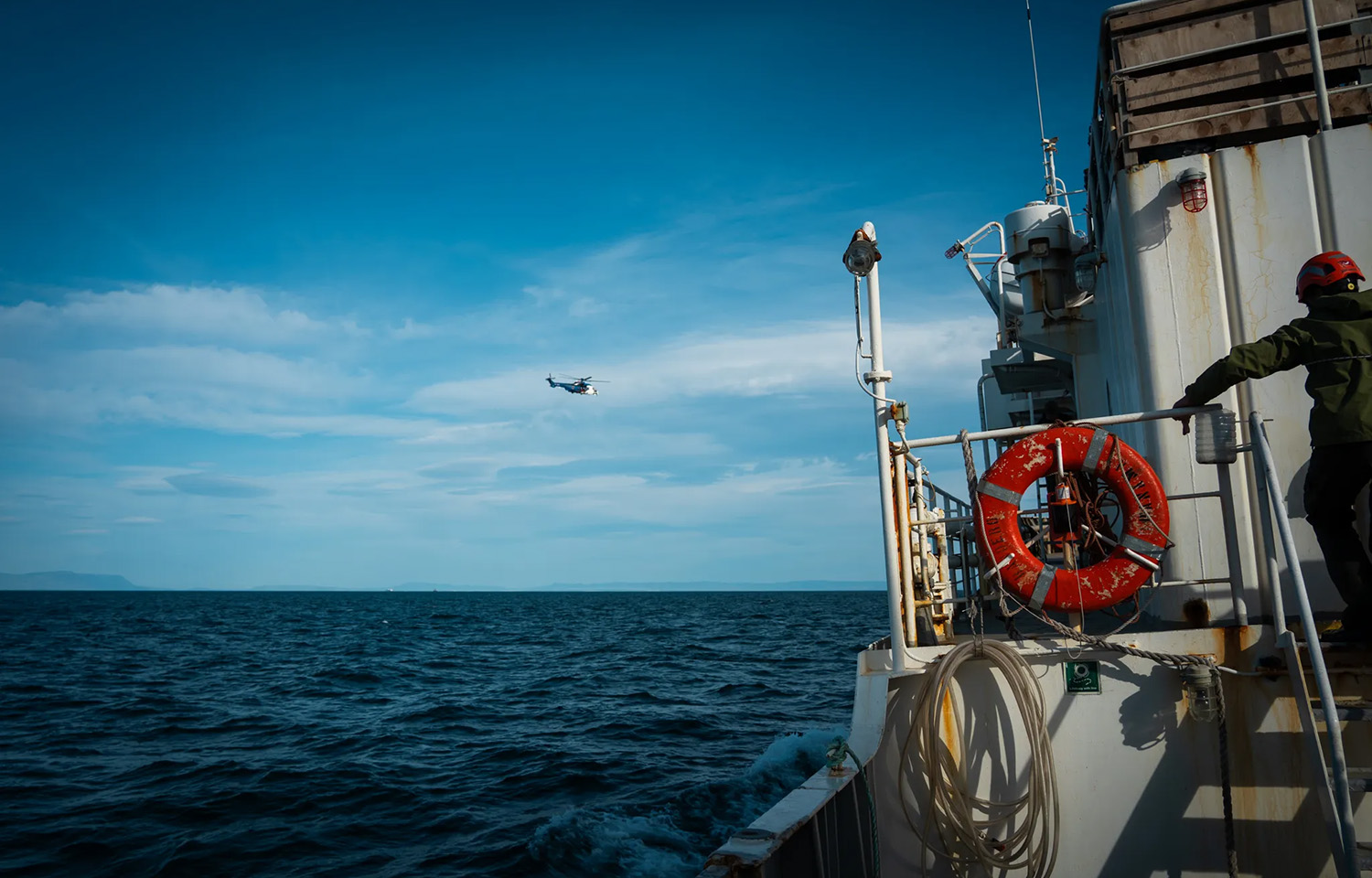
This season, yet again, faced fierce scrutiny; at one point, the crew of the Bandero, a ship belonging to animal rights activist and Sea Shepherd Conservation Society Founder Paul Watson, was detained by the Icelandic Coast Guard following a confrontation at sea.
“Throughout [its] campaign, the Bandero was closely monitored by the Icelandic Coast Guard. According to the foundation, Coast Guard aircraft, helicopters, drones, patrol vessels, and other resources were repeatedly used to track the Bandero’s movements whenever it approached Hvalur’s whaling vessels,” the Captain Paul Watson Foundation said in a statement. “The foundation states that the Bandero was required to report its position to the Coast Guard every hour and continuously broadcast its automatic identification system (AIS) signal. In contrast, the foundation alleges that Hvalur’s whaling vessels were permitted to operate without transmitting AIS while actively hunting.”
Following the conclusion of the controversial season, Icelandic Minister of Industry Hanna Katrín Friðriksson said she plans to present a bill to Icelandic Parliament in February 2027 that would end whaling in the country.
Valgerður Árnadóttir, a former member of Icelandic Parliament and co-founder of the organization Hvalavinir, which translates to Whale Friends, told SeafoodSource she is hopeful the season’s conclusion marks the last summer of whale hunting in Iceland.
"I am cautiously optimistic that we are finally approaching the end of commercial whaling in Iceland. There is growing recognition that the industry has no sustainable future, either economically or in terms of animal welfare. However, I would hesitate to declare this the last whaling season until legislation has actually been adopted. We have seen before how political pressure and powerful commercial interests can delay progress. The coming months will be crucial, and we will continue to push for a permanent legislative solution rather than relying on individual companies deciding whether or not to hunt,” she said, adding that she expects the bill to pass by a slim majority.
However, Krístján Loftsson, the owner of Hvalur, said he would take the government to court if it decides to impose a ban.
"This will cost them a great deal of money, and these ministers don't care because they don't have to pay for it themselves. They pass it all on to the taxpayers," he said, according to Icelandic public broadcaster RUV.
Hvalur’s hunting permit doesn’t expire until 2029, but the firm hasn't been able to meet whaling quotas in the years it has decided to hunt. This year, the company killed 93 fin whales but ended early, as weather conditions did not cooperate, according to RUV.
According to Árnadóttir, the industry has been struggling for a while to find a profitable market for whale meat.
"Commercial fin whaling in Iceland has been financially unsustainable for years, and the market for Icelandic whale meat is almost non-existent. The industry has depended almost entirely on exports to Japan, where demand for whale meat has declined dramatically," she said. “Iceland has an opportunity to move beyond an industry that causes unnecessary suffering, generates international controversy, and offers increasingly questionable economic benefits.”
Instead of moving on, Loftsson announced intentions to stop selling fin whale meat to Japan and, instead, said he would look into producing iron supplements from the meat his firm harvests. He further explained that if such an end product finds success, it might result in increased whaling across the globe.
"I think many will want to go whale hunting when people have them off the coast of their countries, and their people are suffering from anemia. This could lead to an increase in whaling worldwide. In Sub-Saharan Africa, this is a big problem, but there are large whale populations off the West Coast of Africa," he told Icelandic newspaper Morgunblaðið.
Some have speculated whether Loftsson’s commitment to the practice is less about actually conducting whaling operations and more about making a political statement.
“It is perverse that Loftsson intends to kill fin whales again even though he cannot sell the meat,” International Fund for Animal Welfare Germany Campaign Manager Andreas Dinkelmeyer said in a release before this year’s season kicked off. “We question whether he has ulterior motives such as using whaling to inflame political debate, with fin whales ultimately paying the price as collateral damage. One possible aim could be to delay proposed reforms to Iceland’s whaling laws and influence the upcoming referendum on resuming E.U. accession negotiations.”
