



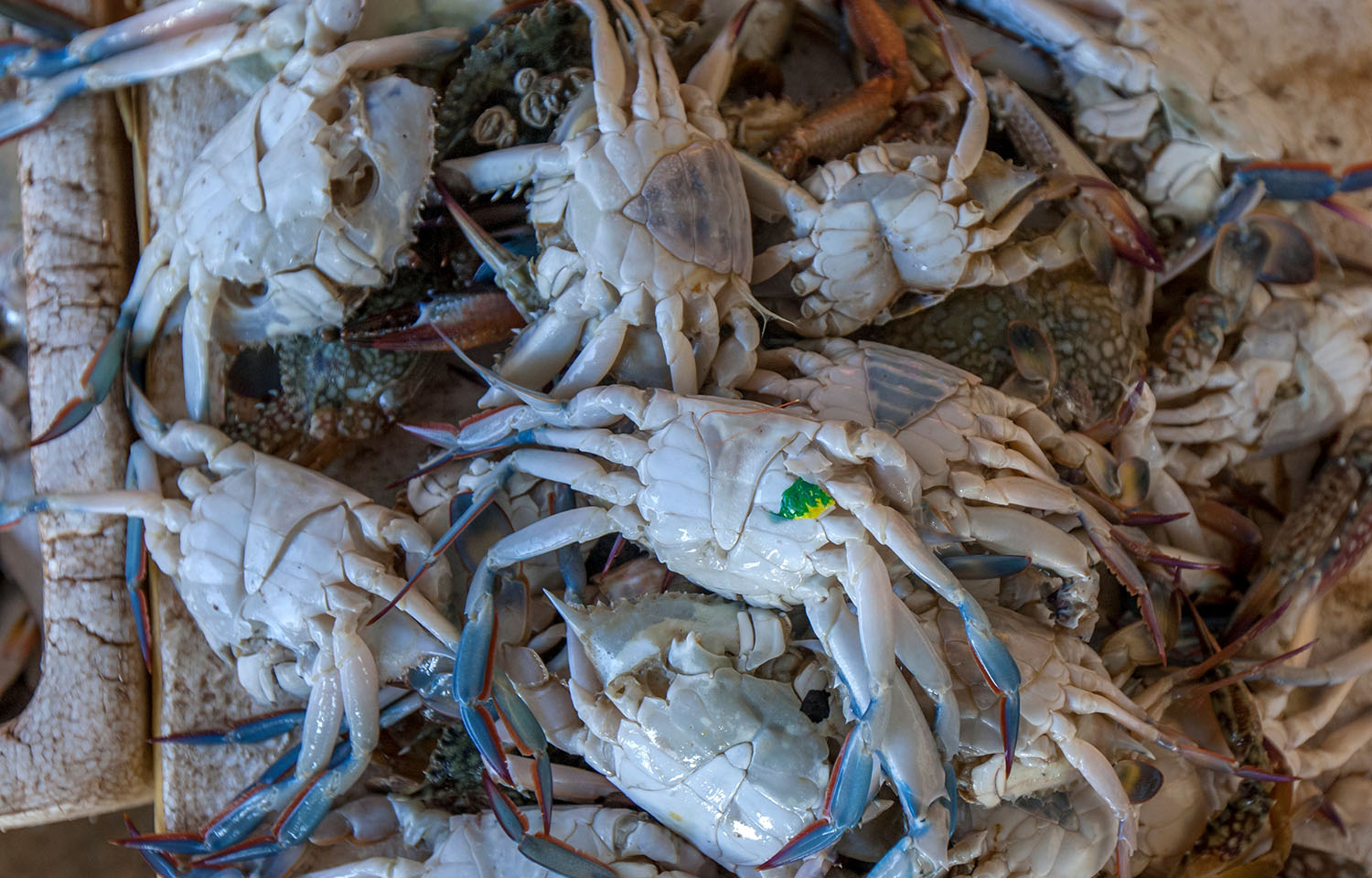
The Northwestern Sri Lanka blue swimming crab fishery has achieved certification to the Marine Stewardship Council (MSC) standard, marking a first for the country, after over a decade of work.
The MSC announced the certification, which covers the wild capture of Portunus pelagicus, will apply to fishing in two areas off Sri Lanka’s northwestern coast in Palk Bay and the Gulf of Mannar. The certification follows a fishery improvement project (FIP) and covers small-scale fishers using bottom-set gillnets using traditional boats and small motorized vessels.
“The success of the fishery improvement project in achieving MSC certification is built on a three-way partnership that promotes responsible harvesting by fishers, responsible purchasing by the seafood supply chain, and collaborative fisheries management by the [Sri Lankan] Department of Fisheries,” FIP Project Coordinator Steve Creech said in a release.
The Seafood Exporters’ Association of Sri Lanka, with support from the then-U.S. National Fisheries Institute (now National Seafood Association) Crab Council, helped start the certification process in 2013 by bringing together stakeholders to work on improving the scientific data available on the blue swimming crab stock. Those efforts have enhanced stock assessments and allowed the development of a science-driven harvest strategy and fishery management plan, MSC said.
Taprobane Seafoods Co-Founder and Managing Director Timothy O’Reilly said the certification will give the company, which is the largest seafood company in Sri Lanka and operates a blue swimming crab fishery and processing facility, the opportunity to build new partnerships and supply more markets with its products.
“It’s remarkable to reflect that we began this journey shortly after the end of Sri Lanka’s 30-year civil conflict,” O’Reilly said. “Years of dedication and collaboration have brought us to this important milestone for the fishing communities we work with and Sri Lanka’s blue swimming crab industry.”
Sri Lanka Department of Fisheries and Aquatic Resources Director-General Susantha Kahawatte said the certification is an important milestone for the department in its path toward sustainable fisheries management.
“This achievement supports the conservation of marine resources, safeguards fishing livelihoods, and strengthens Sri Lanka’s position in international seafood markets,” Kahawatte said. “MSC certification demonstrates our commitment to the long-term sustainability and competitiveness of the fisheries sector.”
