

Bantry Bay in Ireland’s County Cork has become a key testing ground for the E.U.’s lofty ambitions to radically expand farmed seaweed production over the next decade.
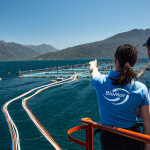
In the bay, which is just over 30 kilometers long and located along Ireland’s Wild Atlantic Way, Irish firm Óir na Farraige has installed a seaweed cultivation system designed by Norwegian marine technology company Arctic Seaweed, aiming to increase harvest yields and reduce costs compared to traditional seaweed production, as well as enhance the mechanization of such production processes.
The cultivation system is part of the Seaweed in Ecosystem Enhancing Aquaculture for Growth and Sustainability (SeaGrow) project – a EUR 1.4 million (USD 1.57 million) research project funded through the European Maritime, Fisheries, and Aquaculture Fund (EMFAF) that brings together Óir na Farraige and marine researchers from Bulgaria, Portugal, Malta, the Netherlands, and Ireland.
Arctic Seaweed CEO Kim Kristensen told SeafoodSource that the Bantry Bay site where Arctic’s system is installed is “high energy,” meaning it’s left exposed to high waves and storms.
Kristensen explained that the key to Arctic Seaweed’s technology is its modular and scalable design, which allows the system to be adaptable once in the water. For instance, lines can be widened or narrowed but also lowered to adjust to varying weather and nutritional conditions.
He added that projects like SeaGrow are vital for the development of Europe’s seaweed cultivation because they allow different bodies of water to be tested in an effort to find optimal production conditions.
With more than 7,500 kilometers of coastline, Ireland is uniquely positioned to become an optimal site for regenerative ocean farming, according to Óir Na Farraige CEO Gareth Murphy, who is also chair of the Irish Seaweed Association.
The modular Arctic system his firm has installed allows for larger volumes of seaweed production but “also allows seaweed farms to skip the hatchery process and go straight to sea, thus reducing production costs,” Murphy explained to SeafoodSource.
“The system gives us more space, and it’s five times the production of traditional methods, which is very important in delivering biomass,” he said.
Murphy has elsewhere praised the company’s technology as “10 years ahead of” rivals in terms of seeding technology and the volume its modules can produce in the water.
Besides boosting harvest yields, the E.U. is also funding SeaGrow to assess the ability of seaweed farms to remediate marine ecosystems, or remove harmful organics like nitrates from the water, and sequester carbon, all of which will be monitored by scientific experts partnered with the project.
SeaGrow comes as the E.U. Commission has laid out goals to achieve 8 million tons of farmed seaweed production by 2030, estimating the sector has the potential to unlock EUR 9 billion (USD 10.1 billion) in economic value while creating 115,000 jobs.
However, European seaweed production has actually fallen in the past decade, according to a study by Netalgae. Currently, 99.5 percent of the world’s 35.2 million tons of cultivated seaweed is farmed in Asia, according to the Food and Agriculture Organisation (FAO).
Kristensen said the European seaweed sector is still in its “early stages” and E.U. targets are “very ambitious.” He clarified that the biggest challenge is not the bloc’s ability to produce but, rather, finding the markets to justify such output.
“It’s still chicken and egg. Demand is not sufficient yet to support an interim price that would guarantee investment; with scale, the price will fall. There is not enough biomass yet to ensure that major players invest or commit to long-term purchasing contracts,” he said, emphasizing that seaweed is versatile and has a wide range of uses from agricultural biostimulants to cosmetics, food ingredients, and bioplastics. “[Major buyers] need to see an established supply chain before they commit.”
In the meantime, though, projects like SeaGrow are vital to establishing whether “we can meet [E.U.] targets rapidly,” Kristensen said.
While Ireland’s coastline may provide ideal conditions for seaweed production, navigating the country’s laborious aquaculture licensing system has proven to be a scaling challenge for some growers.
Dúlra Irish Seaweed is one company that has faced such issues.
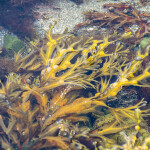
The firm began growing trials in 2018 and operating in 2021, farming edible winged kelp on 20 hectares of foreshore at County Mayo’s Blacksod Bay. In 2024, the company opened a drying and processing facility to process winged and sugar kelp, both of which are native to the area.
“It’s very, very difficult to get a license,” Dúlra Co-Founder Anthony Irwin told SeafoodSource “It took me six years to get the original license. It’s such a long, drawn-out process.”
Though bureaucracy has proven an issue, he said he is optimistic on the demand for his product, confirming client demand for the product remains strong, including from health food stores.
“A couple of clients use it in ingredients for skincare,” Irwin said.
Irwin has a national distribution deal with the Irish supermarket chain SuperValu in whose stores a 50-gram pack of winged kelp – marketed as a salt replacement, an ingredient for baking and smoothies, and a natural source of protein, vitamin B12, zinc, and both omega-3 and omega-6 – retails for EUR 6.50 (USD 7.27).
Aside from selling directly to consumers, Irwin has also been approached by large multinational firms seeking his supply.
“We’re targeting high-end food and skincare. There’s a consistency for [buyers]; we know how much can be produced,” Irwin said.
Provided he secures the necessary licenses, Irwin said he hopes to expand production.
“It’s proof that there’s a market for this product and jobs for the local community,” he said, adding that his firm is eyeing future sales across Europe and the U.S.
Meanwhile, the nation’s wild capture production has also hit governmental snags, with Ireland’s Maritime Area Regulatory Authority (MARA) announcing earlier this year it would be pausing the processing of applications for licenses to harvest wild seaweed from the country’s shoreline until 2027 amid a fierce battle between traditional rights holders and larger firms seeking to secure thousands of tons in quota.
