






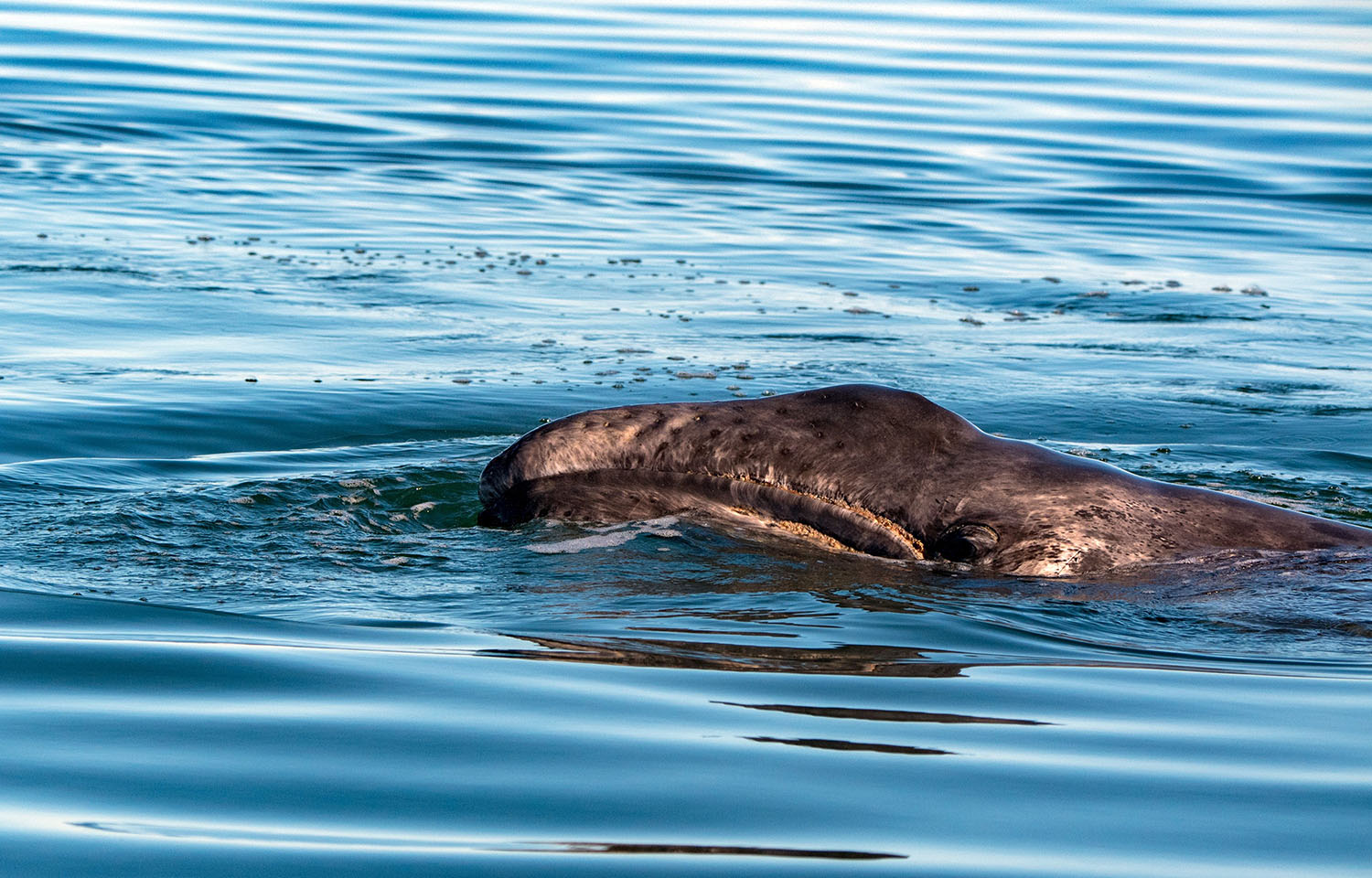
A new study published by NOAA’s Fisheries’ Southwest Fisheries Science Center found that population numbers of gray whales along the U.S. West Coast have increased since 2025.
How and why populations of Eastern North Pacific gray whales are seeing an uptick is still under research, but in a release, NOAA confirmed that the increase "likely exceeds the reproductive capacity of the population.” Last year, the most recent estimate for gray whale calves was the lowest on record at 85. Now, researchers estimate the population of Eastern North Pacific gray whales is between 15,930 and 20,530, which is much higher than last year’s estimate of between 11,690 and 12,890.
“We know that we don’t see every whale,” Southwest Fisheries Science Center research scientist Aimée Lang said in a release. “One of the questions raised by our most recent count is whether we see a consistent proportion of the population every year or whether other factors affect how much of the population we see and count.”
Scientists at NOAA collected the new numbers of gray whale populations by counting whales migrating south and then back north. During this process, scientists found that many whales that were stranded in the spring before reaching Arctic feeding grounds near Alaska were “skinny or emaciated, suggesting they are not finding sufficient food to sustain their round-trip migration between Alaska and Mexico,” the release said.
But, results of increasing populations highlighted the possibility that analytical methods for creating assumptions about gray whale migratory behavior may have changed. Currently, scientists utilize models to calculate annual estimates through visual counts that carry a margin of error. This helps track trends over time but makes it more difficult to pinpoint exact numbers on specific dates, NOAA said. Whales also do not follow the same migratory and feeding strategies year over year, which can also affect count totals.
“For instance, tens of gray whales have left their usual north-south migration route to temporarily occupy San Francisco Bay and other areas on the West Coast in recent years, possibly looking for food,” NOAA said.
These results are driving additional research to refine counting methods and improve analytical methods for estimating abundance, NOAA said, with technology such as drones being considered for whale counting.
In 1994, Eastern North Pacific gray whales were removed from the endangered species list, and numbers peaked between 2015 and 2016 to anywhere from 24,890 to 29,760 whales counted. A spike in whale strandings in 2019 led NOAA to declare “an unusual mortality event,” which lasted until 2023. Since 2019, calf production has remained low, and strandings remain in the general range, but a new unusual mortality event has not been declared as the factors for strandings have not changed since 2019. NOAA, however, reported there were "higher-than-average" whale entanglements in 2024.
NOAA has worked with local and national organizations on mitigation startegies, like AI-powered thermal cameras in San Francisco and "moving up" Oregon's Dungeness crab late season rules for net setting depths.
