




Environmental NGO Oceana has lost an appeal of its lawsuit against the National Marine Fisheries Service (NMFS) after the U.S. Court of Appeals for the Ninth Circuit vacated and remanded an earlier decision, instructing the court to dismiss for lack of jurisdiction.
Oceana first sued NMFS in Alaska District Court in 2024, alleging the agency failed to adequately protect the North Pacific seabed from trawl fishing. The lawsuit claimed NMFS wasn’t fulfilling its obligations under the Magnuson-Stevens Act (MSA) and the National Environmental Policy Act (NEPA).
Oceana was represented by environmental NGO Earthjustice, a nonprofit public interest environmental law organization, in the lawsuit, which challenged amendments to the fishery management plans for the Gulf of Alaska that the group claimed violated the MSA.
“NMFS ignored important obligations under both the Magnuson-Stevens Act and NEPA when it failed to adopt meaningful measures to five fishery management plans for the North Pacific Ocean to help protect corals, sponges, and important seafloor habitat from the destructive effects of trawling,” Earthjustice Senior Attorney Charisse Arce said when the lawsuit was first filed. “There have been massive changes in the North Pacific ecosystem, and NMFS must be adopting management measures that proactively conserve and enhance essential fish habitat.”
The lawsuit’s claims, and the push against trawl fishing, have been steadily opposed by the At-Sea Processors Association and Groundfish Forum, which filed as intervenor defendants on the case. Both organizations have consistently defended the fishing industry and their arguments have also consistently beaten out Oceana’s in court, as the case was dismissed in October 2025, appealed by Oceana in December 2025, and has now been remanded back to the district court with instructions to dismiss again.
“We welcome the Ninth Circuit’s decision. The North Pacific Fishery Management Council and NOAA are global leaders in science-based conservation of essential fish habitat,” At-Sea Processors Association CEO Matt Tinning said. “Extensive area-based conservation measures are in place throughout the North Pacific region, and scientists estimate that over 96 percent of U.S. North Pacific benthic habitat is undisturbed by fishing activity.”
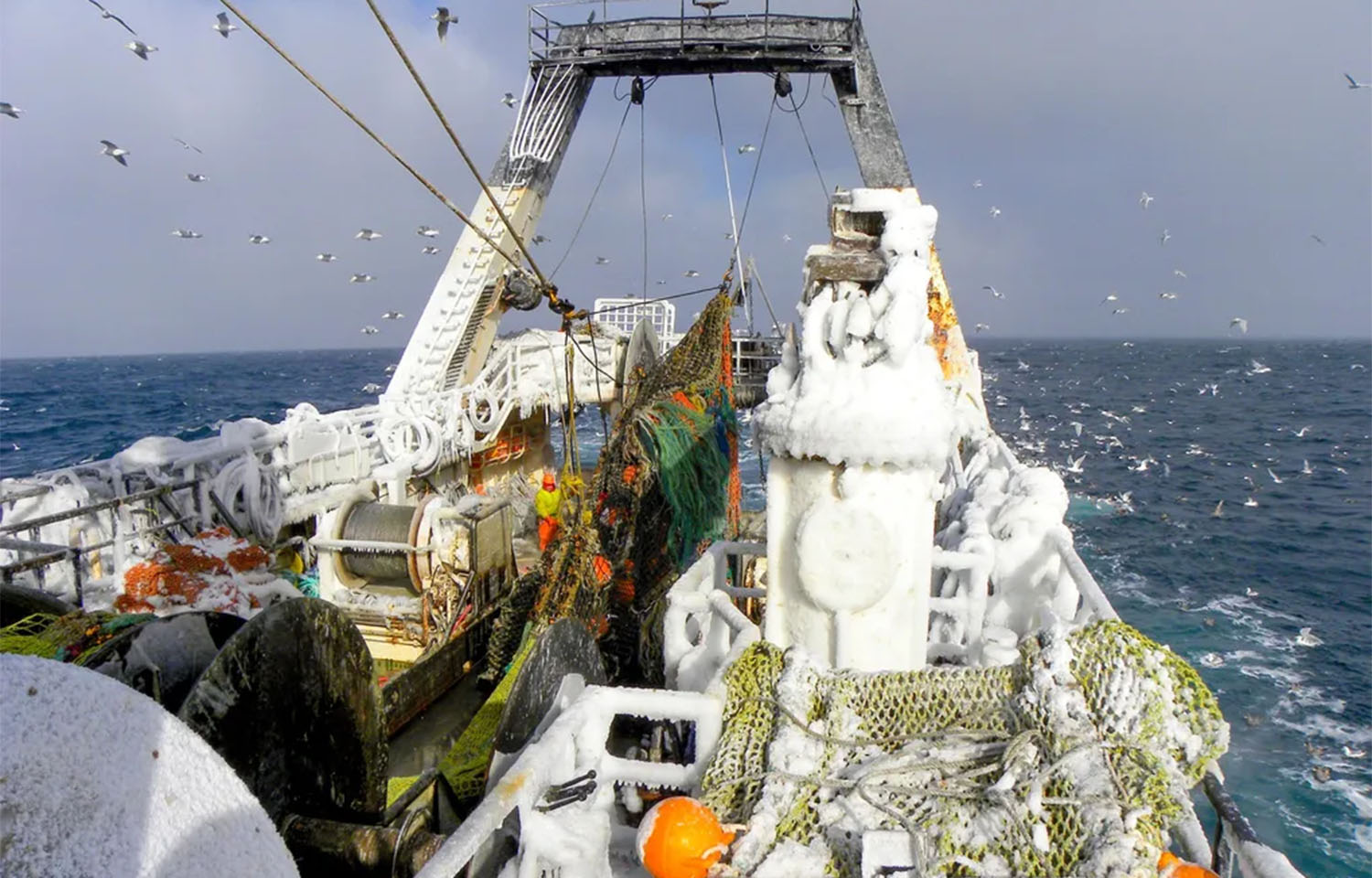
Oceana’s lawsuit claimed the NMFS and North Pacific Fishery Management Council have ignored the effects of bottom trawling on the environment, alleging cascading impacts on Alaska’s ocean ecosystems stemming from damage to coral and sponge species in the areas fishing takes place.
“The science is clear and so is the law – fishery managers are required to protect areas designated as essential fish habitat, including deep sea coral and sponge ecosystems,” Oceana Fisheries Campaign Director and Senior Scientist Ben Enticknap said in a release. “Right now, fragile seafloor habitats in the Gulf of Alaska that are critical for fish and other ocean animals to breed, feed, and grow are being damaged and destroyed by massive trawl fishing nets. These ecosystems can be hundreds of years old, yet a single pass of a trawl net can wipe them out of existence.”
The Ninth Circuit Court of Appeals determined Oceana’s lawsuit required to many speculative assumptions to be applicable, and that the lawsuit wasn’t arguing the amendments directly caused any environmental harm.
“Instead, Oceana relies on a chain of speculative assumptions to argue that the Fisheries Service’s amendments – by failing to adopt additional measures to mitigate potential harm to essential fish habitats – likely caused and will continue to cause its members’ alleged injuries,” the court wrote.
The justices argued Oceana’s injuries required multiple assumptions, including that NMFS would have developed different criteria in its fisheries management plan if it hadn’t relied on data about “core” areas of essential fishing habitats, those criteria would have found harms from trawling, and then the agency would have taken action based on those hypothetical decisions.
“Multiple links in Oceana’s chain of assumptions are merely ‘hypothetical or tenuous,’ and thus cannot support Article III standing,” the court wrote.
The lawsuit was one of many actions being taken against Alaska’s trawl fishing industry in recent years. Mary Peltola, who was then the representative for Alaska, filed the “Bottom Trawl Clarity Act” in 2024 and drew widespread outcry from the fishing industry who said it would have block off large sections of the ocean from trawling.
More recently, a coalition of 5,000 Alaskan NGOs, business owners, and citizens called for a ban on all bottom trawling, and in July U.S. Senator Dan Sullivan (R-Alaska) introduced an updated version of the Bycatch Reduction Act which had stronger opposition to any seafloor contact by trawling gear.
“My bill is the most comprehensive bycatch legislation ever introduced in Congress, with three clear objectives: protect Alaska’s ocean habitat and fisheries, make bycatch monitoring and reporting more transparent, and reduce bycatch and habitat disturbances,” Sullivan said.
Trade groups have pushed back against claims trawl fisheries are damaging, and point to consistent Marine Stewardship Council certification for fisheries like pollock and flatfish and the robust observation requirements and scientific data the fisheries rely on.
