






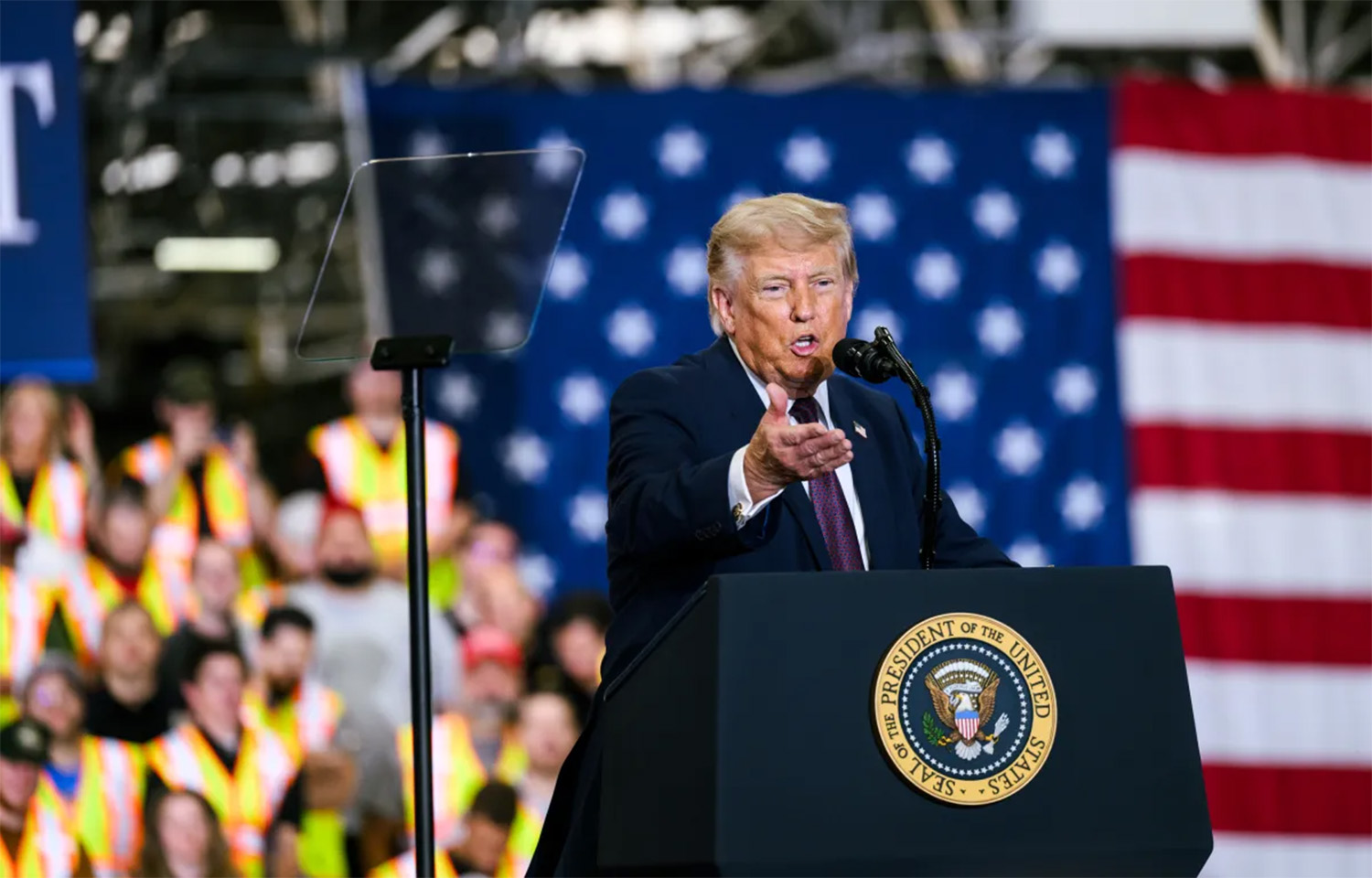
Multiple media reports indicate that the administration of U.S. President Donald Trump will decline to extend the United States-Mexico-Canada (USMCA) agreement, triggering a process that could see it leave the trade deal in a decade barring a new decision.
The USMCA was set in motion in 2018 as the previous trade agreement for the three countries – the North American Free Trade Agreement (NAFTA) – was replaced under the prior Trump administration after two decades of use. The revised version of the agreement initially included just Mexico but later confirmed the participation of Canada and formed the USMCA, which came into force on 1 July 2020.
As part of that revised deal, the three countries built in a six-year review period, despite concerns at the time that that review period could discourage investment due to trade uncertainty over potential renegotiation of the deal.
Now, media reports expect the U.S. to decline extending the agreement, with Reuters reporting the administration is expected to formally declare it will not extend the USMCA.
The reports follow Trump’s own comments on the USMCA, which he criticized in a post on his social media site Truth Social.
“Canada is cheating the United States Farmers on USMCA,” Trump wrote.
He and his administration have also heavily criticized Canada on trade more generally; in December 2025, U.S. Trade Representative (USTR) Jamieson Greer said the two countries have “divergent views” on whether the trade review should place restrictions on seasonal imports from Mexico.
The heavy criticism of the trade deal is a stark turnaround from Trump’s earlier treatment of the USMCA, which he used as an election campaign point in 2023 – including calling it among the “best trade deals in history.”
It is also runs counter to Canada’s stance on the trade deal. Canada-U.S. Trade Minister Dominic LeBlanc told the BBC the 1 July meeting will be "an opportunity to build on the positive, constructive bilateral discussions he has had with both countries in recent weeks.”
If the administration follows through with the expected denial to extend, it doesn’t mean the trade deal is immediately over. It sets up yearly review processes for the next 10 years before the trade deal expires on 1 July 2036. The deal can be extended at any point during that 10-year process.
Parts of the seafood industry in the U.S. have already expressed support for maintaining the USMCA as it stands.
The National Fisheries Institute (NFI) is part of a coalition formed in February 2026 to advocate for keeping the trade deal in place. That coalition – the Agricultural Coalition for USMCA – is composed of multiple major U.S. industry groups including the Global Cold Chain Alliance, National Corn Growers Association, National Pork Producers Council, National Turkey Federation, and more.
“USMCA is one of President Trump’s signature achievements and one that has significantly propelled the ag economy,” Bryan Goodman, a spokesperson for the coalition, said in a release at the coalition’s founding. “We are not saying it’s perfect, as some changes are warranted, but we are saying it is of paramount importance to farmers that all three countries renew the agreement.”
Under the USMCA, USD 1.9 trillion (EUR 1.66 trillion) in goods and services are traded between the three countries annually, including billions in seafood. Canada is the U.S.’s largest seafood trading partner, sending USD 4.3 billion (EUR 3.7 billion) worth of seafood to the U.S. in 2025 and importing nearly USD 1 billion (EUR 875 million) worth of seafood from the U.S.
NFI Director of Public Policy Morgan Bell has actively defended the USMCA and, in hearings before the USTR, called for the extension of the deal.
“Under this agreement, tri-national seafood trade has thrived, benefiting U.S. seafood suppliers, their employees, and the millions of consumers they serve,” Bell said. “Since its entry into force, seafood trade among the three countries has increased significantly. American seafood exports to Mexico have increased by 65 percent, and exports to Canada have increased by 17 percent. A predictable, tariff-free framework gives our members confidence to innovate, plan, and compete.”
