






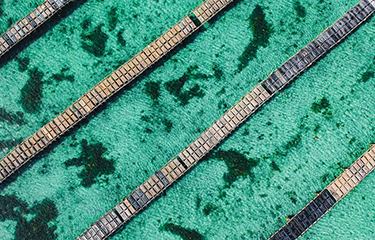
Aquaculture is now responsible for 56 percent of the Australia’s total fisheries production and, and its importance to the country’s economy continues to grow.
According to the Australian Bureau of Agricultural and Resource Economics and Sciences (ABARES), the gross value of Australian aquaculture products increased 9 percent to AUD 1.7 billion (USD 1.18 billion, EUR 1.09 billion) in 2020-2021. Total gross value production (GVP) of Australia’s fishery and aquaculture sectors combined decreased by 1 percent in 2020-2021 to AUD 3.09 billion (USD 2.13 billion, EUR 1.98 billion).
ABARES Executive Director Jared Greenville told Baird Maritime the uptick was “largely due to increased production of salmonids in Tasmania and prawns in Queensland.”
“Over the last two decades we’ve seen aquaculture grow, helping to boost overall fisheries production,” he said.
Tasmania had the highest value production of any Australian state, accounting for 38 percent of the entire country’s production by value, followed by Western Australia at 14 percent and South Australia at 13 percent.
“Aquaculture has been quite a success story for Tasmania,” he said. “Tasmania’s fishery and aquaculture GVP increased by 10 per cent in the same year to AUD 1.18 billion [USD 813 million, EUR 756 million]. In contrast, the GVP of wild-catch species decreased by 12 percent to AUD 1.4 billion [USD 965 million, EUR 896 million] in 2020–2021, largely due to lower prices received for rock lobster in export markets.”
While Australian aquaculture producers struggled through the Covid-19 crisis, they are largely recovering, according to Seafood Industry Australia. They have been aided by government support and by rising domestic consumption, which reached 356,000 metric tons in 2020-2021, or around 13.9 kilograms per person. Thats up from 12.4 kilograms per person in 2019-2020 and from from 13.5 kilograms per person in 2018-2019. Of all seafood consumed in Australia, 62 percent consisted of imports, down from 69 percent in 2013-2014, meaning Australian seafood firms are producing more of the seafood its citizens are eating.
Part of that success stems from the country’s aquaculture sector broadening the composition of species it is farming, Greenville said. Domestically grown prawns, barramundi, and kingfish have all grown more popular with Australian consumers, he said.
In 2021, aquaculture production in Queensland – primarily barramundi and prawns – set a new value record at AUD 193 million (USD 133 million, EUR 123 million), according to the state government. Queensland’s aquaculture sector has grown at an average of 6.6 percent since 1999.
Australian Prawn Farmers Association Chief Executive Kim Hooper said farmed prawn operations have enjoyed good conditions and solid demand.
Queensland Minister for Agricultural Industry Development and Fisheries Mark Furner said a new commercial hatchery for tropical rock lobsters in Toomulla Beach, Queensland, is aiming to grow 1,000 metric tons of lobsters to commercial size over the next 10 years.
“The government’s commitment and support to growing the industry is paying dividends,” Furner said.
Photo courtesy of LyndonOK/Shutterstock
