





Aomori, Japan has set a new record for its scallop harvest, getting, 67,000 metric tons by the end of July.
That number surpasses the previous record high for the period, set back in 2016. The value of sales from 1 April to 4 August this year was a little over JPY 100 million (USD 938,604, EUR 845,968)
The port of Hiranai, located on Mutsu Bay, is the leader in cultivated scallops. This year, the harvest there of baby scallops, harvested at about one year, has been high. As a result, the price has dropped by 10 to 20 percent – to around JPY 111 (USD 1.05, EUR 0.94) per kilogram (shell on) at the port – though the total sales value is stable due to record high shipment volume.
According to a report by the Nihon Keizai Shimbun, fishermen in Aomori are increasing harvests of baby scallops over mature ones to balance the risks of poor ocean conditions or storms, which can stunt growth or damage the rafts from which they are suspended.
Mature scallops – harvested at 3 years – fetched JPY 107 (USD 1.01, EUR 0.91) per kilogram at the port, 40 percent lower than the last year. This is because the local scallop processing plant is busy processing baby foods such as shelling and frying, and is not yet ordering mature scallops.
September is the peak of flavor for scallops. Glycogen, which imparts sweetness, increases throughout the summer but begins to decline with colder weather as the scallops devote their energy stores to reproduction. Harvests of baby scallops are mainly in July, before that of larger scallops.
Most scallops in Japan are the species Patinopecten yessoensis, the “Yesso scallop,” and come from three northern prefectures: Hokkaido, Aomori—at the northern tip of Honshu Island—and Miyagi, further to the south-east. They constitute Japan’s most valuable seafood export, and are popular due to their large size.
This year, production is likely to increase in Hokkaido, due to ocean temperatures favorable to growth. Hokkaido specializes in large scallops and accounts for 70 percent of domestic production. The “seabed ranching and dredge method” is mainly undertaken on the coast of Okhotsk in Hokkaido, while the “ear hanging method” is undertaken in Uchiura Bay in Hokkaido, Mutsu Bay in Aomori Prefecture, and on the Japan Sea coast.
But there has been some trouble in Miyagi Prefecture. On 11 June, shipping of scallops was halted when bacterial counts exceeding national regulations for diarrheal shellfish poisoning were detected. On 23 July, the national government lifted the ban on shipments in some areas, after counts were under the level for three consecutive weeks. But voluntary restrictions were still observed until 6 August in other areas of the prefecture, as levels remained higher than the stricter prefectural guidelines.
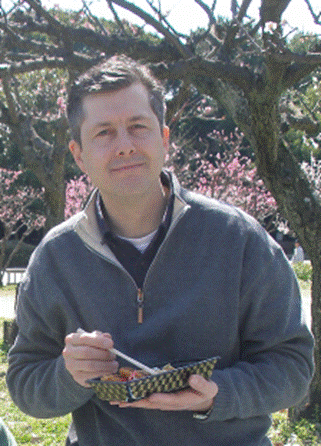
Photo courtesy of Japan Ministry of Agriculture, Forestry, and Fisheries
