

Saudi Arabia is on a mission to increase its aquaculture output dramatically by 2030, and as part of this drive the country’s largest aquaculture firm, the National Aquaculture Group (NAQUA), plans to increase its seafood output by more than 400 percent over the next seven years.
Despite the country’s access to rich fishing grounds along the Red Sea and Arabian Gulf coastlines, Saudi Arabia’s domestic seafood market has a supply deficit that Vision 2030 – a government-led socio-economic development blueprint that aims to accomplish, among many other goals, self-sufficiency in seafood supply – is looking to solve. The government is confident it has the potential to grow its seafood production throughout the country’s “clean waters of the Red Sea, favorable environmental conditions, and advantageous geographical locations, as regards logistic and transport requirements for seafood.”
The country imported an estimated 215,000 metric tons (MT) of seafood in 2020 as domestic consumption increased. Other reports indicate that by 2022, the value of fish, crustaceans, mollusks, and other aquatic invertebrates imported to Saudi Arabia swelled to SAR 1.64 billion (USD 436 million, EUR 414 million).
Under Saudi Arabia’s Vision 2030, the Ministry of Environment, Water, and Agriculture anticipates annual fish and seafood production will hit 600,000 MT. NAQUA CEO Diego Torres said that his company has plans to increase its production from its current output of 60,000 metric tons (MT) to 250,000 MT, comprising 42 percent of the country’s production goals.
Torres, who was one of the key speakers at this year’s Global Shrimp Forum in Utrecht, said the company’s growth plan has received a boost from a recent partnership agreement that saw the Saudi Agricultural and Livestock Investment Company (SALIC), which Saudi Arabia’s sovereign wealth fund – the Public Investment Fund (PIF) – owns, acquiring a 42 percent stake in NAQUA.
SALIC has pledged to leverage its new partnership with NAQUA to develop the country’s domestic aquaculture sector and boost seafood output. The agreement marks the second major transaction the company has inked within Saudi Arabia’s aquaculture scene since 2021 – in March 2021, SALIC acquired a 39.99 percent stake in the Saudi Fisheries Company under an ownership transfer initiated by PIF.
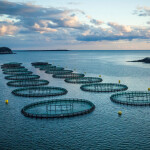
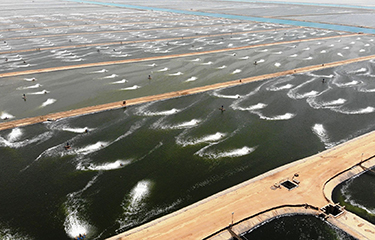
With the injection of resources that comes along with a deal backed by PIF, NAQUA’s projected growth is likely to occur through the expansion of existing operations. Particularly, NAQUA is targeting growth at its shrimp farms along the Red Sea coast, and the company has invested an estimated SAR 4 billion (USD 1.06 billion, EUR 1.01 billion) in creating a modern and fully integrated marine farm system, focusing on production of shrimp along the Red Sea coastline.
NAQUA also plans to gradually introduce new species and seafood products to its portfolio, such as the development and commercialization of the Holothuria scabra species of sea cucumbers in the Red Sea – a project that’s already underway.
The company has also recently established a plant with the capacity to process 6 MT of shrimp per day to produce high-quality chitosan, which is a fiber taken from the shells of shellfish such as shrimp that has several uses – including as a dietary supplement, within the medical field to address wounds, and for use within winemaking as the product in powder form inhibits harmful microbial development.
Elsewhere, NAQUA expects to proceed with its algae production program once it completes the standardization and development process of a technology that supports mass production.
At least 83 percent of NAQUA’s seafood production is destined for international consuming markets such as China, the U.S., Japan, and several countries within the E.U., but more of its production is likely to remain within the country’s borders as production ramps up.
NAQUA is among several companies leveraging the favorable fish and seafood market conditions in Saudi Arabia to expand their operations, planning to capitalize on factors such as the surge in the country’s population, increasing seafood consumption rate, and government-driven investment policies playing a large role in driving expansion.
The Saudi Arabian government estimates it will take a budget of SAR 1.3 billion (USD 346.3 million, EUR 328.5 million) to unlock the full potential of the country’s aquaculture sector through investment in infrastructure, research and development, and targeted marketing campaigns.
Photo courtesy of the National Aquaculture Group (NAQUA)
