

Royal Park, South Australia, Australia-based Clean Seas has hired its acting CEO, Robert Gratton, on a permanent basis.
The premium yellowtail kingfish farmer also announced the hire of David Brown as chief financial officer. Brown has been the company’s acting CFO since August 2020, after former CEO David Head retired in September.
Gratton, formerly Clean Seas CFO until his promotion, previously worked in investment banking at JP Morgan, as well as at Australian cosmetics manufacturer Jurlique and stationary brand kikki.K. His base salary will be AUD 400,000 (USD 297,000, EUR 246,000). In a press release, the company praised his experience growing companies through international expansion, a strategy the company has previously said it will be pursuing with greater urgency.
“Gratton brings a strong understanding of capital markets and deep commercial and international experience focused on management execution and long-term value creation to the role of CEO and creates a seamless transition,” Clean Seas said.
Brown previously worked as Clean Seas’ group financial controller and joint company secretary, and worked closely with Gratton in his role as CFO. Prior to joining Clean Seas, he held senior positions at KPMG and Grant Thornton, specializing in corporate finance.
“With the appointment of Rob and David, along with the rest of the executive team, we have secured the talent and experience needed to deliver on Clean Seas’ strategy and complete the transformation that has been underway over the last few months,” Clean Seas Chairman Travis Dillon said. “The entire Clean Seas team are to be congratulated on the progress made to date. We are only early in this journey, but I look forward to working with the team to produce and deliver high quality products for our customers and results for our shareholders.”
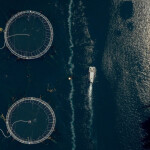
Clean Seas is engaged in full-cycle breeding, farming, processing, and marketing of high-quality hiramasa, or yellowtail kingfish (Seriola lalandi) and is renowned amongst leading chefs and restaurants around the world for its exceptional quality. It operates a hatchery at Arno Bay and three farms at Whyalla, Wallaroo, and Port Lincoln, on the Eyre Peninsula in South Australia.
“I’m humbled and excited at the prospect of leading Clean Seas as we seek to grow and enter new markets,” Gratton said. “We have an outstanding product, great partners, and a fantastic team at Clean Seas. We have been able to demonstrate significant recent progress with new channel openings and diversification into the retail segment in North American and Asian markets, complementing Clean Seas’ existing premium foodservice business in Australia and Asia. Demand for sustainable seafood is seeing structural growth globally and our premium Kingfish has significant potential in this space.”
According to a December 2020 presentation to stockholders, the COVID-19 pandemic has been “highly disruptive” for the company, which previously sold 50 percent of its product domestically and 40 percent to Europe, mostly to foodservice vendors. In response, the company initiated a fast-tracking of several initiatives, including a cost-reduction effort that resulted in the number of company executives being reduced from eight to five, and the number of board members declining from six to three.
The company has also been able to achieve a cost reduction of AUD 3.00 (USD 2.22, EUR 1.84) per kilogram in its kingfish production by optimizing working capital and via automation of processing funded via an existing debt facility, it said.
Ålesund, Norway-based Hofseth Group took a AUD 5 million (USD 3.2 million, EUR 2.9 million) equity investment in the company in early April, and that partnership has helped Clean Seas enter the North American market via Hofseth’s relationships with club stores and meal-kit manufacturers.
“[The] strategic relationship continues to build, with a distribution pipeline targeting new channels, and providing opportunities to diversify the business and grow volumes,” the company said.
Clean Seas said it had also developed new retail products that are currently undergoing trials in Australian supermarkets
In its 2020 fiscal year, the company said it recorded net losses after taxes of AUD 14.5 million (USD 10.6 million, EUR 8.9 million). In 2019, it netted a profit of AUD 1.5 million (USD 1.1 million, EUR 925,256).
Photo courtesy of Clean Seas
