






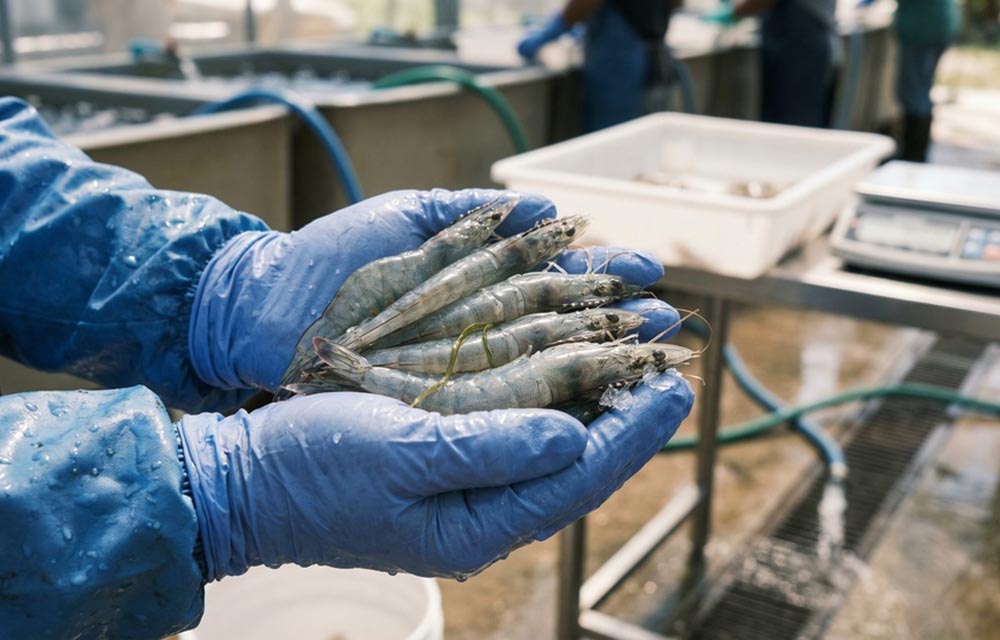
U.S. Representative Nancy Mace (R-South Carolina) has introduced legislation that would require NOAA to establish a portable chemical test that can reveal the origins of shrimp.
“South Carolina shrimpers have been undercut for years by foreign imports with no accountability and no transparency,” Mace said in a social media post. “Our SHRIMP Act puts an end to this. They have earned a level playing field. We are delivering it.”
The domestic shrimp sector has expressed frustration with cheap imported shrimp, and both federal and state lawmakers have looked to establish tools to crack down on foreign shrimp and insulate their struggling industry from competition.
If passed, the Shrimp Honesty and Responsibility in Import Monitoring Protocols (SHRIMP) Act would require NOAA, the National Institute of Standards and Technology, the commissioner of U.S. Customs, and the commandant of the Coast Guard to collaborate on developing a portable chemical test that can verify the country of origin of shrimp.
“This methodology has broad applications, from supporting law enforcement in combating illegal, unreported, and unregulated (IUU) fishing, to improving food safety and traceability, to verifying compliance with country-of-origin labeling laws, to improving screening of shrimp at ports of entry, and bolstering enforcement of trade restrictions and customs duties,” Mace said.
The legislation has been backed by industry advocacy group Southern Shrimp Alliance.
“International seafood supply chains are intentionally opaque, many times masking illegal activity. We see this directly in the foreign shrimp supply chains that compete with American family businesses,” Southern Shrimp Alliance Director Blake Price said in a release. “Congresswoman Mace’s SHRIMP Act of 2026 recognizes the importance of the ability to objectively identify where shrimp comes from.”
The Southern Shrimp Alliance has engaged in a shrimp testing campaign across U.S. Gulf states and those bordering the South Atlantic, teaming with SeaD Consulting to conduct DNA testing on shrimp samples from various cities. The testing campaign has unveiled the prolific presence of imported shrimp being sold in the Southern U.S., with the groups claiming that much of the imported shrimp is being misleadingly presented as local shrimp. The testing has helped prompt lawsuits, complaints, and legislation ensuring that imported shrimp is labeled as such.
The SHRIMP Act mirrors other bills that have been introduced in the House and Senate directing the federal government to develop similar chemical tests. The Illegal Red Snapper and Tuna Act, which was passed by the Senate nearly a year ago, orders NOAA to create tests that can identify the origins of red snapper and tuna.
“Seafood that’s caught illegally or intentionally mislabeled rips off consumers and makes it harder for law-abiding U.S. fishermen to compete,” U.S. Senator Brian Schatz (D-Hawaii) said at the time. “Our bill will help fight against anyone who tries to pass off cheap foreign tuna for high-quality ahi from local Hawai‘i fishermen.”
More recently, the Senate attached language from that bill to the Weather Research and Forecasting Innovation Reauthorization Act in hopes that legislation would pass both houses of Congress, but it has yet to be passed by either.
