


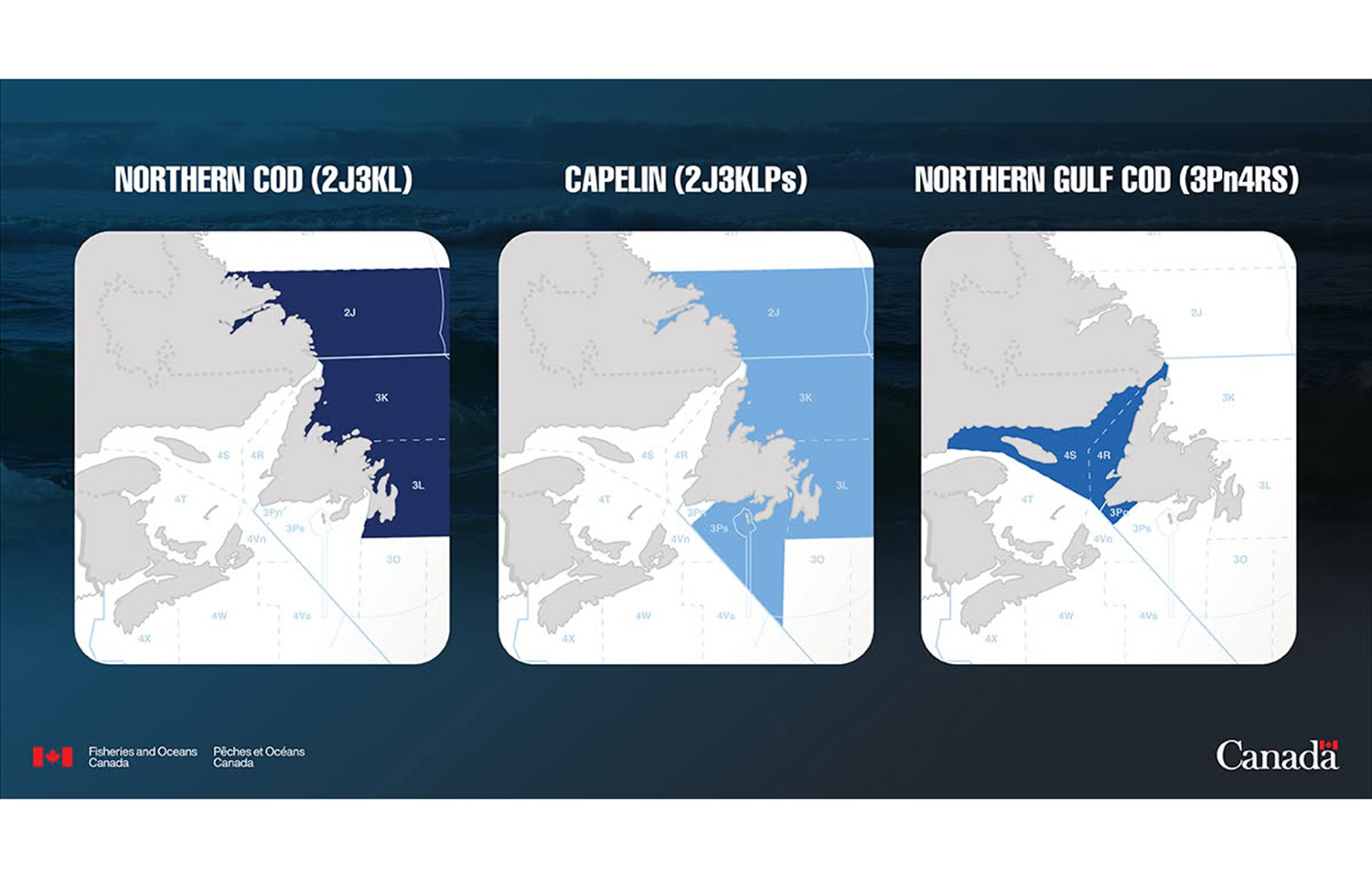
Canada’s Department of Fisheries and Oceans (DFO) has increased the Northern cod quota in the province of Newfoundland and Labrador by 55 percent.
DFO reopened the fishery in 2024, setting an 18,000-metric-ton (MT) quota after a 32-year moratorium. Since that time, it more than doubled the quota in 2025 to 38,000 MT, deeming the population had sufficiently recovered to support wider fishing after assessments.
Now, that quota is being bumped up again to 59,000 MT after the latest stock assessment indicated the stock is in the healthy zone for the first time since 1992.
"Northern cod is part of who we are in Newfoundland and Labrador,” Canada Fisheries Minister Joanne Thompson said. “This increase in the Total Allowable Catch is what science-based management and real conversations with harvesters, Indigenous communities, our provincial partners, and industry make possible.”
DFO said Northern cod’s total allowable catch (TAC) will be set at 59,000 MT, the 2J3KLP capelin TAC will remain at 14,533 MT, and in the Northern Gulf, there will be no direct commercial fishery and total removals will remain capped at 500 MT. The department said the decision was backed by peer-reviewed science and ongoing collaboration with harvesters, processors, and industry stakeholders.
The department said the TAC will be split between three groups, with the inshore fleet getting 70 percent of the TAC, or 41,300 MT. The offshore and midshore fleet will receive 20 percent of the TAC, or 11,806 MT. Finally, 10 percent of the TAC, or 5,895 MT, will go to Indigenous and special allocations.
“Our government remains committed to working collaboratively because when our fisheries thrive, so do the people and communities who depend on them,” Thompson said.
Fishing industry representatives welcomed the news, and the Fish, Food, and Allied Workers Union (FFAW) said the quota distribution maintains fair access for inshore harvesters. However, it also criticized the increase in distribution to the offshore fleet.
“We remain concerned by the reduction in direct inshore allocation and the significant increase in offshore access,” FFAW President Dwan Street said. “As this fishery rebuilds, any shift away from owner-operator harvesters and plant workers must be carefully scrutinized to ensure Northern cod continues to benefit the people and local economies that depend on it.”
Street said that despite those concerns, the current arrangement maintains fairness in the fishery.
