





Record first quarter average prices of Atlantic salmon at USD 6.86 (EUR 6.42) per kilogram whole-fish equivalent (WFE), compared to prices of USD 4.33 (EUR 4.05) per kilogram in the same quarter of 2021, drove an increase in Santiago, Chile-based fishing and salmon-farming firm Blumar’s quarterly earnings.
The company’s total revenues in Q1 2022 reached USD 148 million (EUR 138 million), an 11 percent boost from the USD 133 million (EUR 124 million) posted in the same period a year ago. The company's EBITDA and net profits surged 218 percent and 390 percent, respectively, in Q1 to USD 29.9 million (EUR 27.9 million) and USD 17.4 million (EUR 16.3 million).
Blumar subsidiary Salmones Blumar suffered an algae bloom event in January, which affected five farming grow-out centers in southern Chile’s Aysén region, resulting in the death of around 760,000 fish, equivalent to approximately 1,230 MT of biomass. The company said the mortality event resulted in a hit to its EBITDA of USD 4.2 million (EUR 3.9 million).
In Q1 2022, Blumar’s harvests of Atlantic salmon dropped to 11 metric tons (MT) WFE, down 42 percent from the 19.1 MT WFE it harvested in the first quarter of 2021, while its ex-cage costs increased 21 percent to USD 4.38 (EUR 4.10) per kilogram WFE.
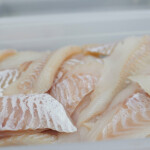
The company brought in USD 82 million (EUR 76.5 million) in Atlantic salmon sales during the quarter, representing 55 percent of its total revenues. Its sales of fish oil and fishmeal garnered USD 25.6 million (EUR 24 million), 17 percent of its total sales. Its frozen horse mackerel sales, at USD 25.1 million (EUR 23.5 million), accounted for 17 percent of the company's revenue; and its whitefish sales reached USD 15.2 million (EUR 14.2 million), accounting for 11 percent of the total.
In Blumar's salmon segment, the U.S. accounted for 61 percent of the company's sales, up from 42 percent in the same period a year ago; followed by Mexico at 10 percent, versus 5 percent in Q1 2021; Chile at 7 percent, versus 15 percent in Q1 2021; Brazil at 4 percent, down from 9 percent; and China at 4 percent, up from 1 percent.
For the full-year 2021, the company posted sales of USD 626 million (EUR 570 million), a 35 percent jump from 2020. Revenues were broken down by Atlantic salmon, which weighed in at 61 percent of total sales versus 54 percent in 2020; fishmeal and fish oil at 16 percent, versus 21 percent; frozen horse mackerel, at 13 percent compared to 12 percent; white fish at 8 percent, versus 9 percent; coho salmon at 1 percent, unchanged; and “others” at 1 percent, also unchanged.
According to the Global Salmon Initiative’s (GSI) annual sustainability report, Blumar was just one of two salmon firms of the eight Chilean salmon-farming companies that report to GSI, to actually lower antibiotic use in 2021 when compared to 2020 levels. Blumar led the pack with the lowest use, registering 168.7 grams active pharmaceutical ingredients (API) per MT, dropping 38.5 percent from its 2020 levels of 274.4 grams.
Photo courtesy of Blumar
