





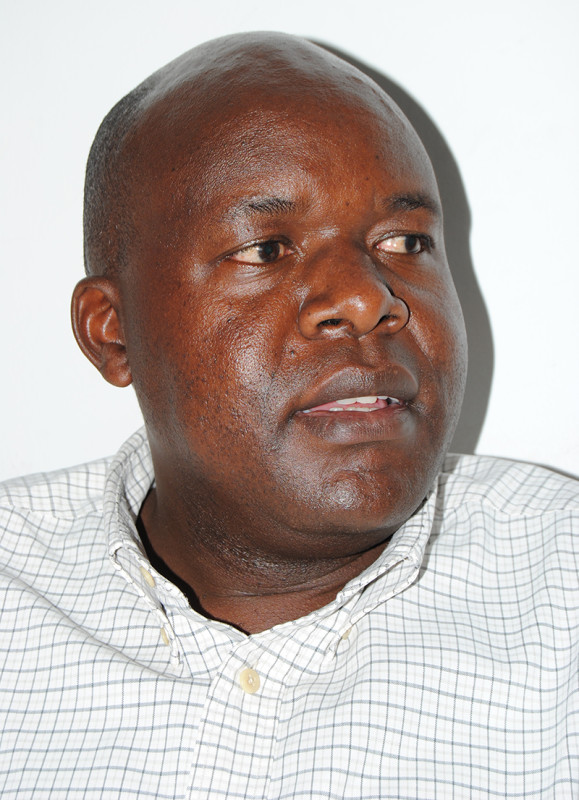
The South Africa Deep-Sea Trawling Industry Association (SADSTIA) has picked Sea Harvest Chief Executive Officer Felix Ratheb as its new chairman.
Ratheb, who has been representing his company within SADSTIA since 2013, succeeds Terence Brown, also from Sea Harvest. As the new SADSTIA chairman, Ratheb will spearhead the organization’s activities heading into the post-pandemic era, with the goal of helping association companies to achieve speedy recoveries.
“I am excited to take up the chairmanship of SADSTIA,” said Ratheb, who was previously a board member of the Marine Stewardship Council from 2006 to 2019. “The hake deep-sea trawl fishery is a South African success story – it is sustainable, highly transformed and makes a massive socio-economic contribution, especially in the coastal provinces and I am eager to represent the fishery and the interests of our members.”
SADSTIA-affiliated companies contribute more than 50 percent of South Africa’s total fishery production, which is estimated at slightly more than 600,000 metric tons (MT) and includes 143,000 MT of hake, mainly the Merluccius paradoxus and M. capensis species.
The SADSTIA members operate 51 trawlers in water depths of between 300 meters and 800 meters. Twenty-one of those vessels are freezer trawlers and 30 are wetfish trawlers. The fleet generates a combined ZAR 4.5 billion (EUR 231 million, USD 260 million) in annual sales, with 67 percent of its catch destined for the export market.
Ratheb takes over the chairman role for SADSTIA at a time when South Africa has just expanded the ocean protection area around the country by 5 percent, up from the previous 0.5 percent, through the creation of an additional 20 Marine Protection Areas (MPAs).
A previous statement by the Department of Environment, Forestry, and Fisheries says the new MPAs will “facilitate fisheries management by protecting spawning stock, allowing stock recovery and enhancing stock abundance in adjacent areas, in particular for linefish and abalone resources.”
Observing the boundaries of the new MPAs, which have pushed ocean boundaries in South Africa by an estimated 50,000 square kilometers, is important for the successful MSC re-certification of the SADSTIA-operated hake fishery, where demersal otter trawl fishing is the common method deployed. The MSC certification was first done in 2004, followed by re-certification in 2010 and 2015. Another re-certification process is expected for early next year.
“Although the MSC standard that is being applied is more rigorous than the standard that has been applied over the past 16 years, SADSTIA is optimistic the fishery will be re-certified for a further five-year period early in 2021,” Ratheb said.
In the short-term, the new chairman has cautioned that the “raging” COVID-19 pandemic “will have affected every one of our members, and company balance sheets will have been severely weakened.”
“The industry needs to survive this because it is a large employer providing quality jobs in coastal towns, and it is a significant exporter,” Ratheb added.
Other SADSTIA officials include Innocent Dwayi (vice-chairman), Johann Augustyn (secretary), Madoda Khumalo (chair Scientific Committee), Fisokuhle Mbatha (research assistant), Don Lucas, Jayesh Jaga, and Terence Brown.
Photo courtesy of Sea Harvest/Felix Ratheb
