
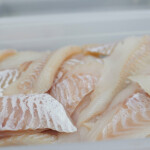
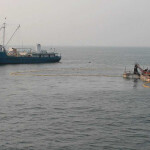

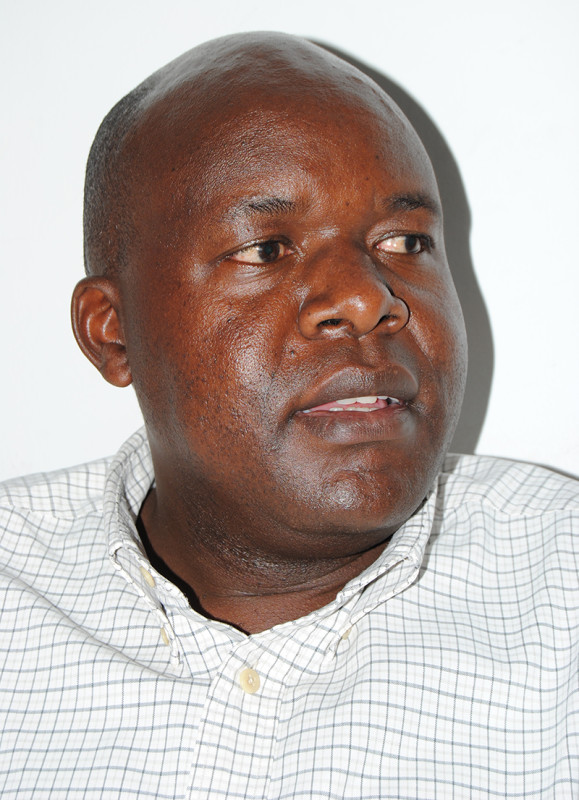
Cape Town, South Africa-based Sea Harvest Group posted higher sales and revenue for the year ending 31 December, 2022, but its gross and operating profit figures dropped due to higher costs.
The group’s total revenue rose 27 percent to ZAR 5.9 billion (USD 321 million, EUR 301 million) from ZAR 4.6 billion (USD 250 million, EUR 235 million) in 2021. Despite the higher revenue, the company saw a 25 percent decline in its earnings before interest and taxes (EBIT) to ZAR 500 million (USD 27 million, EUR 25.5 million) down from the ZAR 670 million (USD 36.4 million EUR 34.2 million) in 2021.
Sea Harvest Group’s gross and operating profit figures also dropped in 2022 compared to 2021. The company’s gross profit dropped 6 percent to ZAR 1.34 billion (USD 72.8 million, EUR 68.5 million), and its operating profit dropped 32 percent to to ZAR 472 million (USD 25.6 million, EUR 24 million).
The company reported its costs rose 42 percent, driven by a 90 percent rise in fuel prices, a 35 percent spike in the cost of ingredients and packaging, and energy load-shedding in South Africa that saw the company spend ZAR 20 million (USD 1.08 million, EUR 1.02 million) on related power costs and associated mitigation from September through December 2022 alone.
Sea Harvest’s profit after taxes dropped 32 percent to ZAR 294 million (USD 16 million, EUR 15 million) from ZAR 434 million (USD 23.58 million, EUR 22.18 million) in 2021.
Sea Harvests's South Africa operations upped revenues by 3 percent to ZAR 2.74 billion (USD 148.8 million, EUR 140 million) compared to ZAR 2.66 billion (USD 144.5 million, EUR 135.9 million) in 2021, “benefiting from firm demand and price increase in both local and international markets.”
The surge in revenue defied a 10 percent decrease in available hake volumes in 2022, driven by quota losses from the fishing rights allocation process (FRAP), a decrease in the total allowable catches, and material input cost inflation.
Its South Africa segment's costs rose 26 percent in 2022, dragging down the performance of the segment, but the strong performance of the company’s abalone and oyster volumes harvested and sold provided some offset. venue grew by 29 percent to ZAR 118 million (USD 6.4 million, EUR 6 million) from ZAR 92 million (USD 5 million, EUR 4.7 million) in 2021 “despite the continued lockdowns in China and Hong Kong as well as travel restrictions in 2022.”
“The improved performance of the abalone division resulted in the segment reducing its operating loss by 37 percent to ZAR 40 million [USD 2.17 million, EUR 2 million],” the company said.
Export revenue for Sea Harvest’s South Africa segment increased 6 percent as the company allocated higher volume to export markets and prices appreciated across target markets, with Europe remaining Sea Harvest’s largest export market.
Sea Harvest’s Australia operations posted a 69 percent increase in revenue to ZAR 938 million (USD 50.9 million, EUR 47.9 million) from ZAR 554 million (USD 30 million, EUR 28.3 million) in 2021, a feat company management attributes to “firm pricing, good growth in trading division, and inclusion of MG Kailis from 23 May, 2022.” MG Kailis contributed ZAR 340 million (USD 18.4 million, EUR 17.37 million) to the top line.
Sea Harvest Group acquired 100 percent of Western Australia-based MG Kailis, which included its fishing assets and related businesses, at a cost of ZAR 770 million (USD 41.83 million, EUR 39.34 million) through its wholly-owned Australian subsidiaries Sea Harvest Proprietary Limited and Sea Harvest Marine Proprietary Limited.
“The acquisition represents a significant step in the execution of the group’s investment strategy of acquisitive growth in the international seafood space that focuses on businesses of scale in high-value seafood species,” it said.
Despite an 85 percent increase in fuel prices, and spending ZAR 34 million (USD 1.84 million, EUR 1.73 million) in acquisition-related costs, the Australian segment posted an operating profit of ZAR 45 million (USD 2.44 million, EUR 2.29 million) compared to ZAR 31 million (USD 1.68 million, EUR 1.58 million) in 2021.
“Adjusting for the acquisition-related costs would have resulted in the Australian operations delivering operating profit of ZAR 79 million [USD 4.29 million, EUR 4 million], up 93 percent, at an operating profit margin of 8 percent,” the company said.
Looking into the future, Sea Harvest said the long-term fundamentals of all its segments “remain attractive with firm demand for high-value proteins both locally and internationally.”
The company’s South Africa fishing operations are expected to stabilize and acquire long-term certainty following a 5 percent increase in its 2023 total allowable catch of hake and its gains in the fishing rights allocation process.
“The export markets are firm, and the group is well-hedged across all currencies for 2023,” the company said.
The company anticipates some headwinds in 2023, however, due to worsening energy load-shedding as well as higher fuel costs.
Sea Harvest’s strategy in the coming year includes prioritizing its aquaculture operations, with emphasis on growing and selling larger sizes of abalone and diversification of product formats and markets.
The release of the 2022 financial results coincided with the group’s acquisition of additional shares in Viking Aquaculture, a company that produces abalone, oysters, mussel, tune fish, and seafood products; with its main farms in South Africa's Western Cape and the Northern Cape producing 500 metric tons of abalone annually.
Sea Harvest Group, through its wholly-owned subsidiary Sea Harvest Aquaculture, initially acquired a 54 percent controlling stake in Viking Aquaculture, and the new acquisition ups its share to 82 percent.
The additional 28 percent share in Viking Aquaculture was acquired at a cost of ZAR 210 million (USD 11.3 million, EUR 10.7 million), largely from minority shareholders – including Viking Fishing Group and Odin Investments, which respectively held an 18 percent and a 10 percent interest in Viking.
Sea Harvest said acquiring more shares in Viking Aquaculture is part of its business strategy that “encompasses growth in the sustainable fishing and high-value aquaculture sectors” as the company strives to become “one of the largest Black-owned diversified global seafood and food companies.”
Photo courtesy of Sea Harvest Group
