

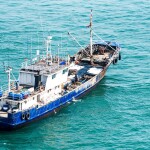

Cape Town, South Africa-based seafood company Sea Harvest has announced substantial growth in its seafood business in Southern Africa, posting a surge in overall revenue and also on both gross and operating profit for 2019.
The results, released in early March, show the company’s total revenue for 2019 increased 23 percent to ZAR 2.47 billion (USD 153.8 million, EUR 135.8 million), driven by a 10 percent increase in the hake total allowable catch and the annualized effect of the July 2018 acquisition of Viking Fishing.
Last year, South Africa increased the total allocation to the hake deep-sea trawl fishery to 122,431 tons, an equivalent of 84 percent of the annual TAC share.
Sea Harvest increased its gross profit by 35 percent to ZAR 953 million (USD 59.3 million EUR 52.4 million), driven by its increased revenue gross profit margin surging to 36 percent “benefiting from synergies relating to the Viking Fishing acquisition and improved efficiencies in the Saldanha Bay fresh fish processing factory in the second half of the year.”
Meanwhile, the company says its operating and export profits increased 45 percent and 26 percent, respectively, in 2019. Sea Harvest said it experienced a surge in demand for Marine Stewardship Council-certified, wild-caught Cape hake, which became the company’s most-important seafood product in the European export market.
“Locally, revenue through the foodservice channel has increased 32 percent, with the foodservice mix increasing to 31 percent of sales revenue,” Sea Harvest said.
However, although its wholesale seafood sales channel reported an increase of 80 percent in sales, retail revenue declined 14 percent, “impacted by a continued challenging local economic environment," the company said.
According to the African Development Bank, the South African economy shrunk 0.7 percent in 2019, down from 0.8 percent in 2018, but it could rise again to 1.1 percent in 2020 before reaching 1.8 percent in 2021.
Sea Harvest predicted South Africa's creation of a new Department of Environment, Forestry, and Fisheries (DEFF), a global shift towards natural fats, and promising returns from of its state-of-the-art Marel fresh fishing processing facility in Saldanha Bay, will shape the company’s performance in 2020.
Photo courtesy of Sea Harvest
