





The Philippines government is imposing stricter controls on the nation’s blue swimming crab fisheries to meet U.S. standards.
Last year, NOAA Fisheries determined 240 foreign fisheries did not meet U.S. requirements under the Marine Mammal Protection Act (MMPA), banning products from those fisheries from entering the U.S.
After a lawsuit led the U.S. National Marine Fisheries Service (NMFS) to review its MMPA comparability findings for swimming crab, NMFS greenlit products from Vietnam, Indonesia, and Sri Lanka but announced it would still block imports from Philippine gillnet and pot/trap fisheries.
In response, Philippine authorities began considering new gillnet rules for its blue swimming crab fishery to unlock the U.S. market again.
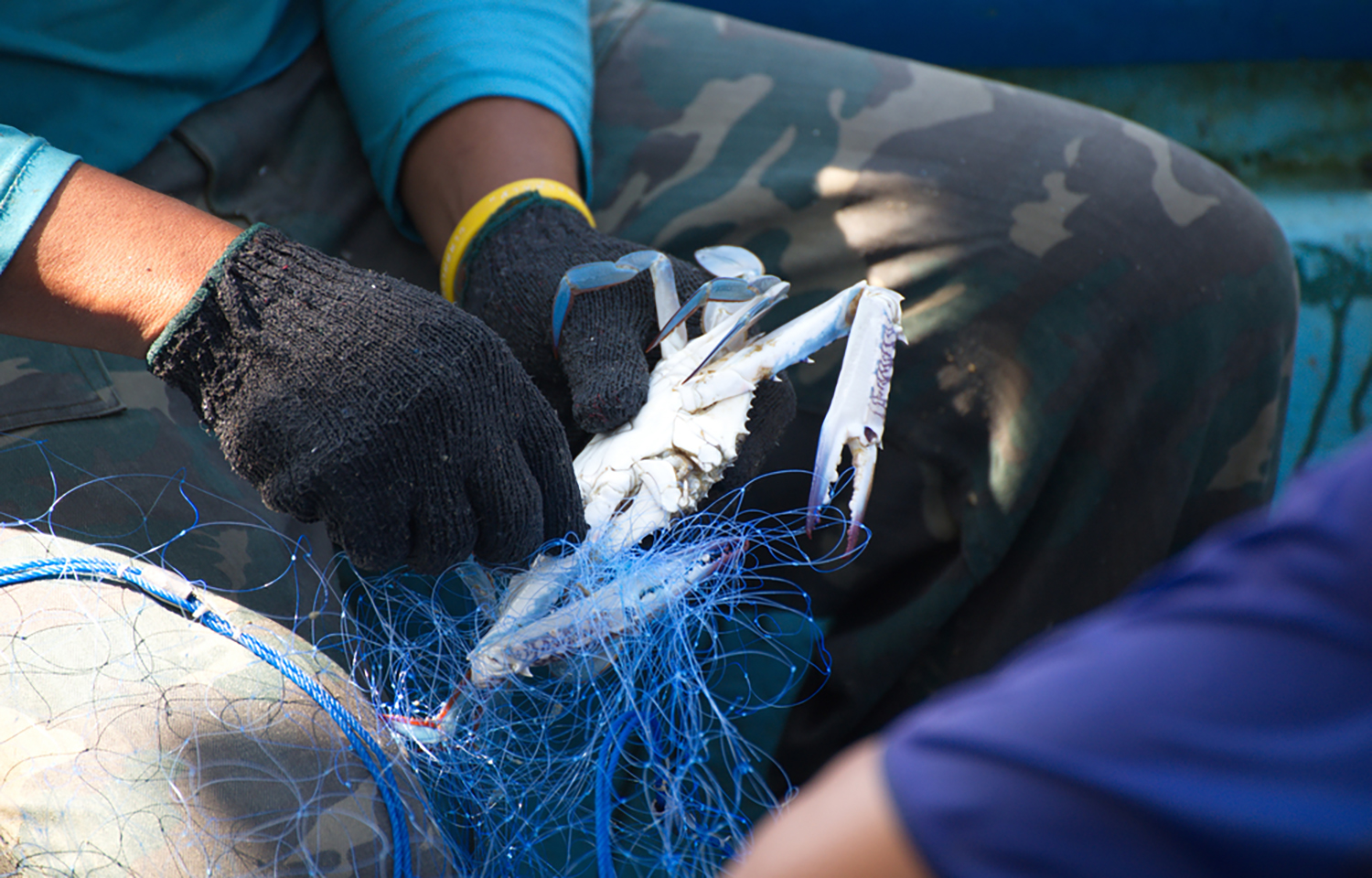
Now, the Philippines Department of Agriculture said its Bureau of Fisheries and Aquatic Resources (BFAR) has issued Fisheries Administrative Order No. 277, setting a maximum total length of 500 meters for gillnets used in blue swimming crab fishing, according to the Manila Bulletin.
The department explained that the new caps aim to prevent accidental marine mammal bycatch while preserving overall catch efficiency. Alongside the net limits, the regulation introduces strict penalties for offenders and mandates a review every three years to ensure continued effectiveness.
According to Philippines Agriculture Undersecretary Drusila Bayate, aligning local rules with the U.S. MMPA strengthens the country’s standing as a reliable, sustainable seafood supplier.
"This is a critical step toward restoring our access to the U.S.,” Bayate said.
The U.S. ban, which took effect 11 June, has raised concerns among fishers and exporters in the Philippines.
The Confederation of Philippine Exporters Cebu Foundation, or Philexport Cebu, said the U.S. accounts for about 90 percent of the country’s exports of the product. NOAA import data showed that the U.S. imported 2,417 metric tons (MT) of blue swimming crab from the Philippines in 2025.
Philexport Cebu estimated that a prolonged ban could cost the Philippines USD 50 million to USD 60 million (EUR 43.9 million to EUR 52.7 million) in annual export revenue.
