




The U.S. Department of Commerce will likely not impose any antidumping duty on shrimp Thai Union imports into the United States from Thailand.
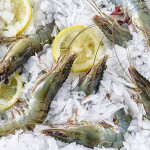
According to the preliminary results of its 17th administrative review of the antidumping duty order on frozen warmwater shrimp from Thailand, the U.S. DOC said it did not find evidence Thai Union sold its shrimp into the U.S. at less than fair value.
The Thai Union group of companies, which includes Pakfood Public Co., Okeanos Food Co., Asia Pacific (Thailand) Co., and Chaophraya Cold Storage Co., will receive a margin of zero percent for their frozen shrimp shipments to the U.S. If the decision is kept in the DOC’s final conclusion, they will not have to make any antidumping duty cash deposits on their U.S. shrimp exports, which has been at 0.57 percent since 15th administrative review, unless and until they are found to have sold shrimp at less than fair value in a future administrative review.
“Thai Union is pleased with the preliminary results of the administrative review of the antidumping duty order. This shows our commitment to free and fair trade. Thai Union looks forward to maintaining the 0.00 percent rate in the final review results, but the lower rate will have no immediate effect on our expected shipment volumes," Thai Union said in a statement sent to SeafoodSource. "Overall, we aim to increase our sales and exports to the U.S., so our industry can grow continually and sustainably.”
Other shrimp exporters from Thailand, which did not participate with Thai Union in the 17th administrative review covering the period between 1 February, 2021 and 31 January, 2022, will continue to pay antidumping duty cash-deposit rates of between 0.81 percent and 1.23 percent imposed by the DOC since the 11th administrative review, according to U.S. Southern Shrimp Alliance.
The U.S. imported 50.3 million pounds of shrimp from Thailand in 2022, down 87.9 percent from 416.4 million pounds in 2010.
Thai Union’s sales to the U.S. and Canada increased 9 percent in 2022, due mainly to the high growth of ambient seafood and petcare products. But sales of its frozen seafood fell due to a market correction in the U.S., Thai Union said in its Q4 2022 results.
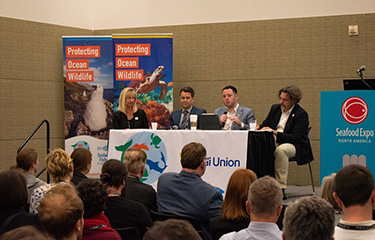
Separately, at Seafood Expo North America in Boston, Massachusetts, U.S.A., on 13 March, Thai Union announced it will only source materials from vessels that apply best practices toward marine bycatch. Thai Union made the commitment based on a research report conducted by the Sustainable Fisheries Partnership (SFP) that highlighted the risks faced by sharks, seabirds, turtles, and other marine wildlife in the fisheries that supply the company. In addition, an analysis by sustainability consultancy Key Traceability also contributed to the company's decision-making.
“Environmental organizations are pointing to the biodiversity and species loss crisis that the planet is facing. The report by SFP notes the significant loss of ETP species in the Western Central Pacific Ocean region,” Thai Union Group Director of Sustainability Adam Brennan said. “We want to do more to ensure that we are sourcing from vessels that are doing everything they can to avoid and reduce bycatch.”
Thai Union said it will require all the fishing vessels it sources from to carry out best practices to protect endangered, threatened, and protected (ETP) species by 2030. The company also made clear it will fulfill a commitment that requires 100 percent observer coverage (human or electronic) on its tuna vessels by 2025.
According to the SFP report, commercial tuna longline fishing in the Western Central Pacific Ocean has caused significant harm to ETP species, with several shark, seabird, and sea turtle populations having declined as much as 70 percent. The region remains a major source of global tuna production, providing more than half of the world's tuna supply, most of which is delivered to North America and Japan. Tuna buyers, therefore, have a crucial role to play in promoting efforts to restore nature loss and rebuild populations of vulnerable marine wildlife, especially sharks and seabirds, according to SFP. The report suggests that adopting more and better equipment modifications could help reduce the risk of interaction and mortality in these fisheries.
Thai Union carried out an audit of its bycatch as part of SFP’s Protecting Ocean Wildlife initiative, which is an international effort led by the industry to address marine wildlife bycatch. SFP evaluated and analyzed Thai Union's source fisheries by utilizing available sustainability data to identify potential risks, overlaps with the company's primary products, and areas where the most-significant reductions in ocean wildlife bycatch can be achieved.
Separately, in an update to its share-buyback scheme announced in December 2022, Thai Union said it has paid THB 611.1 million (USD 18 million, EUR 16.7 million) to repurchase more than 52 million Thai Union shares on the stock exchange as of 20 March. The company had intended to buy back 200 million shares by 30 June in an effort to use up excess liquidity and raise its return on its equity and earnings-per-share ratios.
And on 10 March, Thai Union Thiraphong Chansiri said told the Bangkok Post his company is considering a withdrawal from Red Lobster as the U.S.-based restaurant chain continues to drag on the company’s profits. But in a 11 March statement sent to SeafoodSource, Thai Union said it was confident its turnaround plan for the franchise will eventually bear fruit.
“Regarding the recent questions on Thai Union’s strategic investment in Red Lobster, Thai Union would like to reconfirm that Red Lobster is still considered as a valuable opportunity for Thai Union," said Thai Union. "In the past few months, Red Lobster’s business performance has been improving and in line with expectations in terms of sales growth, cost of goods sold, and labor costs. This is a result of its continual focus on the business turnaround with initiatives including new menu offerings, ensuring value is delivered to customers, cost controls, and targeted marketing campaigns. Therefore, Thai Union is fully committed and supportive of Red Lobster on its business turnaround plan. The company looks forward to seeing the positive outcome from Red Lobster’s focus on marketing strategies, human resources development, product and service improvement.”
