


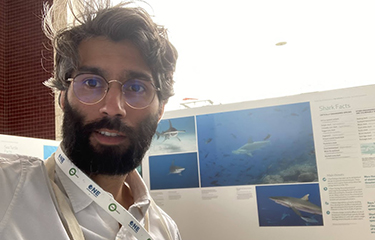
François Mosnier, head of the oceans program at nonprofit financial think tank Planet Finance, spoke to SeafoodSource about his organization’s new Seafood Database, which identifies the companies most exposed to overfishing, illegal fishing, and other sustainability risks across the USD 1.8 trillion (EUR 1.65 trillion) seafood supply chain. The database monitors 100 firms.
SeafoodSource: Have you talked to the companies on the list? Do you believe that they’re aware of the risks they face?
Mosnier: We constantly engage with seafood companies, either directly or via their investors and lenders, to make them aware of the financial implications of these risks. Our research shows that companies are generally aware of these risks, but their response varies, depending on the companies and the type of risk.
We are seeing many companies taking illegal fishing and other fisheries-related crimes very seriously, either by stepping up monitoring efforts, or committing to eliminating illegal, unreported, and unregulated (IUU) fishing. But still, too many others fail to act appropriately, and this is why dreadful cases of illegal fishing and slavery occur too frequently.
When it comes to overfishing, there is way too little action at the corporate level. In many cases, our research shows that management is aware but tries to offset the negative profit impact of declining catches due to years of overfishing using strategies such as vertical integration, increased focus on processing, cost-cutting, and M&A without addressing the root cause of the issue.
Overall, we believe that investors and lenders are rapidly starting to perceive overfishing and other seafood-related risks as the new deforestation – something they should seriously address, meaning that companies should be worried indeed.
SeafoodSource: You said in introducing the database that “ocean sustainability data is notoriously fragmented and difficult to access and yet it is a critical driver of financial performance.” How does the data drive financial performance?
Mosnier: The point we made here is that sustainability is financially material, and therefore securing sustainability data is critical. Here are three examples at each stage of the supply chain:
Everything else being equal, if a fish population is abundant, the profit generated from harvesting that fish is higher than if the population level is low. Data on fish biomass is available and updated for most fisheries, but it is hard for investors and lenders to turn this data into company-specific information, since most companies do not disclose the exact species they harvest or where exactly they come from. Therefore, it is hard to estimate future revenue and profitability trends.
At the processing level, we found that companies can increase their operational margins very significantly by investing in traceability, but again, companies do not often disclose what percentage of their portfolio is traceable.
Even further downstream, we found a correlation between retail margins and health of the fish stock in a case study on Carrefour, where the most-overfished species were also the least profitable. Without data, this sort of analysis is impossible.
In short, without greater transparency on sustainability data, investors are left with the equivalent of financial statements with many blanks.
SeafoodSource: The report finds that only 8 percent of the 100 largest seafood companies – both listed and private – disclose the exact seafood species in their portfolio. Why do you think the figure is so low?
Mosnier: Partly this is due to practical considerations. When a portfolio is very diversified, it can be impractical to disclose every single species on their website, although this can easily be done on the Ocean Disclosure Project, for instance. Companies further downstream can only disclose as much information as they receive from their suppliers. And then there is the issue of commercial names several species can be called using the same commercial name, and translations in the case of international supply chains.
But overall, we believe that disclosure is perceived as a risk by still too many companies, even though it is the exact opposite. Actually, we argue that greater disclosure can even make them money, since it can generate communication opportunities, higher brand valuations, and lead investors to assign higher valuation multiples to the company.
SeafoodSource: How do you select the companies you study?
Mosnier: Within a list of several thousand companies with seafood exposure that we compiled over more than a year, we selected the ones that had at least 25 percent of their revenue derived from seafood. So, for instance, we did not include Mitsubishi, Tesco, or Walmart, and selected the largest ones in terms of their total revenue. We will add more companies in 2023.
SeafoodSource: Do large institutional investors seek the information produced in your database? Do they understand the risks – and the industry – enough to care?
Mosnier: This is a bit of a chicken-and-egg situation. If large investors do not care about these risks, they are unlikely to ask for the data. But if they care and the data is not available, they can’t act by divesting from unsustainable companies and investing in sustainable ones. By providing the data, we ensure that those that do care can act accordingly, we bring awareness to those that do not care enough, and we also help everyone screen companies based on sustainability criteria.
We also know of large investors that decline to invest in any seafood-exposed company because of the risks associated with the sector, and we hope that our tool – along with others such as the World Benchmarking Alliance’s Seafood Stewardship Index – will bring more nuance within the sector and help trigger a race to the top in terms of sustainability disclosure.
Overall, usage and endorsement of our other tools, such as our IUU Fishing Detection Toolkit, which allows investors to conduct IUU-related due diligence on any company, shows that many large investors do seek out the information we produce.
SeafoodSource: Where is reporting or transparency better? Where is it worse?
Mosnier: With the caveat that we do not have enough companies per country for our findings to be statistically significant, the best reporting comes from Australia, Faroe Islands, Canada, Iceland, New Zealand, Greenland, and Norway. This is likely to be biased though, since this is where aquaculture companies, predominantly farming Atlantic salmon, are located, and the nature of their business makes it easier to disclose more transparently, than say, a large processor or retailer.
SeafoodSource: How will you measure the impact of your new database?
Mosnier: We measure our impact in three different ways. One, awareness: the number and type of visitors – and the preliminary results are very encouraging. Two, commitment: based on the information produced, what will financial institutions commit to doing? What will companies promise to change? And three, action: how have shareholdings in the top-rated companies evolved compared to the worst-rated ones? That is, have investors who used our database invested or divested based on the information provided and have companies increased transparency, whether publicly or by providing us directly with more information.
Photo courtesy of Planet Finance
