






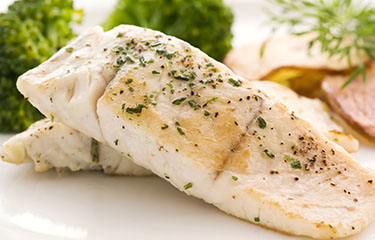
A report recently commissioned by Australis Aquaculture has shown demand for barramundi is increasing significantly, with consumer awareness of the species growing faster than for most other seafood.
Greenfield, Massachusetts, U.S.A.-based Australis Aquaculture raises Fair Trade-certified barramundi in ocean-based farms Vietnam. In March 2021, the firm became the world’s first producer to earn recognition under the Aquaculture Stewardship Council’s (ASC) tropical marine finfish standard.
Australis Aquaculture Marketing Director Julie Qiu and the company's managing director, Drew Prickett, hosted a webinar on Wednesday, 8 February, sharing the results of a two-year research study completed in partnership with Hanover Research. Based on data from more than 4,200 seafood consumers, the study found that consumers, especially in younger age groups, have shown increased interest in barramundi.
“We really noticed the awareness was remarkably higher for millennial fish consumers, which begs the question of, 'What is driving some of this increased awareness?’” Prickett said. “To help answer that, we further unpacked levels of awareness by drilling into familiarity.”
And across all consumers surveyed, barramundi showed the highest growth in consumer awareness, Hanover Research found, more so than any other whitefish species. Online search inquiries for barramundi have increased 40 percent since 2016, it found.
“We also looked at consumer data tracked by Dataessential, and learned that amongst all seafood items that they track, barramundi was the fastest-growing in terms of popularity and favorable perception between 2017 and 2020,” Qiu said during the webinar.
Data collected in the study also found that 94 percent of consumers who have tried barramundi “express moderate to very favorable perceptions" of it.
Elsewhere, on 4 February, the University of Sydney (Australia) announced, in collaboration with the University of Florida (U.S.), the successful development of a new genetic test for the infectious spleen and kidney necrosis virus (ISKNV). The third variant of ISKNV, known as TRBIV, is an emerging pathogen growing in prevalance across barramundi farms in Southeast Asia and Australia, according to the World Organization for Animal Health.
“Our new diagnostic test is the most advanced in addressing WOAH requirements for test validation. It can detect all three variants of the virus with very high sensitivity and specificity,” University of Sydney Associate Professor Joy Becker said. “Once validated, we expect this diagnostic test will help keep this exotic virus out of Australia.”
Photo courtesy of hlphoto/Shutterstock
