






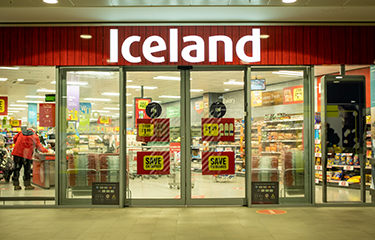
Deeside, Wales-based Iceland Foods, a grocery franchise with more than 1,000 locations, mostly in the U.K., is pulling back on the amount of chilled foods it sells.
Iceland Finance Director Richard Ewen said the supermarket chain is stocking more room-temperature products in order to lower the company’s energy costs, according to Bloomberg.
“We probably got a bit carried away in the pandemic with the amount of chilled products we had available, so we’re just really scaling our chilled proposition back slightly,” Ewen said. He said unplugging refrigerators used to display chilled items is “a big energy saving” for the company.
Iceland Foods paid an additional GBP 90 million (USD 109 million, EUR 101 million) for energy in 2022 year-over-year, resulting in a GBP 20 million (USD 24 million, EUR 22 million) drop in the company’s earnings before interest, taxes, depreciation, and amortization (EBITDA) and a GBP 46 million (USD 56 million, EUR 52 million) reduction in its gross profit.
Furthermore, Iceland Foods is implementing energy-saving measures including upgrading to more energy-efficient refrigerators, adding doors to warehouse fridges, and adding solar panels to its stores and warehouses, Ewen said.
According to market research firm Kantar, Iceland’s sales rose 14 percent in the month leading up to the Christmas holiday. Iceland Food Managing Director Richard Walker said Iceland Foods is well-positioned in the current economic climate in the U.K., as a cost-of-living crisis continues to impact consumer spending. He said Iceland’s customer numbers have grown 35 percent as shoppers sought to save money by shopping with the discount grocer. According to Kantar, Iceland’s market share grew from 2.3 percent to 2.5 percent between November and December 2022.
Despite its small market share, Iceland Foods has the U.K.’s second-largest sales total for frozen foods, and Walker told Bloomberg the company will continue to focus on frozen goods and less-expensive brands, which are seeing higher sales as British customers seek out value.
Walker said he is currently negotiating a new energy-supply deal that should be at a better rate than what it paid through the past year, when energy prices soared across Europe as a result of the war in Ukraine.
“For sure the pricing has come off on the wholesale market,” Walker told the Financial Times. “It’s still uncomfortably high but we’re a lot better than where we were.”
Photo courtesy of William Barton/Shutterstock
